MEMORY HAS A MATERIAL
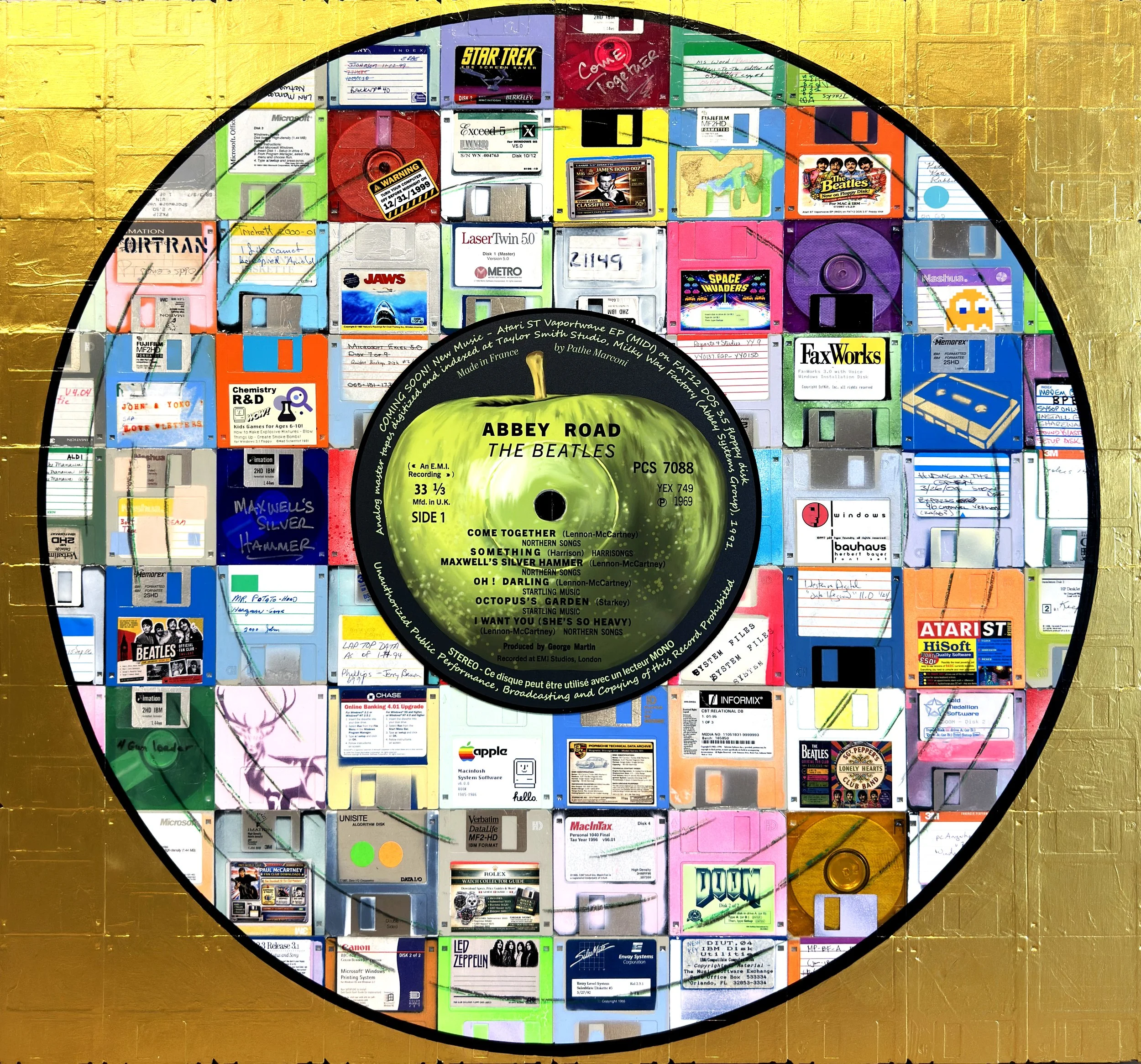
The Vinyl Series brings together two once-familiar formats—the vinyl record and the floppy disk—each associated with the storage and circulation of music, information and memory.
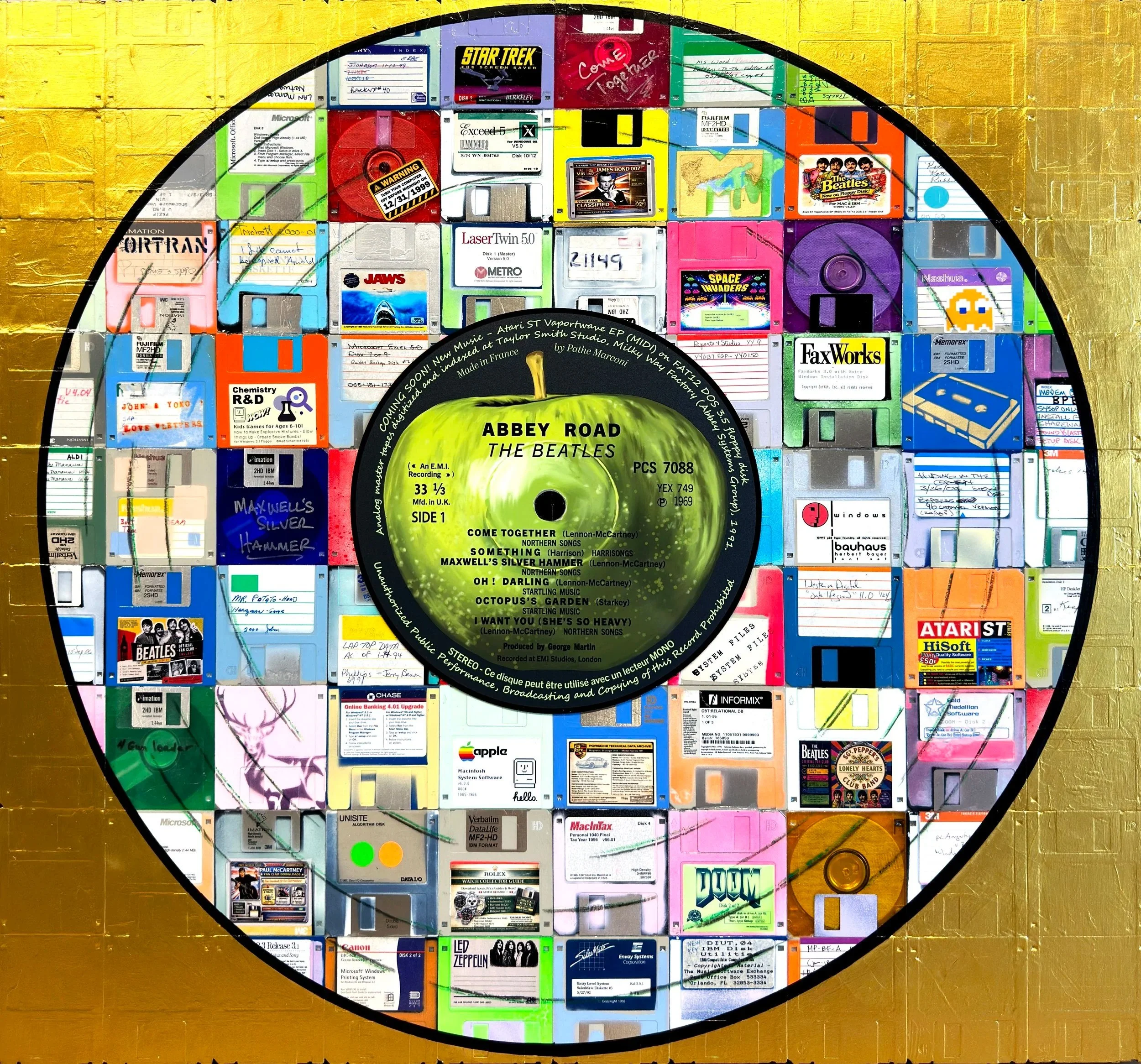
In Abbey Road (Side 1), exactly ninety vintage 3.5-inch floppy disks form the surface of the work, surrounding a custom-cut aluminum center disc with a reimagined record label. Obsolete technology becomes both material and image—a physical archive of cultural memory.
VINYL SERIES
The Beatles
Abbey Road
Side One
32 × 35 inches
Mixed media on vintage 3.5-inch floppy disks
2026
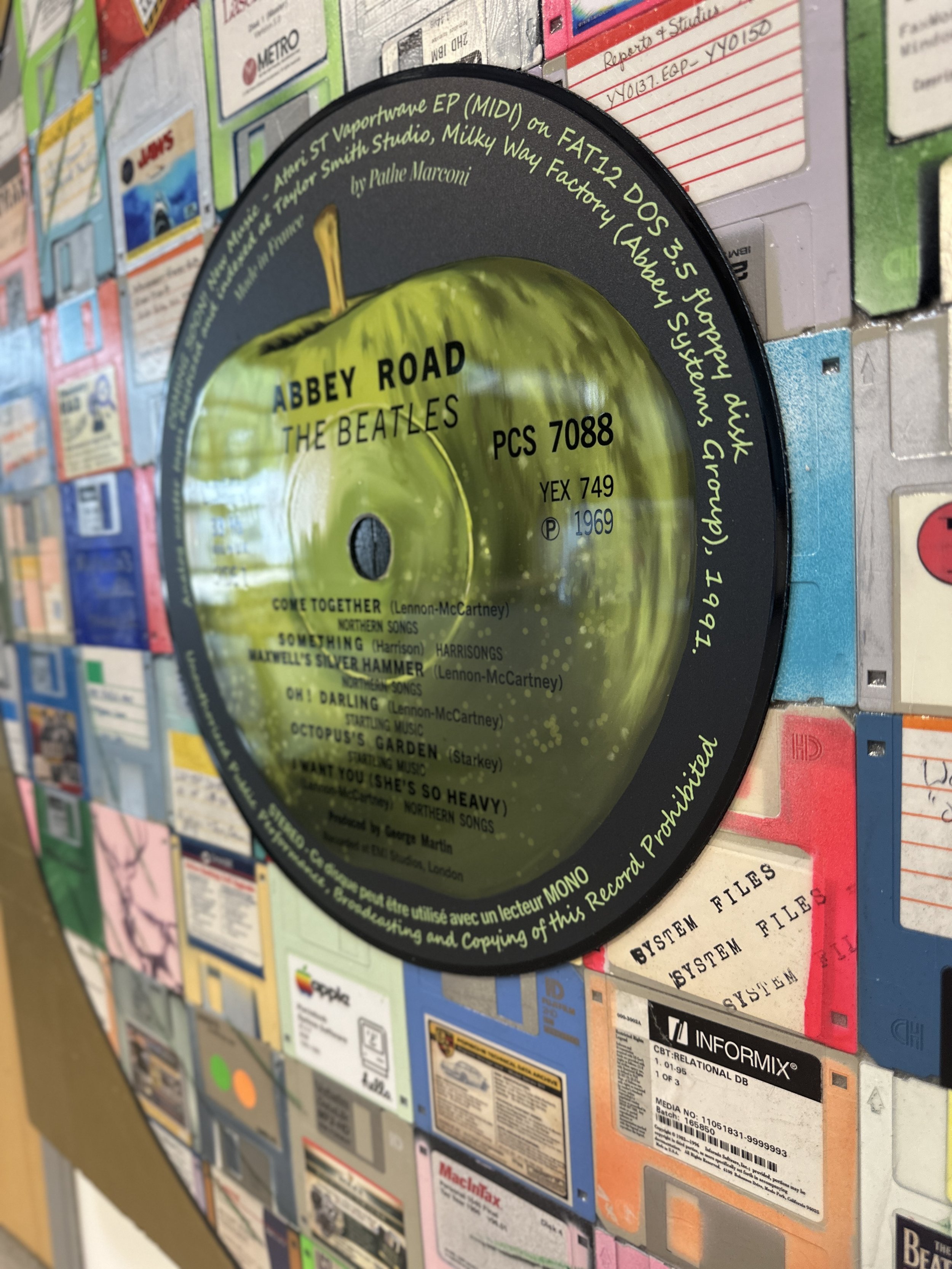
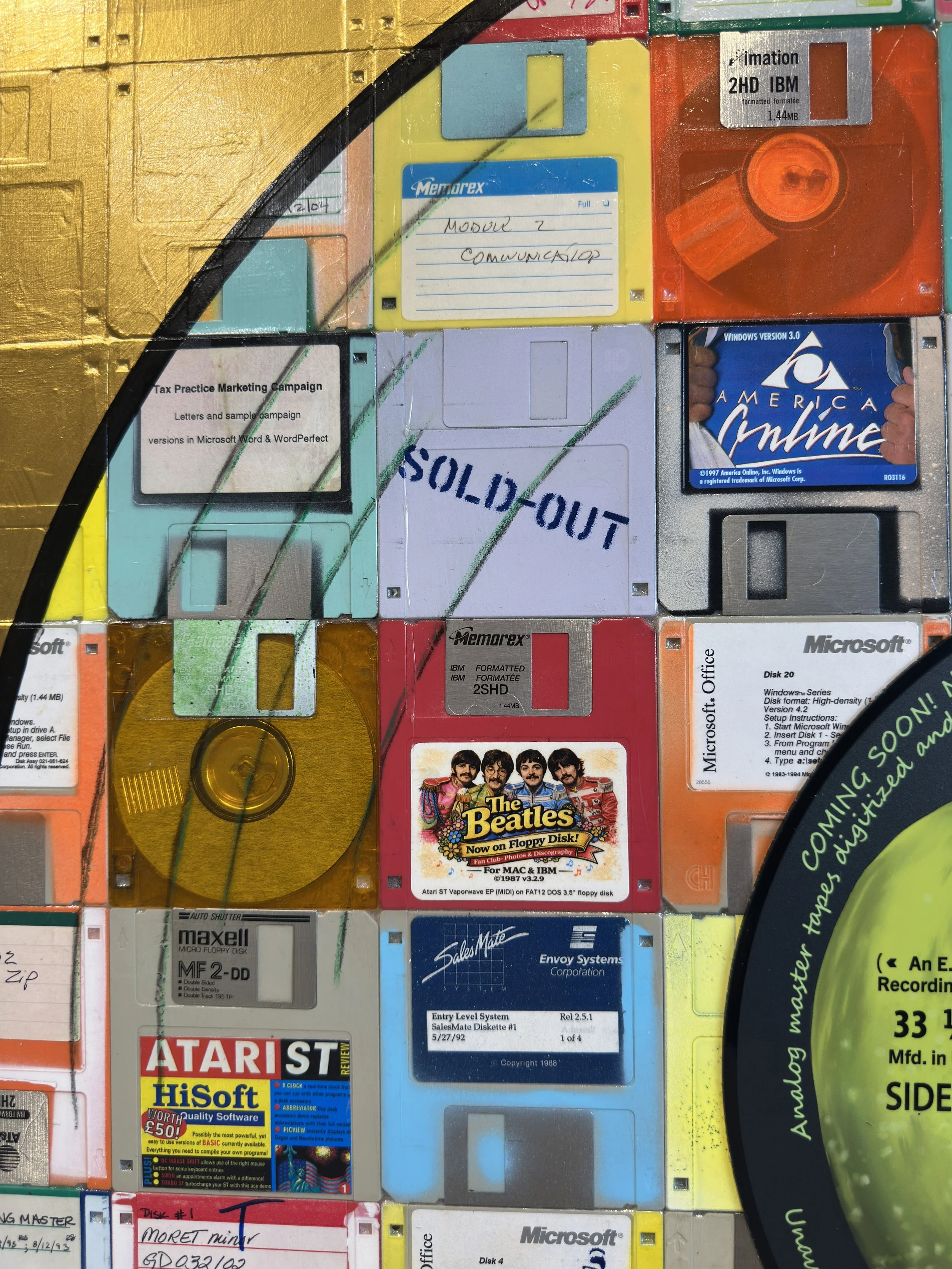

Add final caption here
ABBEY ROAD
Few album images have become as culturally embedded as Abbey Road. Released in 1969, the record occupies a particular place between music and visual memory: the crossing, the typography, the Apple label and even the physical object of the record itself have become recognizable well beyond the music they originally contained.
In Abbey Road (Side 1), that familiarity is reconstructed through another disappearing technology. Ninety vintage 3.5-inch floppy disks form the surface of the work, surrounding a custom-cut aluminum center disc. Rather than reproducing the original record label, Smith rebuilds and reimagines it element by element, drawing from the visual language of the original pressing while introducing details that move between the vinyl era and the later world of floppy disks, software and digital storage. Typography, recording information, production credits and invented technological references are individually composed to create a label that feels simultaneously familiar and newly constructed.
The result is neither a reproduction of the album nor simply an exercise in nostalgia. Music, obsolete technology and personal history become layered into a new physical object—one that considers how cultural memory survives even as the formats that once carried it disappear.
STUDIO NOTES
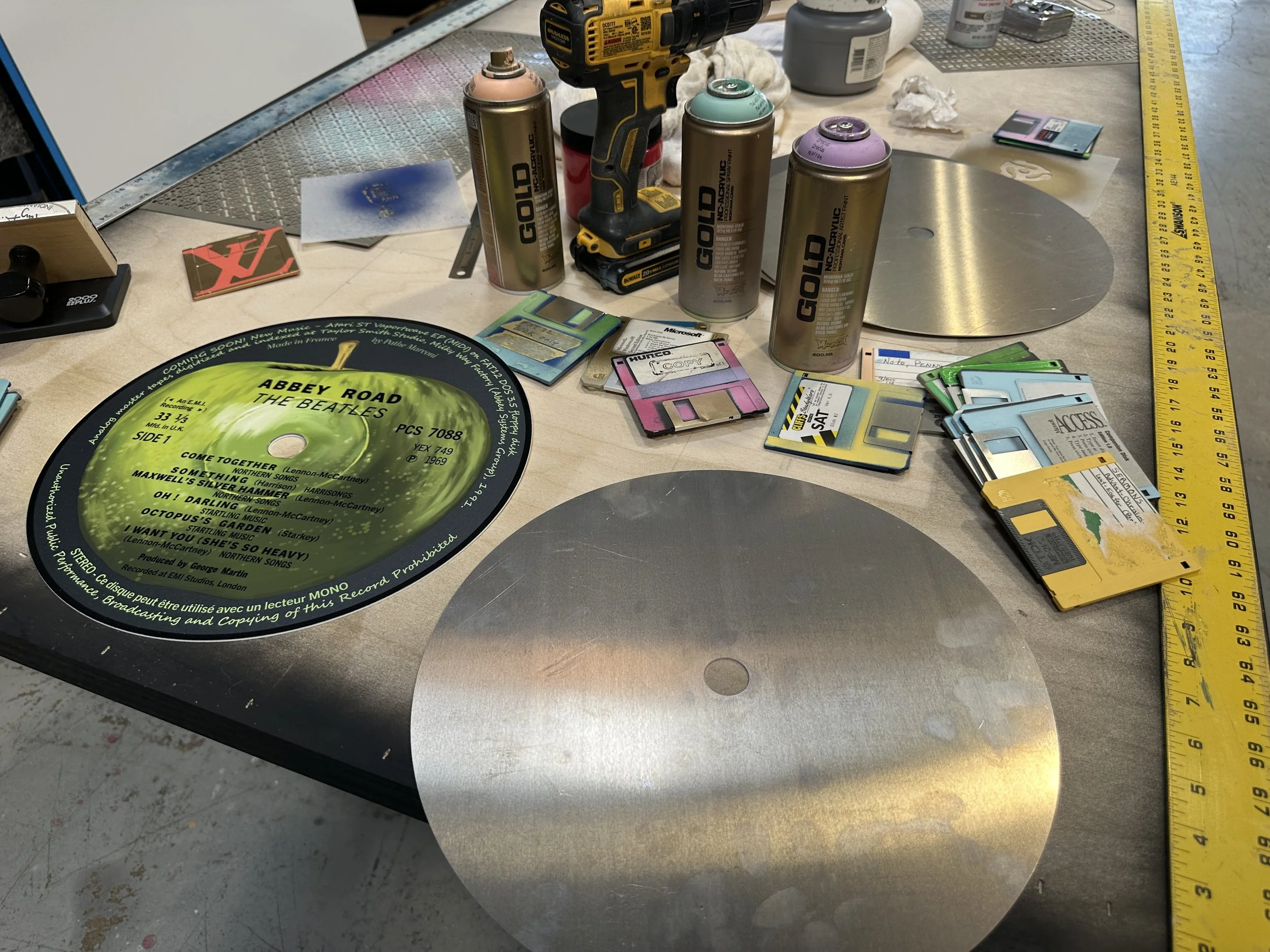
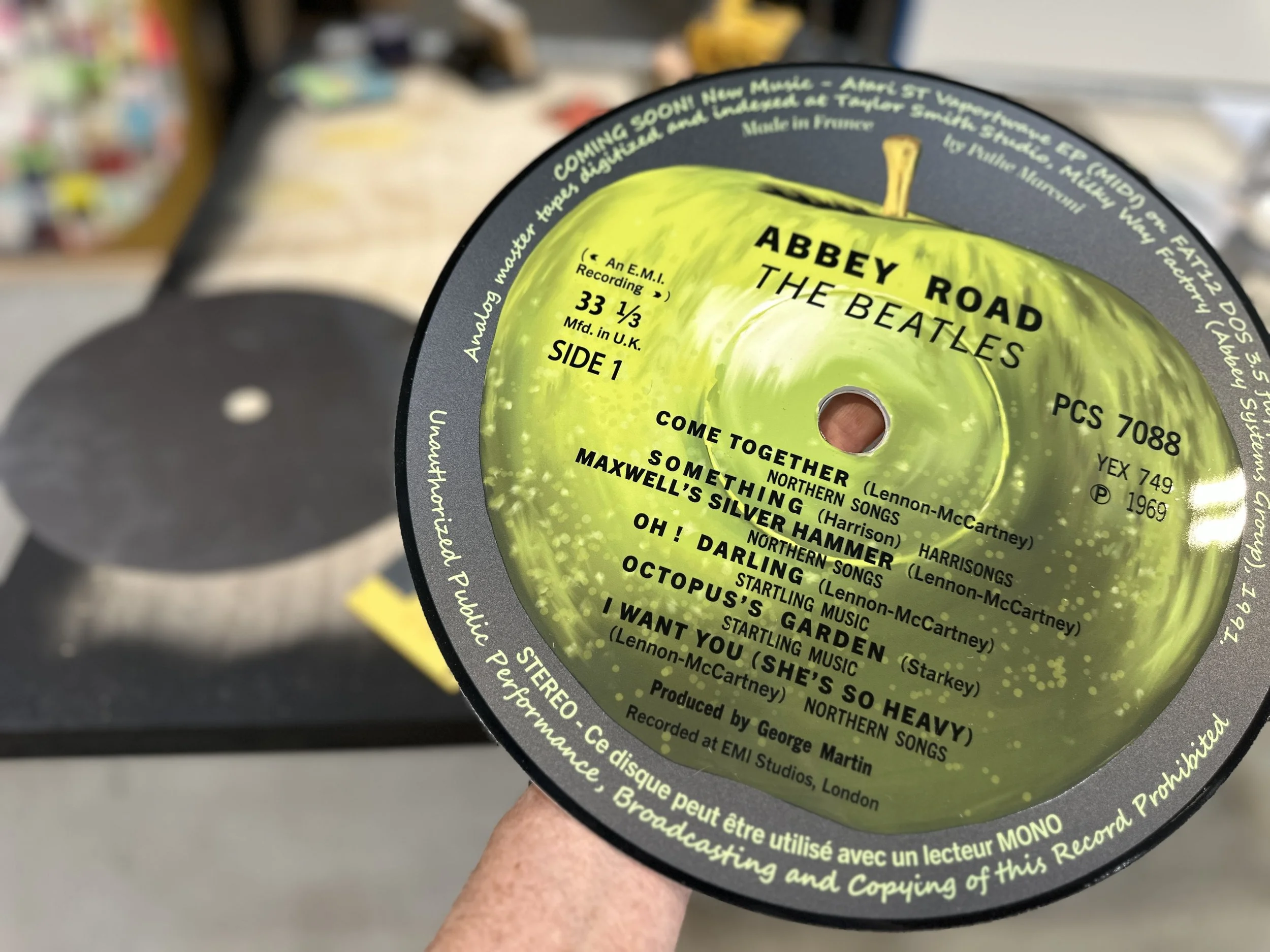
The center label for Abbey Road (Side 1) was developed as an artwork within the larger work. Beginning with the visual language of the original Apple Records label (specifically the 1969 French pressing), I reconstructed and reimagined its individual elements while introducing details that bridge two technological eras.
Original recording information exists alongside newly composed language referencing floppy disks, data storage and obsolete technology. Typography, production details and the perimeter text were considered individually, allowing the label to remain immediately recognizable while revealing invented details upon closer inspection.
This process of research, reconstruction and redesign unfolds over many hours—and often weeks—as each center label develops its own visual identity within the Vinyl Series.
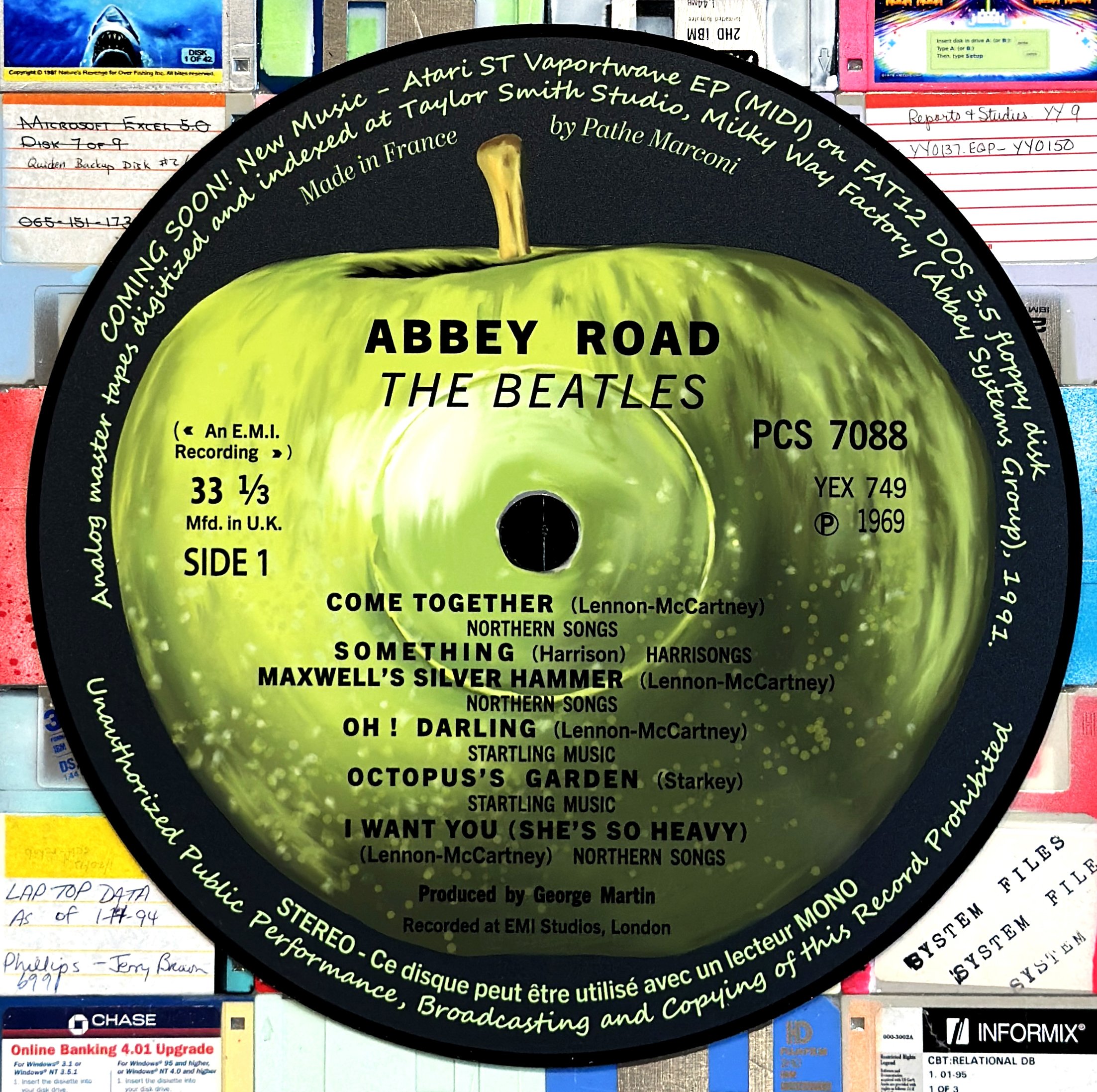
Detail of the reimagined center label for Abbey Road (Side 1)
ABBEY ROAD (SIDE 2) →