MEMORY HAS A MATERIAL
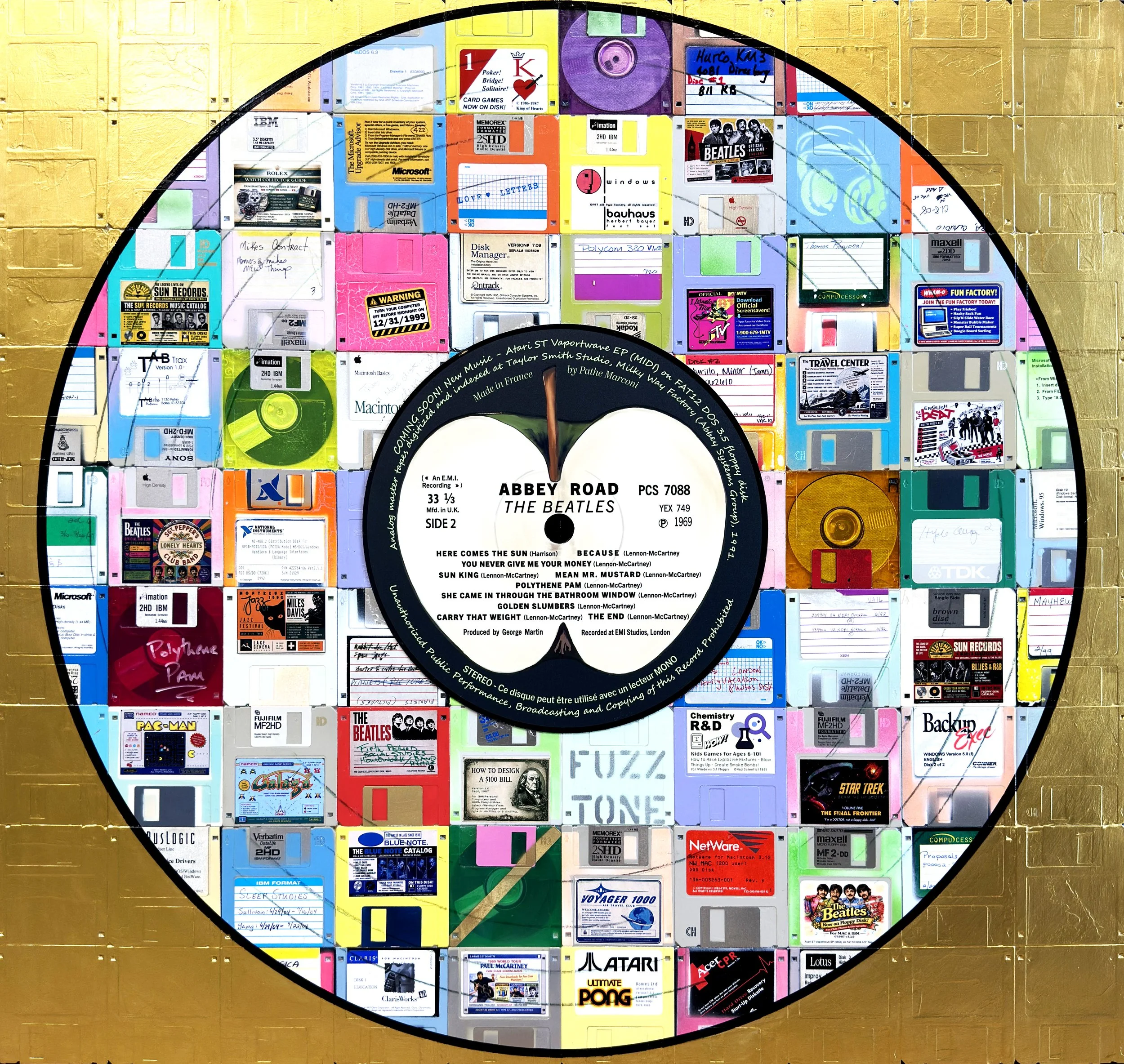
The Vinyl Series brings together two once-familiar formats—the vinyl record and the floppy disk—each associated with the storage and circulation of music, information and memory.
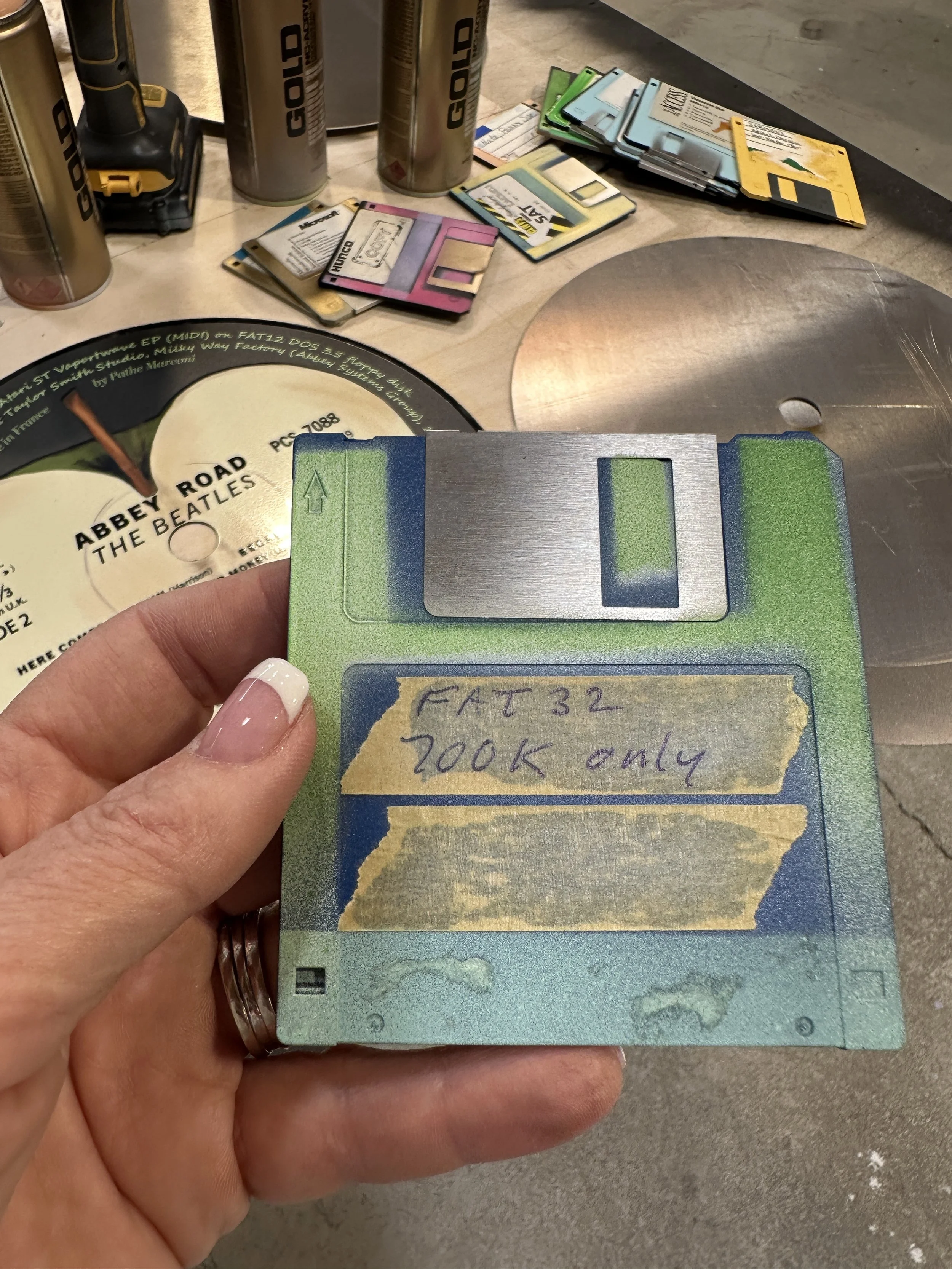
In Abbey Road (Side 2), exactly ninety vintage 3.5-inch floppy disks form the surface of the work, surrounding a custom-cut aluminum center disc with a reimagined record label. Obsolete technology becomes both material and image—a physical archive of cultural memory.
VINYL SERIES
The Beatles
Abbey Road
Side Two
33 × 35.5 inches
Mixed media on vintage 3.5-inch floppy disks
2026

Abbey Road (Side 2), 33 × 35.5 in., shown in a contemporary residential setting
ABBEY ROAD
The second side of Abbey Road occupies a distinctive place in Beatles history. Much of its identity rests in the celebrated closing medley, where individual songs and fragments flow into one another before arriving at “The End”—and, unexpectedly, “Her Majesty.” It is a sequence that helped make the physical act of turning the record over and listening to Side 2 part of the album’s cultural memory.
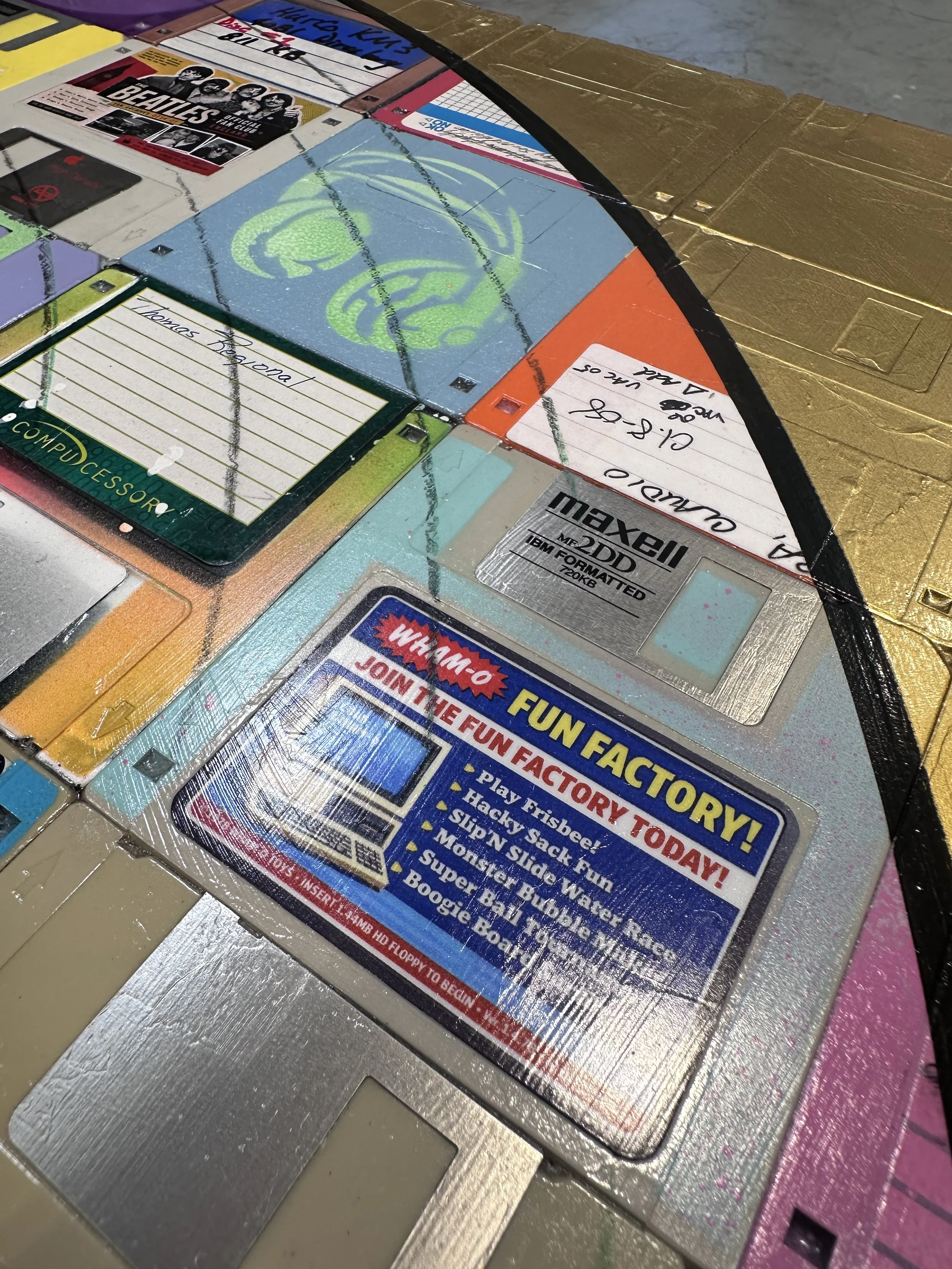
In Abbey Road (Side 2), Smith translates that history into another form of recorded memory. Ninety vintage 3.5-inch floppy disks surround a custom-cut aluminum center disc, transforming the familiar geometry of the vinyl record through a technology associated with a later generation. The reimagined Apple label anchors the composition in 1969, while the surrounding disks retain handwritten notes, software names and other fragments of their original lives.
The two formats belong to different technological eras, yet both once served as physical containers for information and culture. Bringing them together allows Abbey Road (Side 2) to operate simultaneously as an image of an iconic record and as an archive of obsolete media—connecting the music we remember with the objects through which generations learned to store memory itself.
STUDIO NOTES
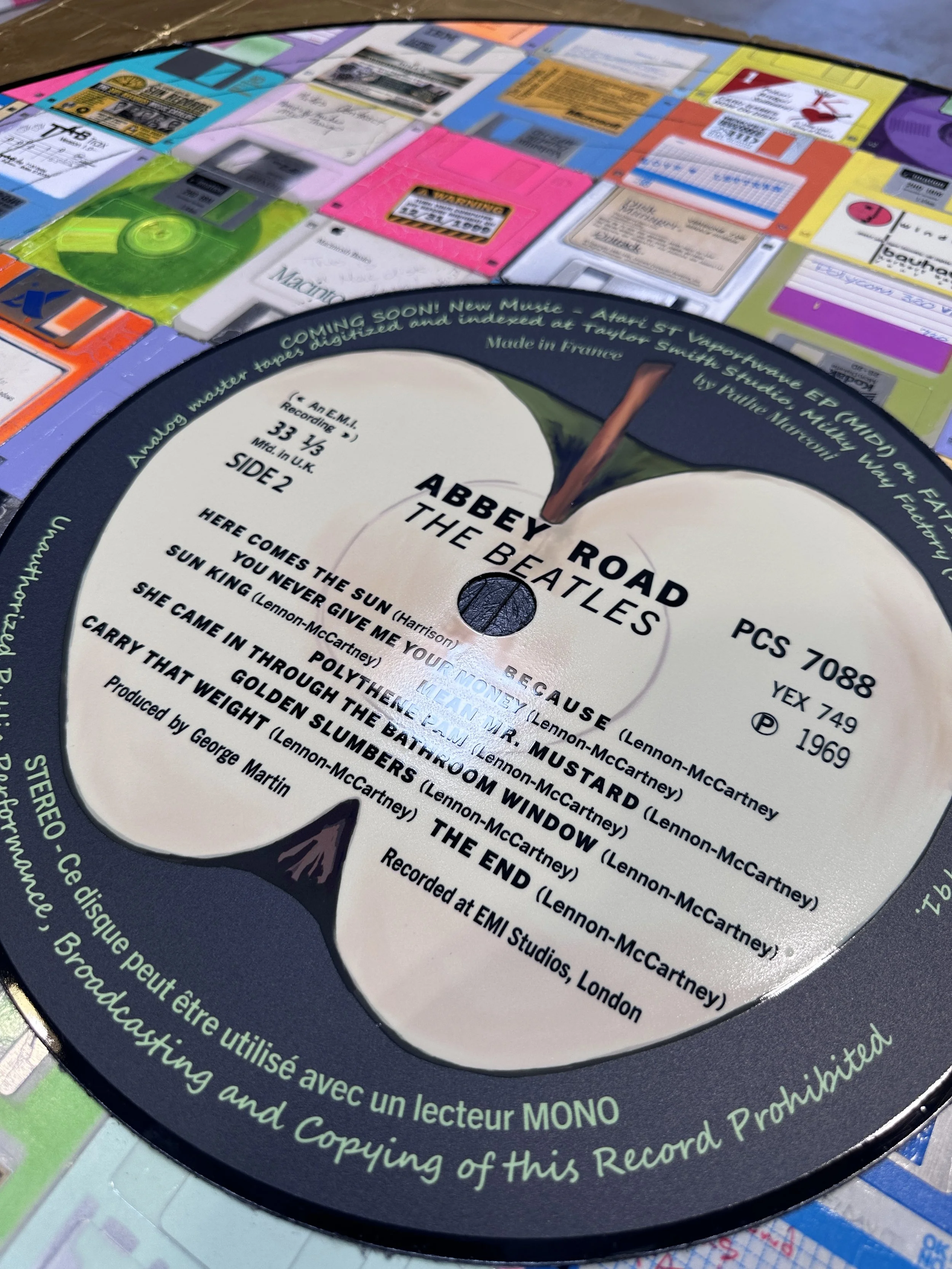
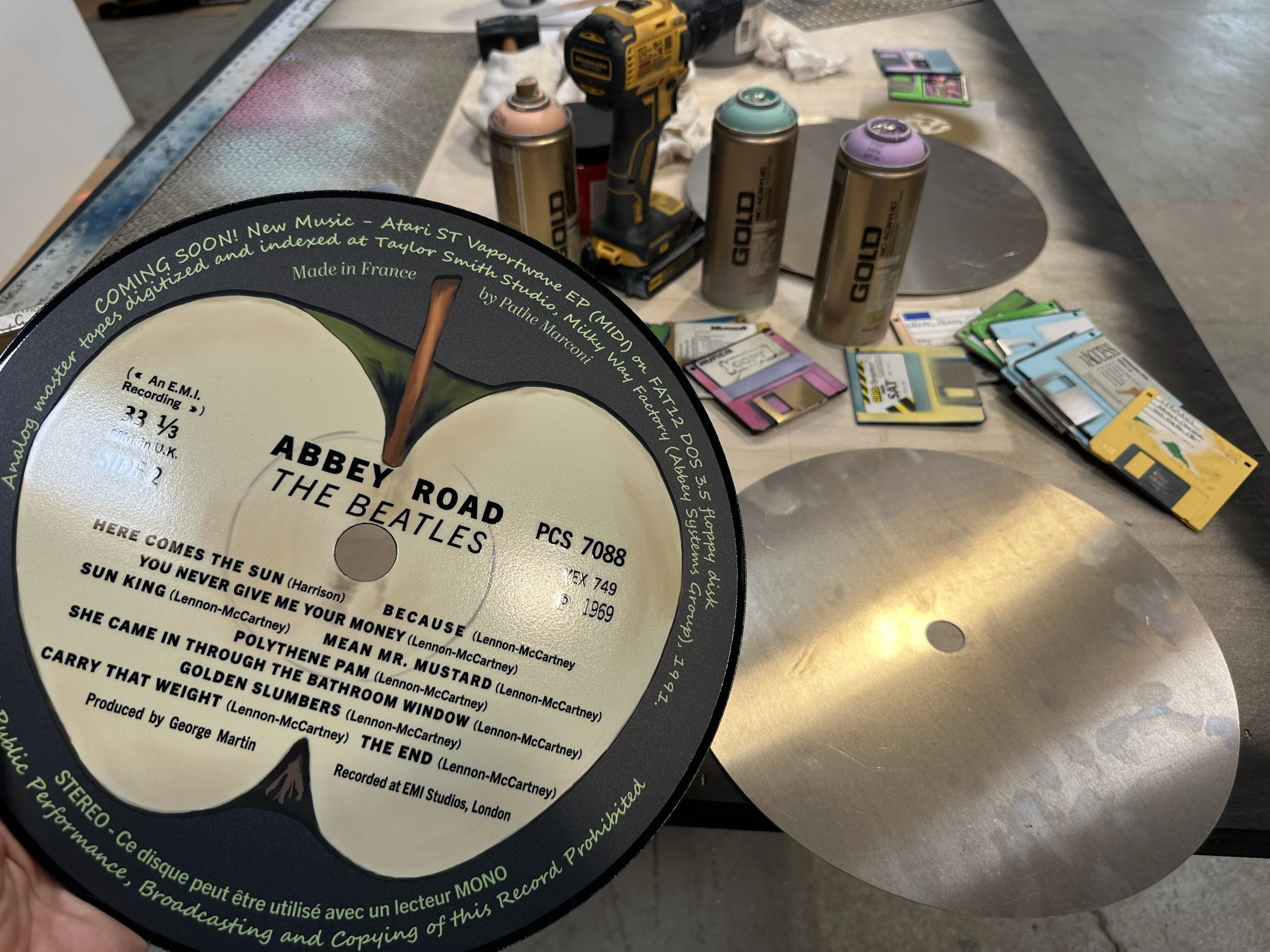
The center label for Abbey Road (Side 2) was developed as an artwork within the larger work. Beginning with the visual language of the original Apple Records label (specifically the 1969 French pressing), I reconstructed and reimagined its individual elements while introducing details that bridge two technological eras.
Original recording information exists alongside newly composed language referencing floppy disks, data storage and obsolete technology. Typography, production details and the perimeter text were considered individually, allowing the label to remain immediately recognizable while revealing invented details upon closer inspection.
As the companion to Abbey Road (Side 1), the Side 2 label maintains a visual dialogue with the first work while developing its own identity through the music, information and details specific to the second side of the record. This process of research, reconstruction and redesign unfolds over many hours—and often weeks—as each center label develops its own visual identity within the Vinyl Series.

Detail of the reimagined center label for Abbey Road (Side 2)