MEMORY HAS A MATERIAL
Vinyl records and floppy disks once served a similar purpose: both were physical objects designed to hold information, passed from hand to hand and gradually marked by use. Today, each belongs to an earlier technological era, carrying associations that extend beyond what was originally stored on them.
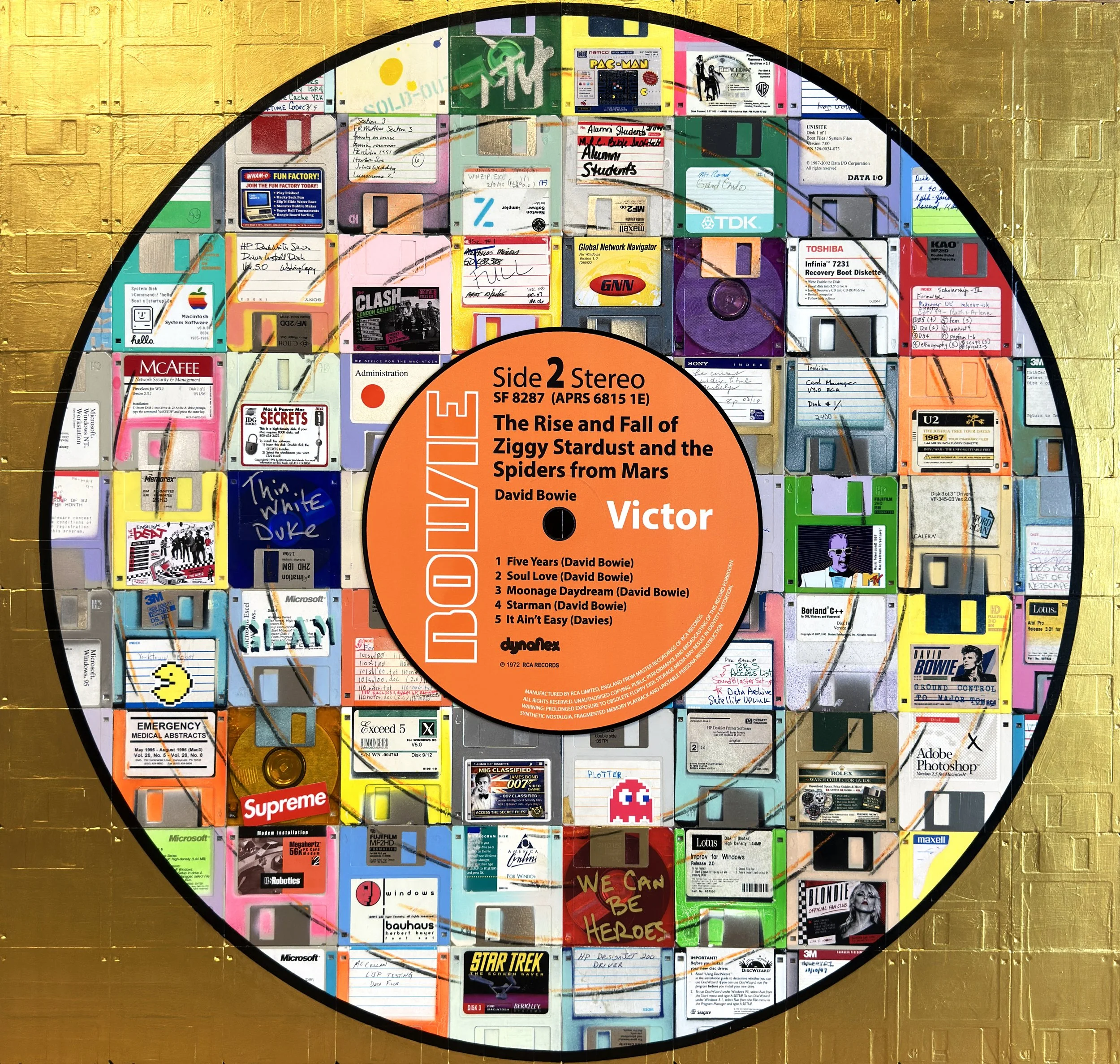
David Bowie – Ziggy Stardust (Side 1) is constructed from ninety vintage 3.5-inch floppy disks surrounding a custom-cut aluminum center disc. Bowie’s iconic record label is reimagined at an exaggerated scale, shifting it from functional information into the visual center of the work.
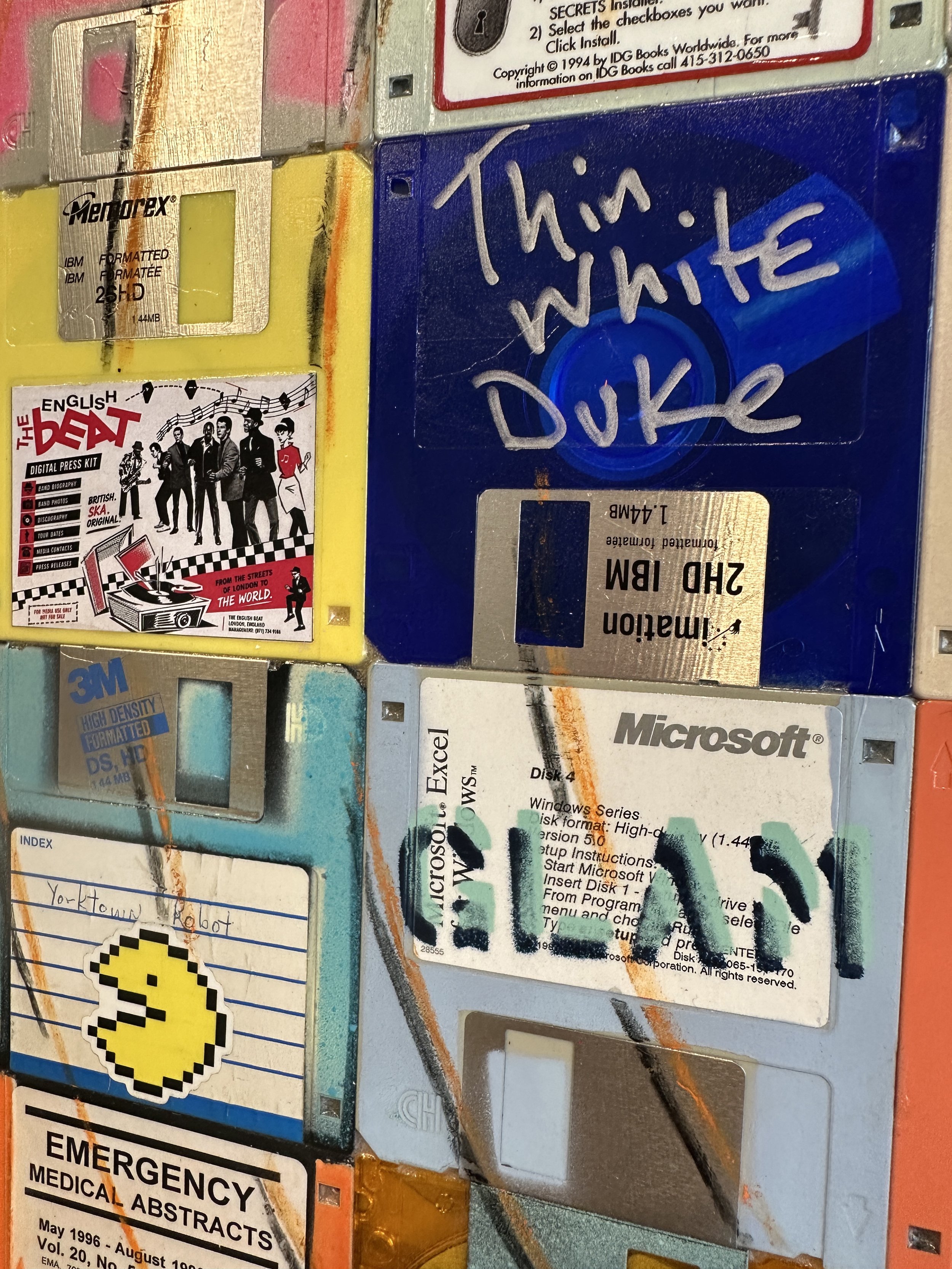
Bringing these two obsolete formats together creates a physical archive of cultural memory. The floppy disks retain their individual labels, colors, wear, and anonymous histories, while Ziggy Stardust evokes a cultural artifact that has endured long after the technology that first carried it began to disappear.
VINYL SERIES
David Bowie
The Rise And Fall Of Ziggy Stardust And The Spiders From Mars
Side Two
33 × 35.5 inches
Mixed media on vintage 3.5-inch floppy disks
2026
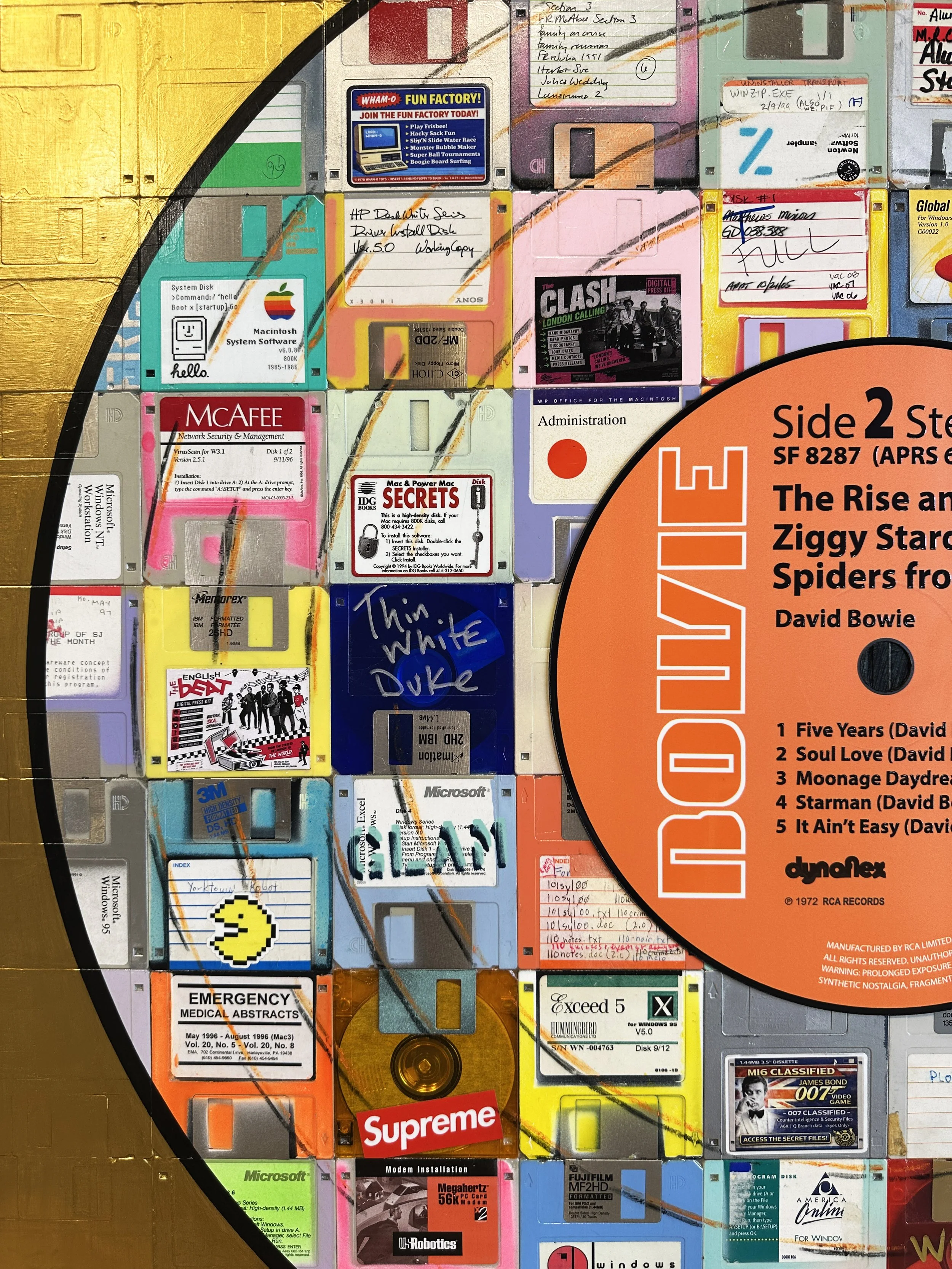
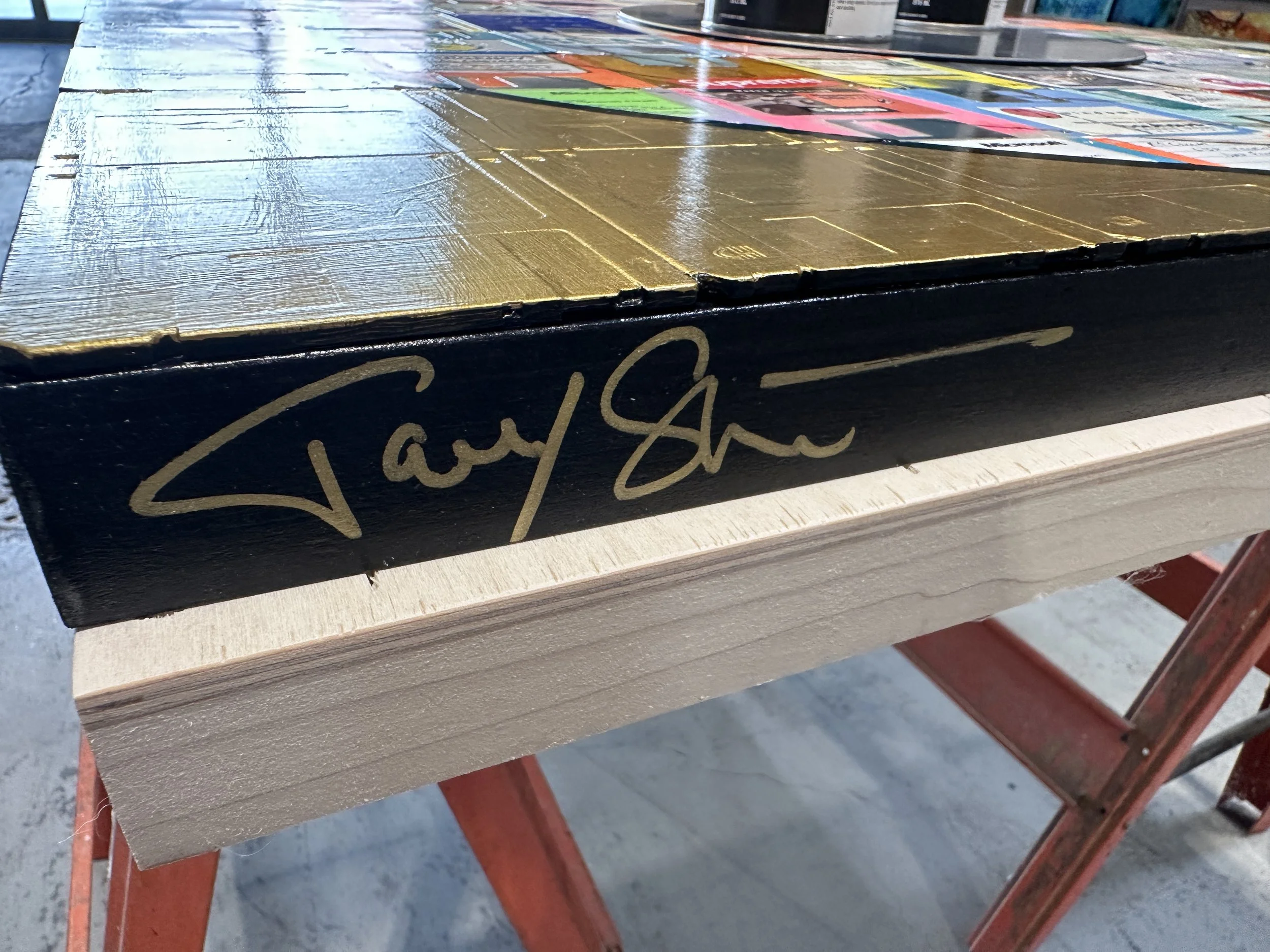

David Bowie – Ziggy Stardust (Side 2) shown in situ | The Vinyl Series, 33 × 35.5 × 2 in.
THE RISE & FALL OF ZIGGY STARDUST & THE SPIDERS FROM MARS
Released in 1972, The Rise and Fall of Ziggy Stardust and the Spiders from Mars transformed David Bowie’s invented rock-star persona into one of the defining images of twentieth-century popular culture. Ziggy was theatrical, ambiguous and deliberately constructed—a character through whom Bowie could explore identity, celebrity and transformation.
The album’s visual world became nearly inseparable from its music. Typography, photography, fashion, performance and persona worked together to create something larger than a collection of songs. More than fifty years later, Ziggy Stardust remains an extraordinary example of how a physical record can become a cultural object—one capable of carrying memories far beyond the music contained within it.
STUDIO NOTES
For Ziggy Stardust, I wanted the surface to have some of the audacity and visual tension I associate with Bowie himself. The gold field is built from seven brush-applied layers of metallic paint containing gold leaf, creating a surface that shifts with changing light rather than reading as a flat color.
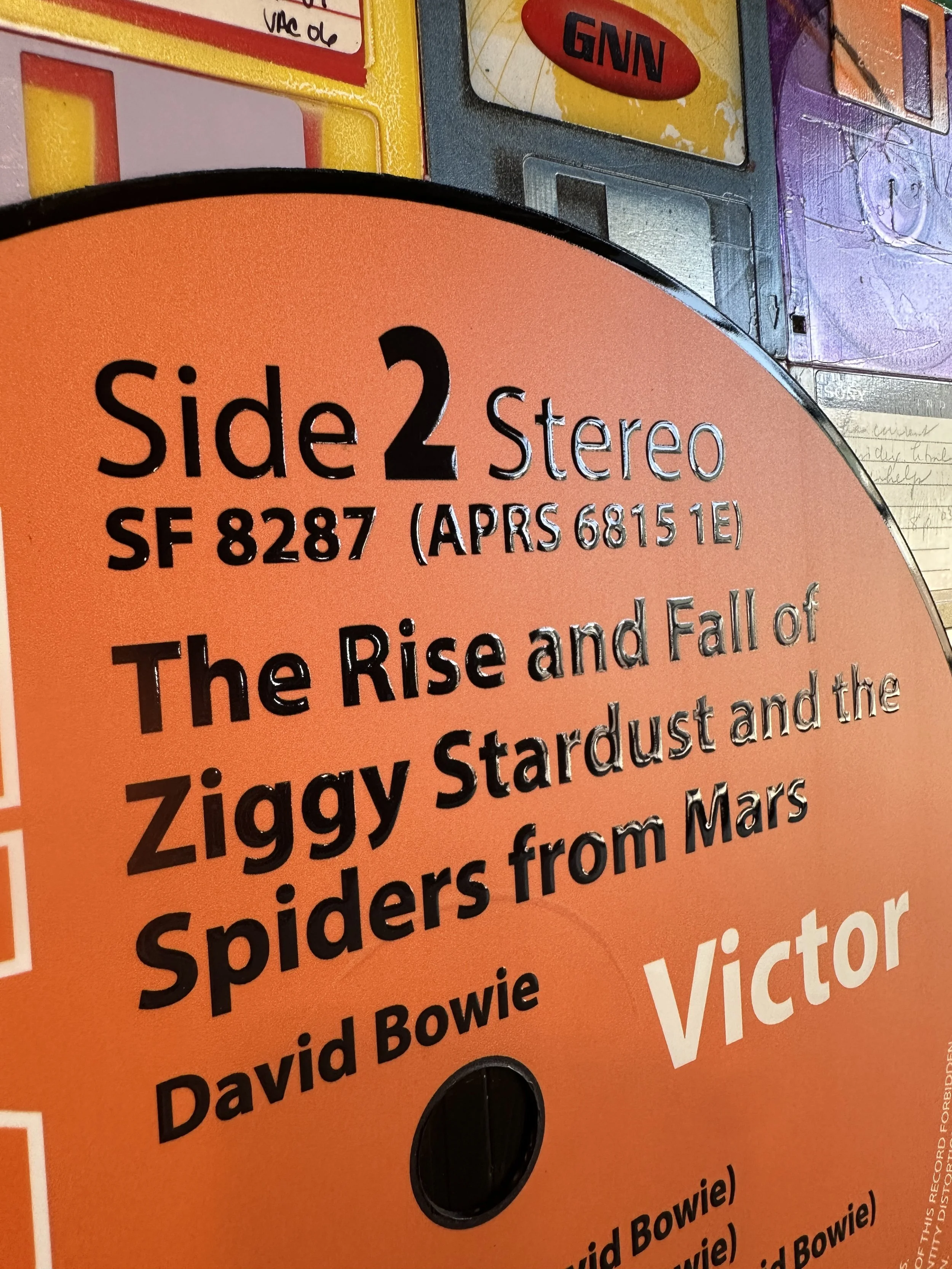
The orange center disc became an especially important part of the composition. I rebuilt and reimagined the historic label at a dramatically enlarged scale, refining its typography, spacing and graphic relationships before transferring the design to aluminum. Against the irregular histories of the ninety vintage floppy disks, its precision creates a deliberate tension between something remembered and something newly constructed.
Throughout the surface, I allowed original vintage handwritten labels, obsolete software, accidental marks and fragments of earlier lives to remain visible. Those details are never incidental to me. They are part of what makes every work in the Vinyl Series singular: the materials arrive already carrying histories before I add my own.

Reimagined center label detail, David Bowie – Ziggy Stardust (Side 2)