MEMORY HAS A MATERIAL
Raising Hell arrived in 1986 at a moment when hip-hop and personal computing were both moving rapidly from specialized worlds into mainstream culture. Run DMC helped transform the scale and visibility of hip-hop, while the 3.5-inch floppy disk was emerging as an increasingly familiar symbol of a new digital era.
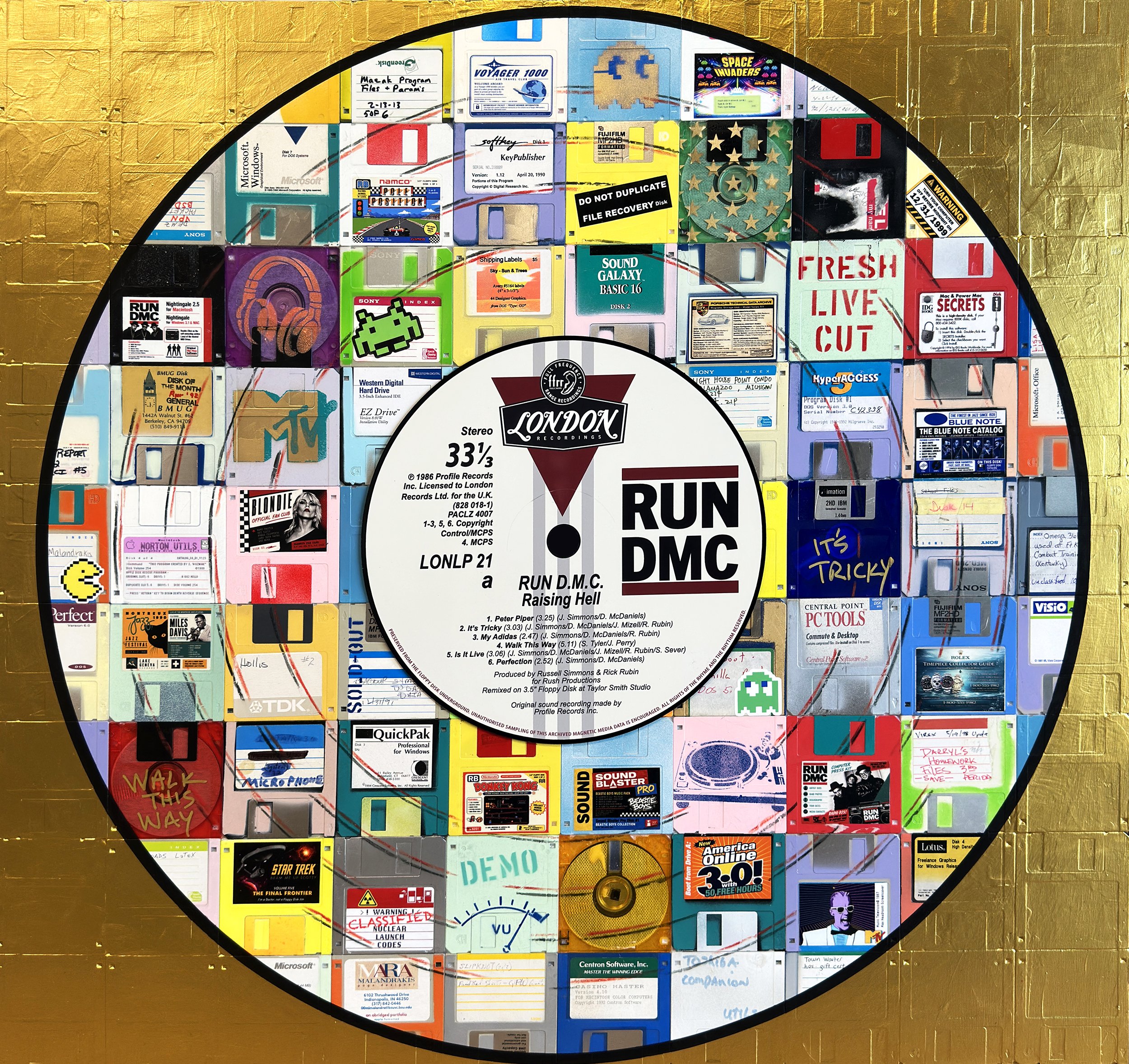
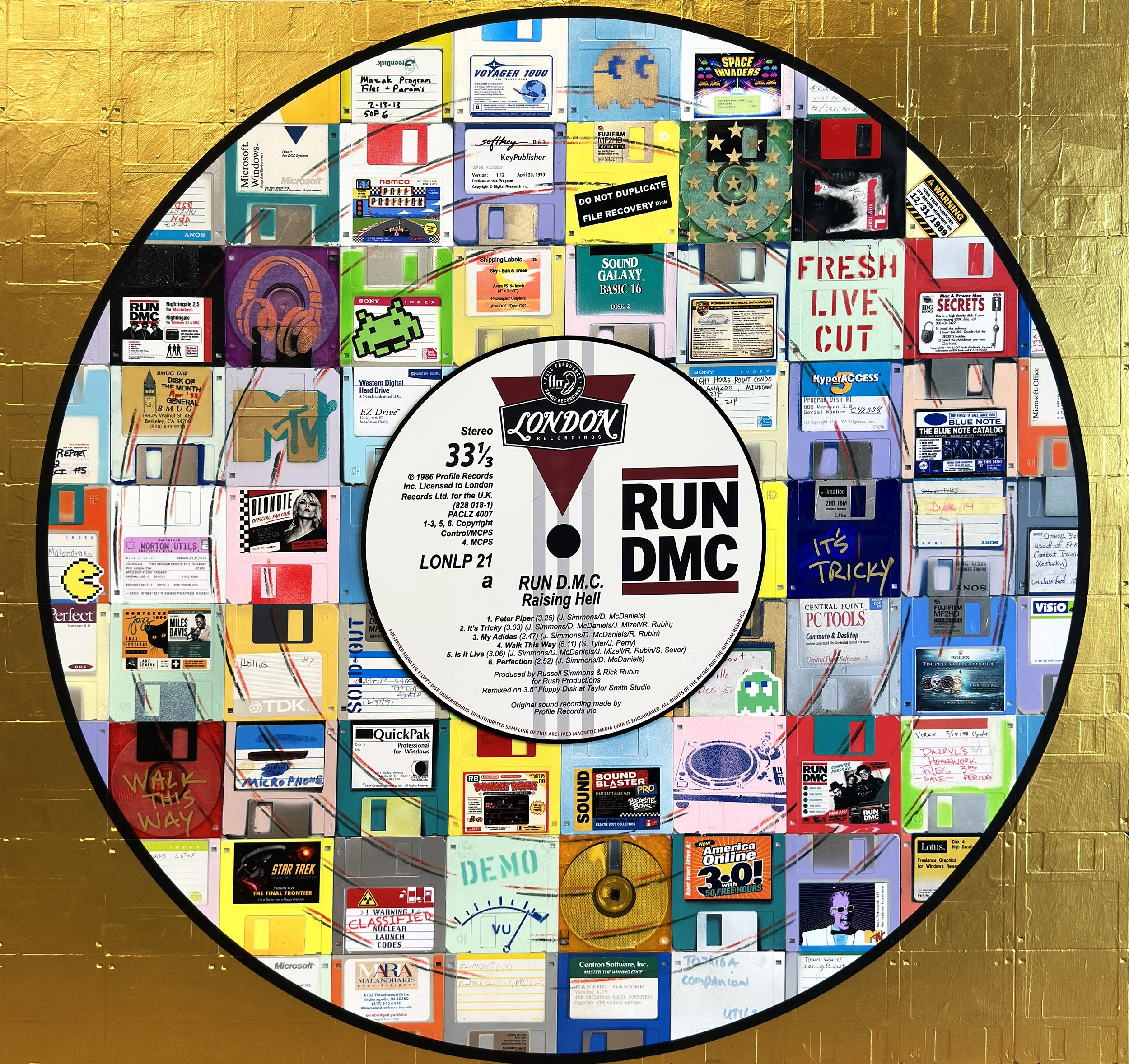
In Raising Hell (Side A), those histories occupy the same physical surface. Ninety vintage floppy disks—carrying obsolete software, handwritten labels, corporate graphics and traces of previous use—surround a custom aluminum center disc that reimagines the visual language of the record itself.
The materials belong unmistakably to their time, yet both now carry something larger than the information they were originally designed to hold. Music, technology and cultural memory converge in objects that once represented the present and have since become artifacts of it.
VINYL SERIES
Run DMC
Raising Hell
Side A
33 × 35.5 inches
Mixed media on vintage 3.5-inch floppy disks
2026
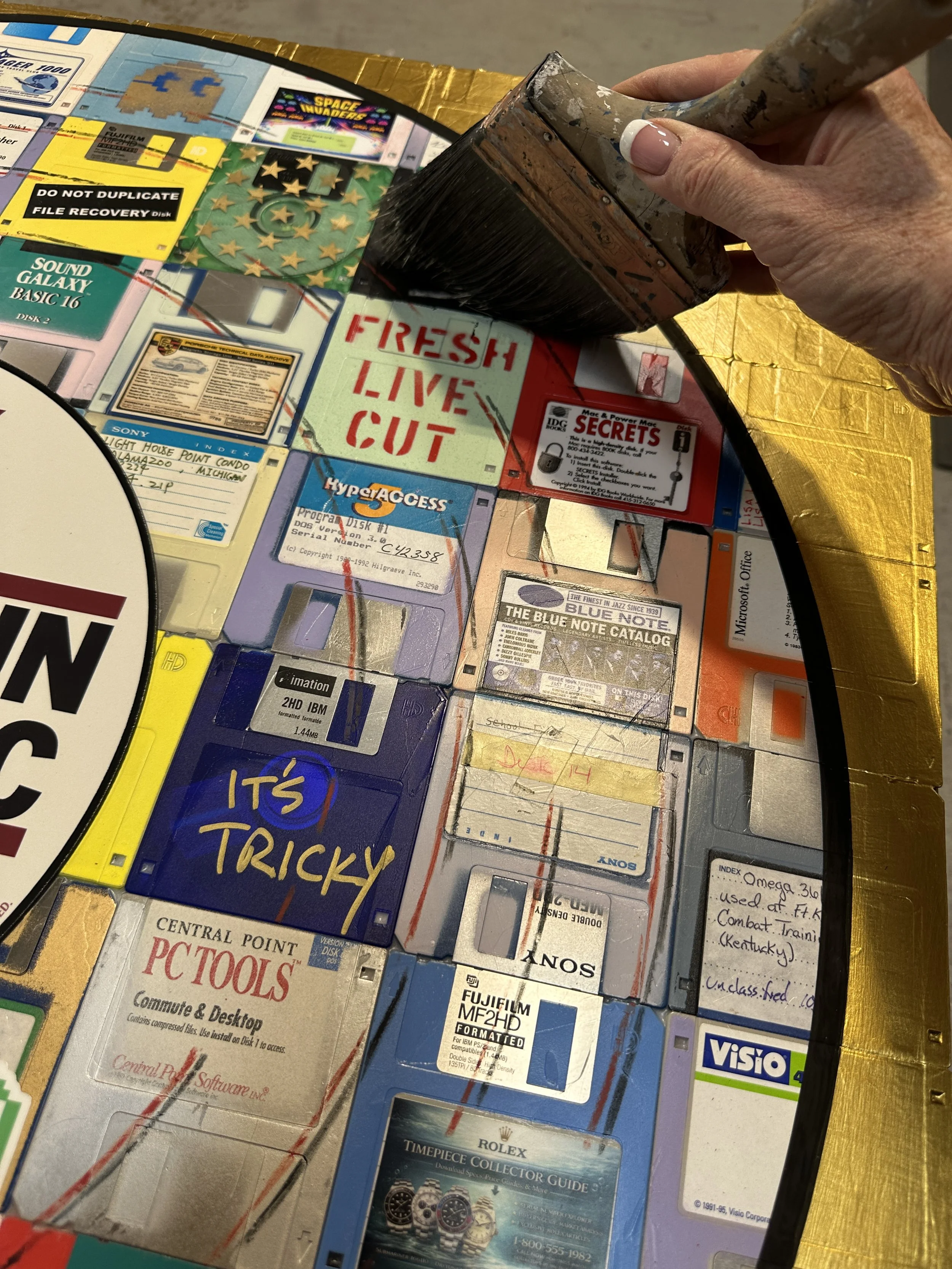
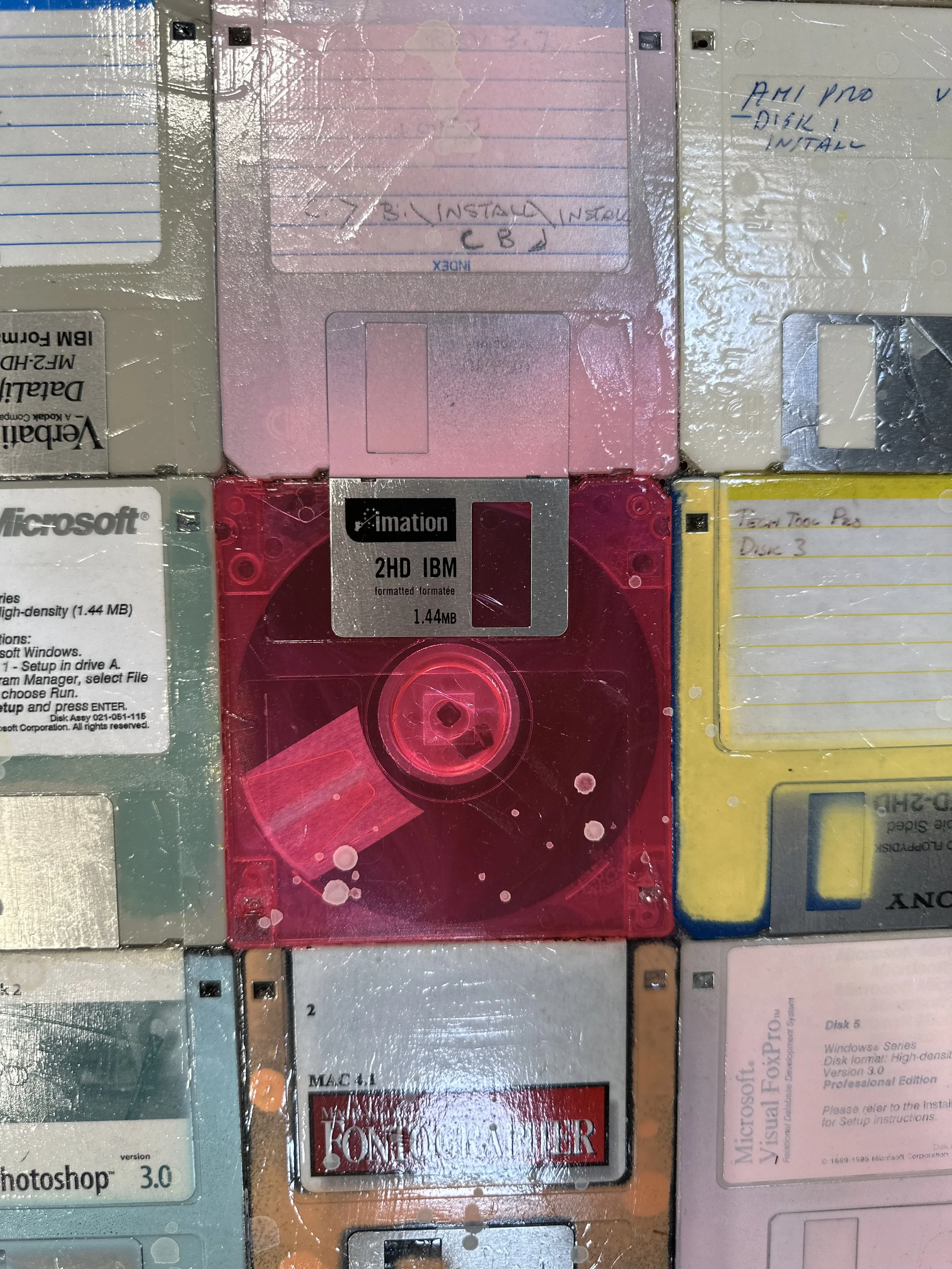

Run DMC – Raising Hell (Side A), shown on the gallery wall. Taylor Smith, Vinyl Series, 33 × 35.5 × 2 in.
RAISING HELL
Released in 1986, Raising Hell marked a pivotal moment in the emergence of hip-hop as a major force in American popular culture. Run DMC brought an uncompromising visual and musical identity into the mainstream, while the album’s fusion of rap, rock and stripped-down production helped expand the possibilities—and the audience—of the genre.
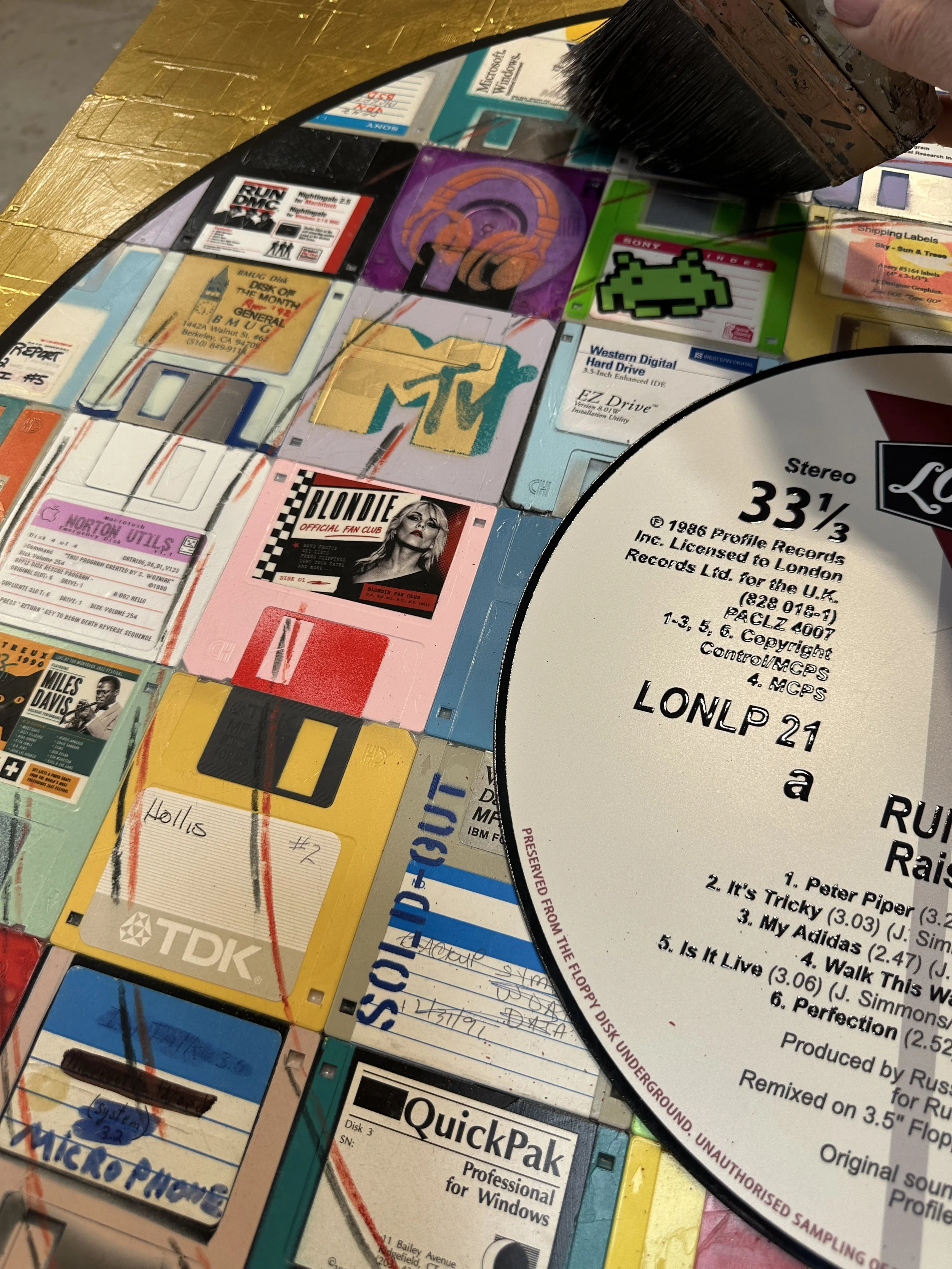
Raising Hell (Side A) turns from the familiar album cover to the physical record itself. Ninety vintage 3.5-inch floppy disks form the surface of the work around a custom-cut aluminum center disc, where Smith reconstructs and reimagines the visual language of the London Records label. The stark geometry and typography of the original pressing are retained as points of recognition while newly composed details introduce the language of software, data storage and obsolete technology.
Side A carries a remarkable sequence: “Peter Piper,” “It’s Tricky,” “My Adidas,” “Walk This Way,” “Is It Live” and “Perfection.” The songs capture a moment when hip-hop was simultaneously establishing its own cultural authority and moving decisively into a much larger public consciousness. “Walk This Way,” in particular, became an unusually visible point of contact between musical cultures that had often been treated as separate.
The surrounding floppy disks belong to essentially the same technological era. Once symbols of innovation and the emerging personal-computer age, they now survive as obsolete objects carrying fragments of forgotten software, handwritten notes, corporate identities and anonymous personal histories. In Raising Hell (Side 1), these artifacts of digital memory surround a recording that helped redefine the cultural landscape of 1986, bringing two histories of transformation into the same physical object.
STUDIO NOTES
Raising Hell immediately interested me for the Vinyl Series because the album and the floppy disk occupy such a remarkably compatible moment in cultural history. The record was released in 1986, precisely when personal computers and floppy disks were becoming increasingly visible parts of everyday life. Both represented forms of culture that were rapidly changing the world around them.
I developed the center label from the visual language of the London Records pressing, but—as with the other works in the series—I didn't want simply to reproduce a historic label. I reconstructed its typography, geometry and recording information while introducing my own details and references to floppy disks, software and data storage. I especially liked the graphic severity of the London label: the black, white and deep red create a strong visual counterpoint to the almost chaotic archive of colors, handwriting and obsolete graphics contained in the surrounding disks.
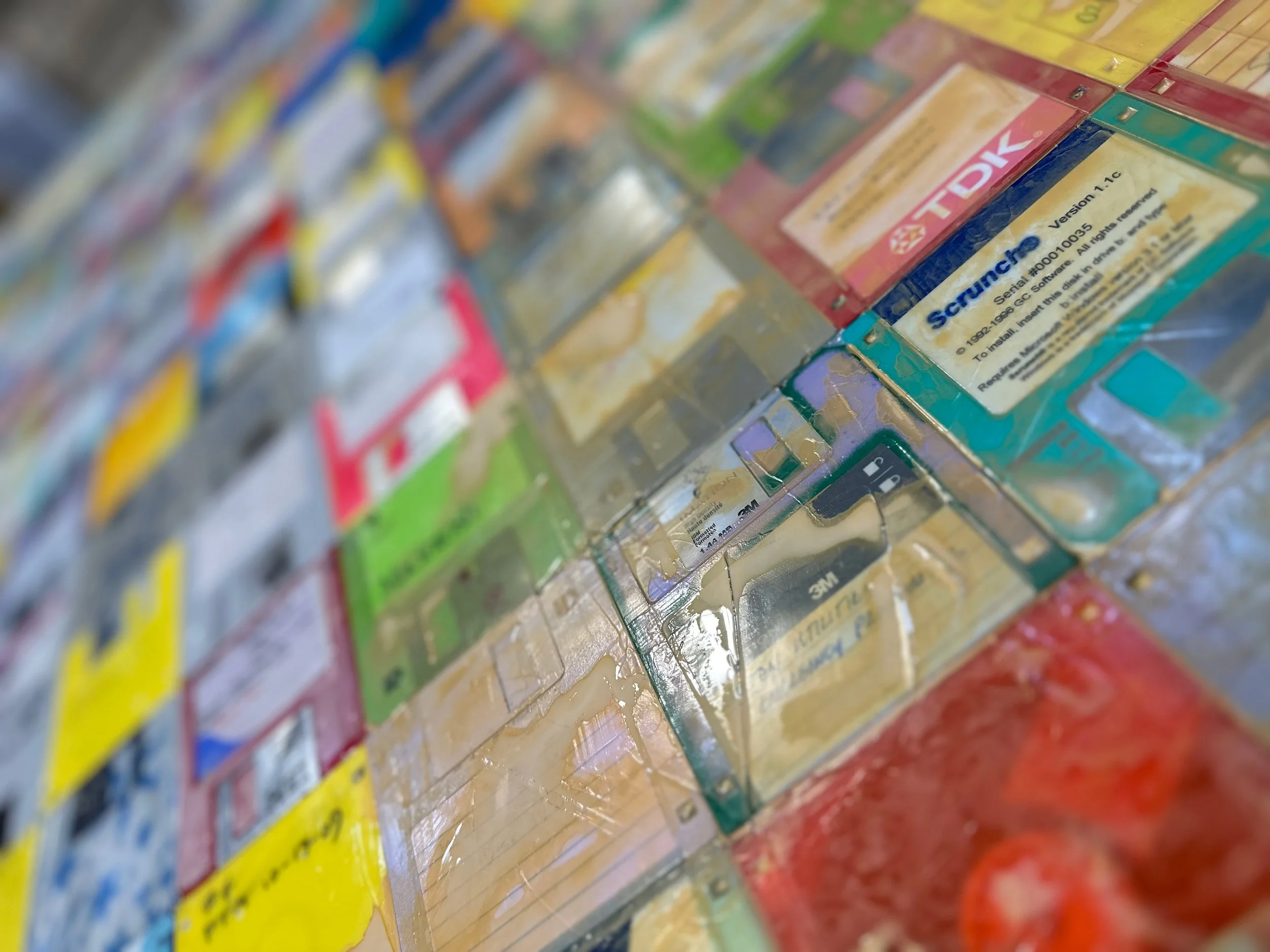
The disks themselves become particularly important in this work. Run DMC belongs to the same period as many of the objects embedded in the painting. Software, early computer graphics, games, handwritten files and familiar technology brands appear throughout the surface. They aren't illustrations of the album; they are actual surviving objects from the technological culture that existed alongside it.
That relationship is central to the Vinyl Series. I am interested in what happens when objects that once seemed completely ordinary survive long enough to become cultural artifacts. Raising Hell still sounds immediate, while the floppy disk—once a symbol of the future—has become almost archaeological. Bringing them together collapses that distance and allows the music, the technology and the visual culture of the period to occupy the same physical space.
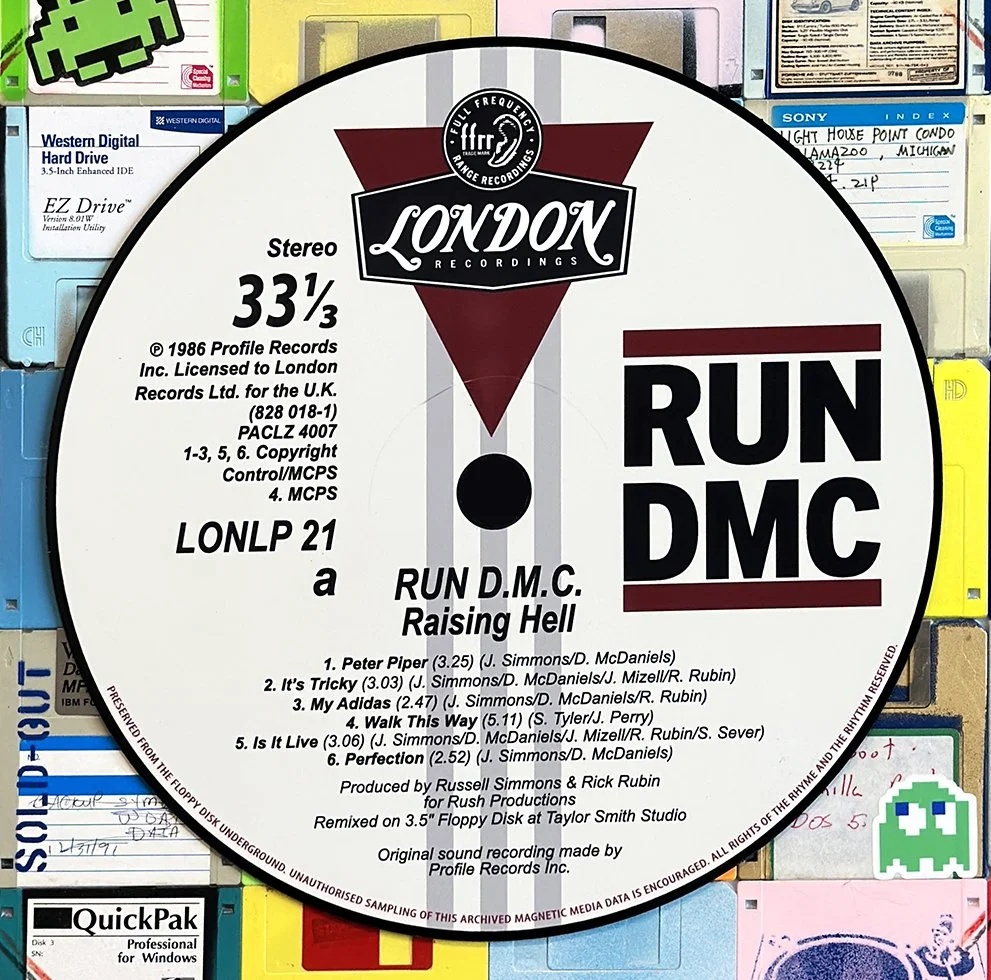
Detail: Run DMC – Raising Hell (Side A)