MEMORY HAS A MATERIAL
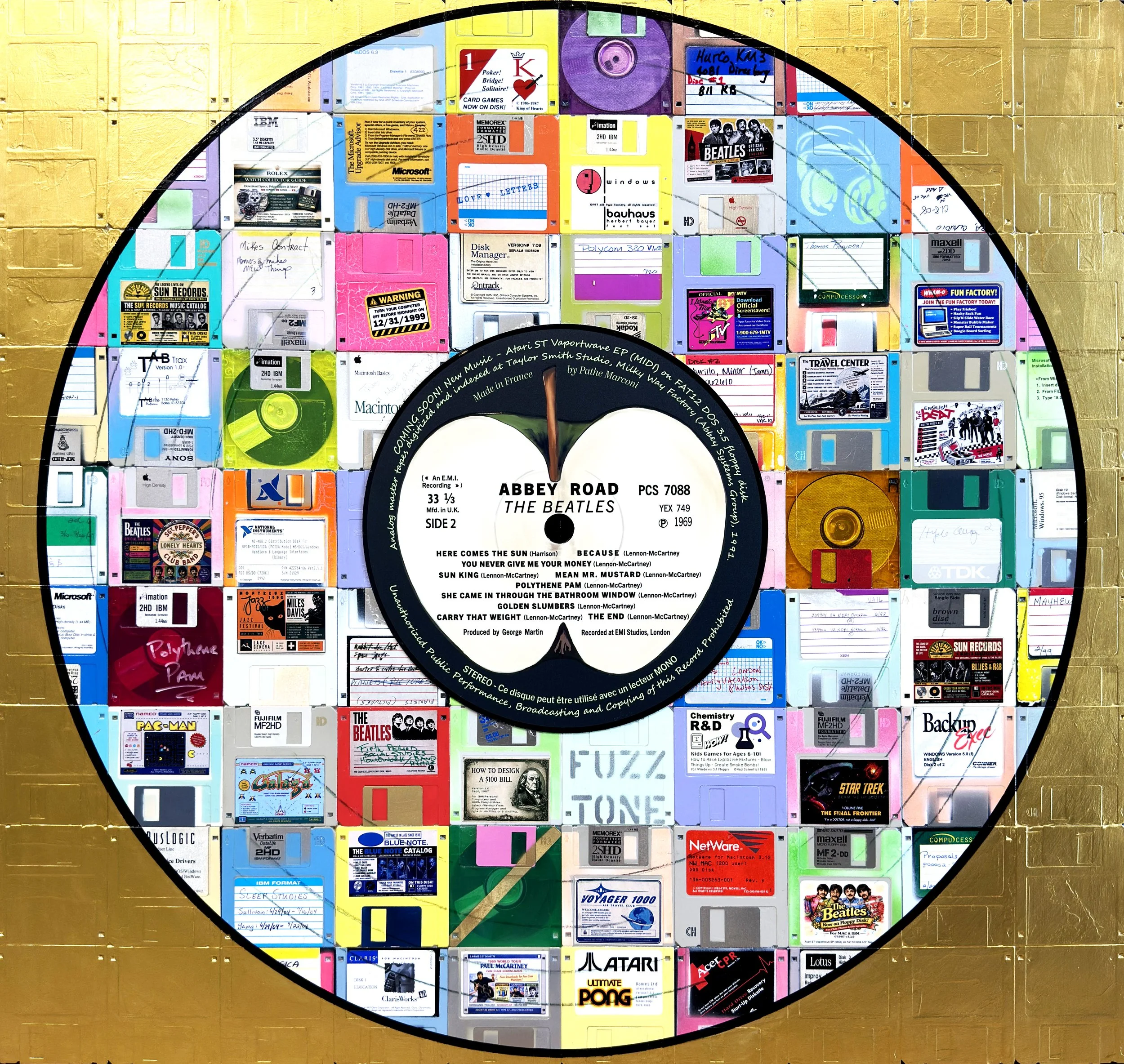
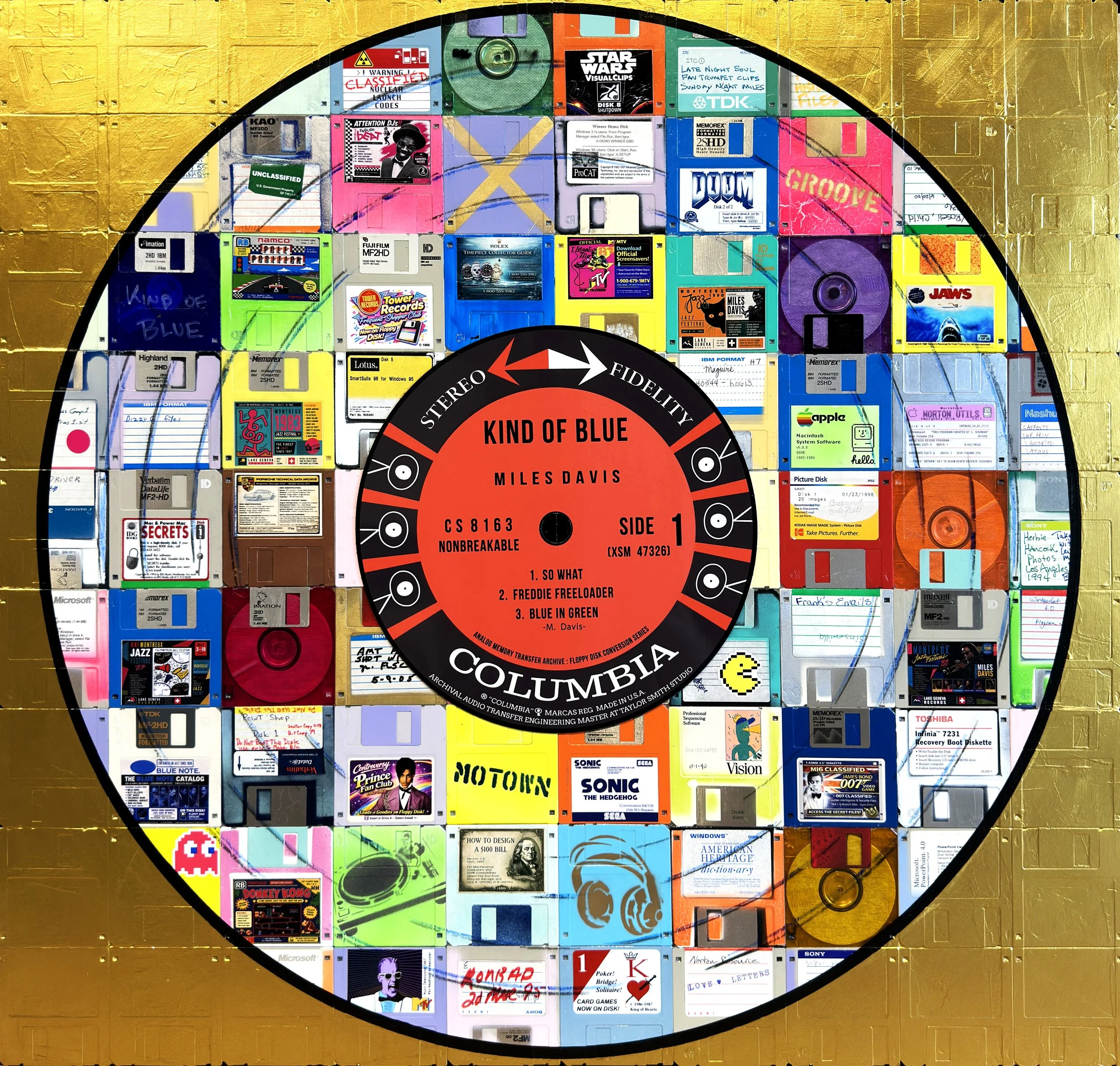
Kind of Blue (Side 1) transforms one of jazz music’s most enduring recordings into a physical dialogue between analog sound and early digital technology. Constructed from 90 vintage 3.5-inch floppy disks, the work surrounds a reimagined vinyl record center label with the colors, typography, labels and visual remnants of obsolete computer media.
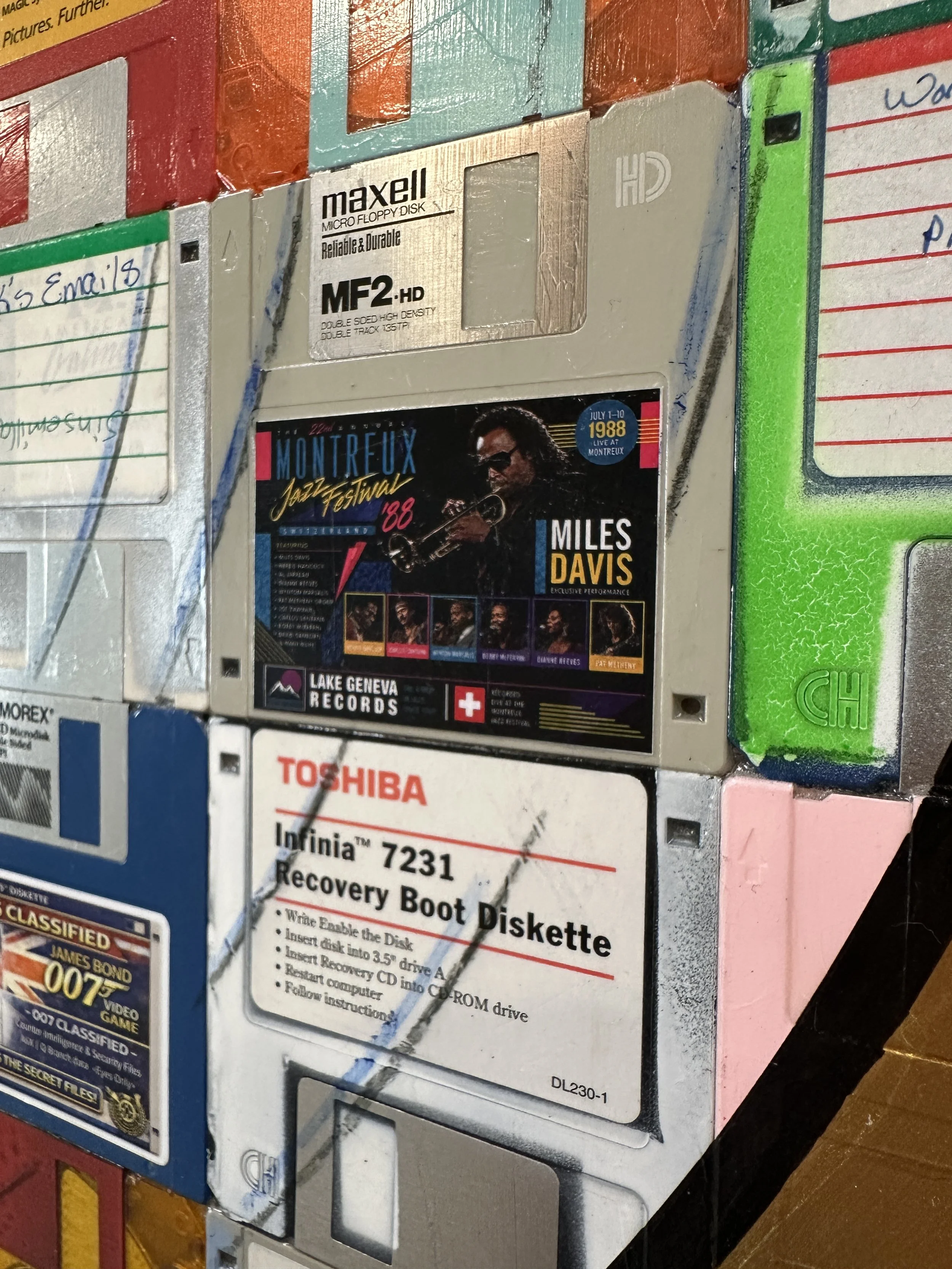
The result connects two technologies that shaped different generations of recorded memory—the vinyl record and the floppy disk—while drawing on the cultural legacy of Miles Davis’s landmark 1959 album. From a distance, the composition reads as an oversized record; up close, individual disks reveal an intricate archive of forgotten software, handwritten labels and technological ephemera.
VINYL SERIES
Miles Davis
Kind Of Blue
Side One
33 × 35.5 inches
Mixed media on vintage 3.5-inch floppy disks
2026
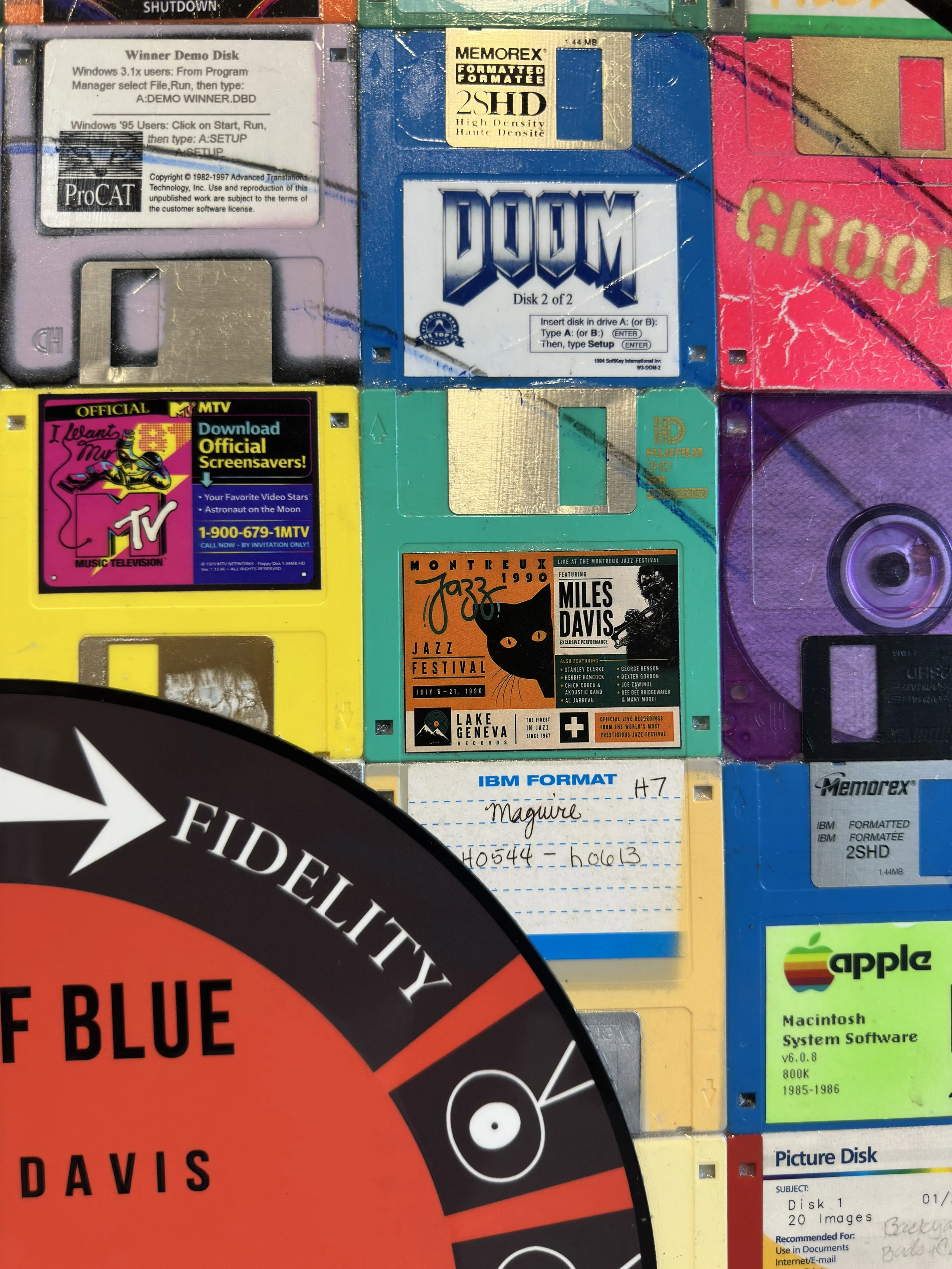
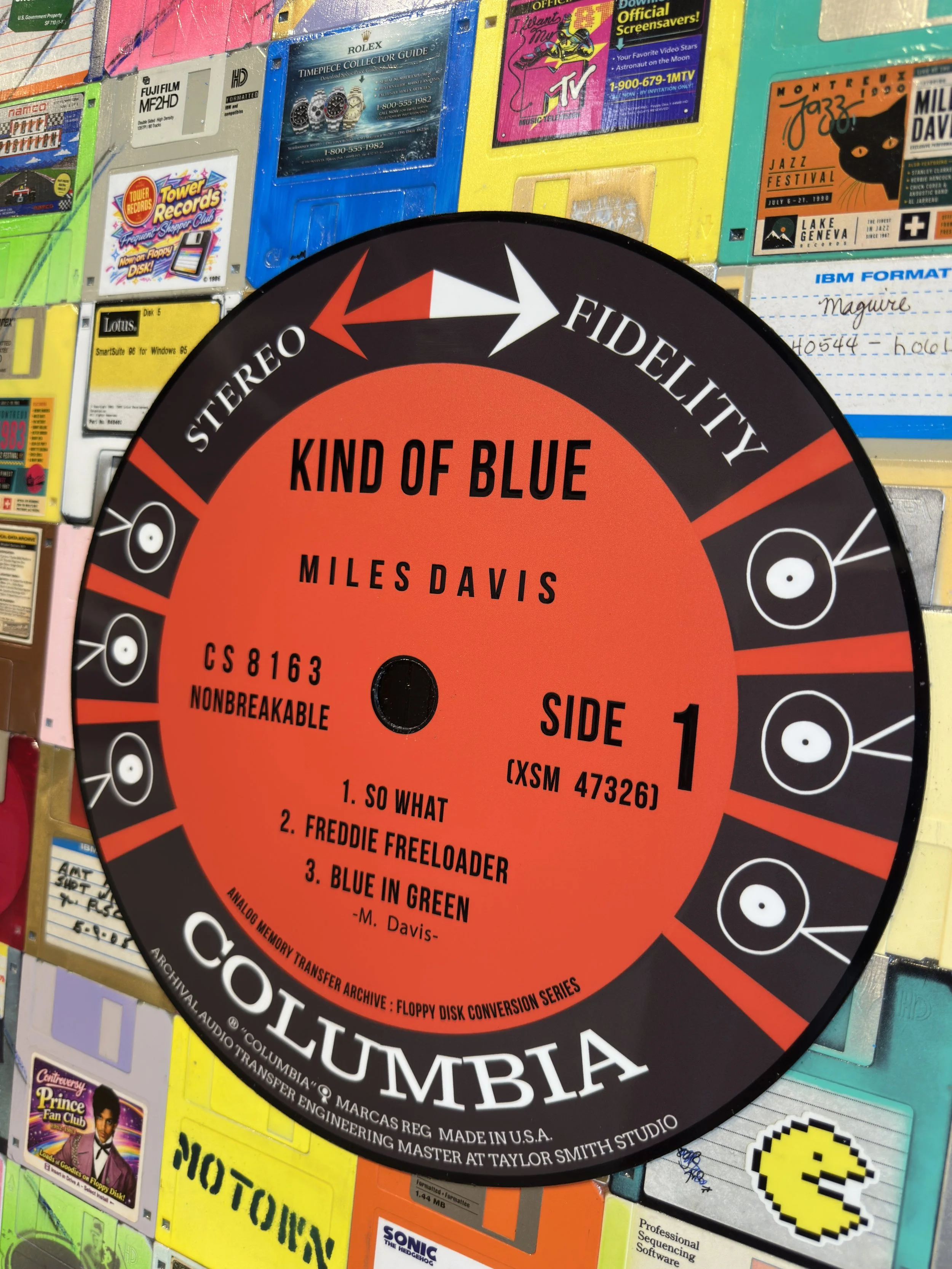

Kind of Blue (Side 1) shown in a residential music room. Taylor Smith, Vinyl Series, 33 × 35.5 × 2 in.
KIND OF BLUE
Released in 1959, Kind of Blue occupies an extraordinary place in the history of recorded music. Miles Davis and an exceptional group of musicians created an album whose restrained visual identity and unmistakable Columbia label became inseparable from a recording that would transcend the boundaries of jazz.
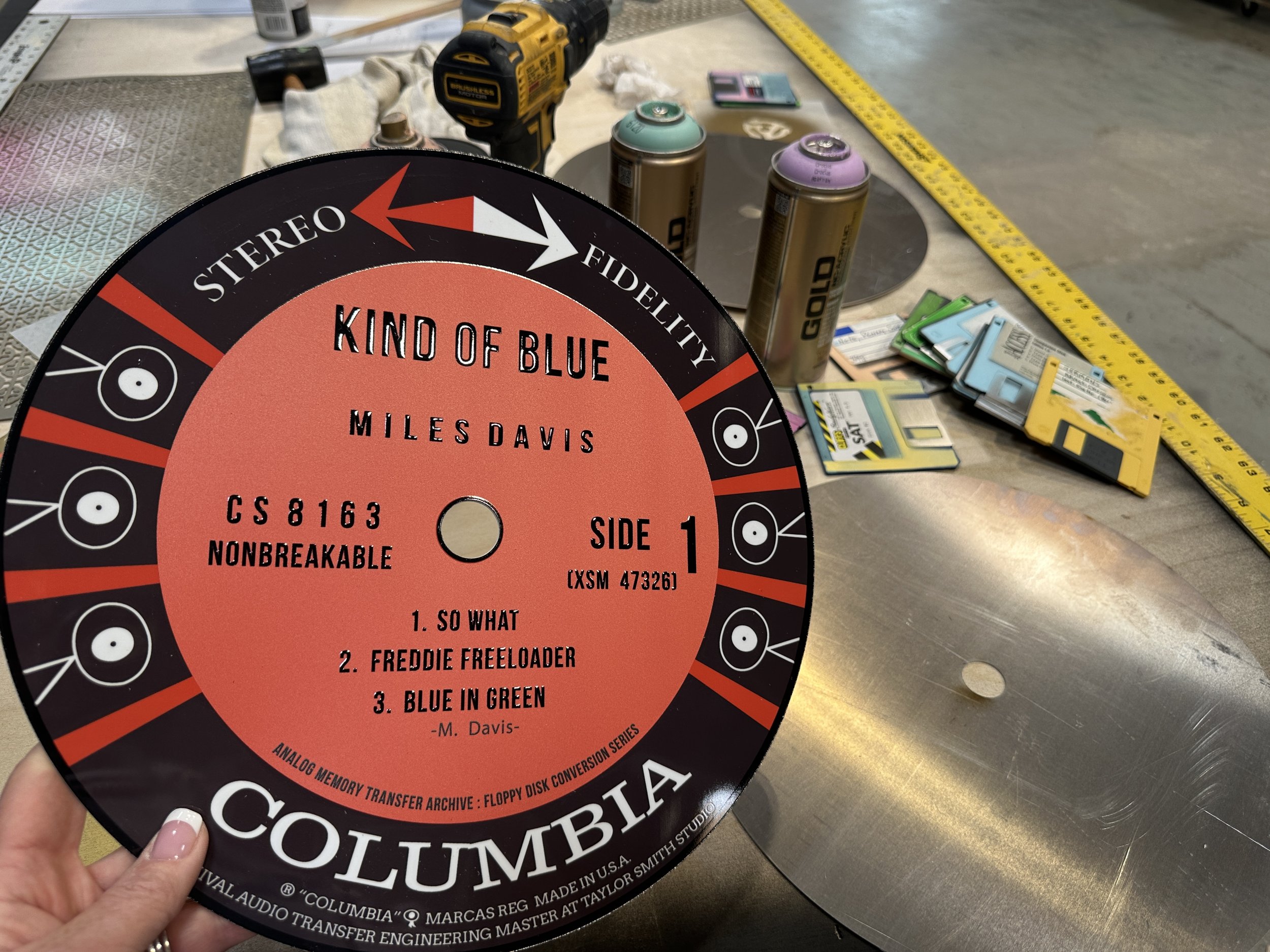
In Kind of Blue (Side 1), that history is reconstructed through another disappearing technology. Ninety vintage 3.5-inch floppy disks form the surface of the work, surrounding a custom-cut aluminum center disc. Rather than reproducing an original record label, Smith rebuilds and reimagines its visual language, bringing the physical vocabulary of vinyl into conversation with the later world of floppy disks, software and digital storage.
Side 1 contains “So What,” “Freddie Freeloader” and “Blue in Green”—three recordings that helped establish the album’s distinctive identity. That musical history is set against another archive of memory: floppy disks that once carried documents, images, software, correspondence and countless fragments of everyday life.
Rather than treating the album as memorabilia, the work uses its familiarity as a point of entry. Music, obsolete technology and personal history become layered into a new physical object, connecting two disappearing formats through the cultural memory attached to each.
STUDIO NOTES
Miles Davis has a particularly personal place in my own history. While living and studying art in Europe during the 1980s, I saw him perform several times at the Montreux Jazz Festival in Switzerland. His music—and the experience of hearing it performed live during those formative years—left a profound impression on me as a young artist.
On one of those trips to Montreux, I had the remarkable opportunity to meet Miles at Harry’s New York Bar in the basement of the Fairmont Le Montreux Palace. I was about 24 years old, standing at the bar with a martini in my hand, when I found myself talking with Miles Davis about art. Decades later, it remains one of the most memorable encounters of my younger life.
That personal connection inevitably found its way into Kind of Blue (Side 1). Released in 1959, Kind of Blue occupies an extraordinary place in the history of recorded music. Miles and an exceptional group of musicians created an album that transcended the boundaries of jazz and became part of our broader cultural memory.
In this work, I reconstruct that history through another disappearing technology. Ninety vintage 3.5-inch floppy disks form the surface, surrounding a custom-cut aluminum center disc. Rather than simply reproducing the original record label, I rebuild and reimagine its visual language, bringing the physical vocabulary of vinyl into conversation with the later world of floppy disks, software and digital storage.
Side 1 contains “So What,” “Freddie Freeloader” and “Blue in Green”—three recordings that helped establish the album’s distinctive identity. That musical history is set against another archive of memory: floppy disks that once carried documents, images, software, correspondence and countless fragments of everyday life.
For me, then, this work is not an exercise in music memorabilia or nostalgia. It brings together several forms of memory: the cultural memory embedded in a landmark recording, the technological memory contained in obsolete media, and my own memory of being a young artist in Europe—hearing Miles Davis perform and, for one extraordinary moment in Montreux, standing at a bar talking with him about art.
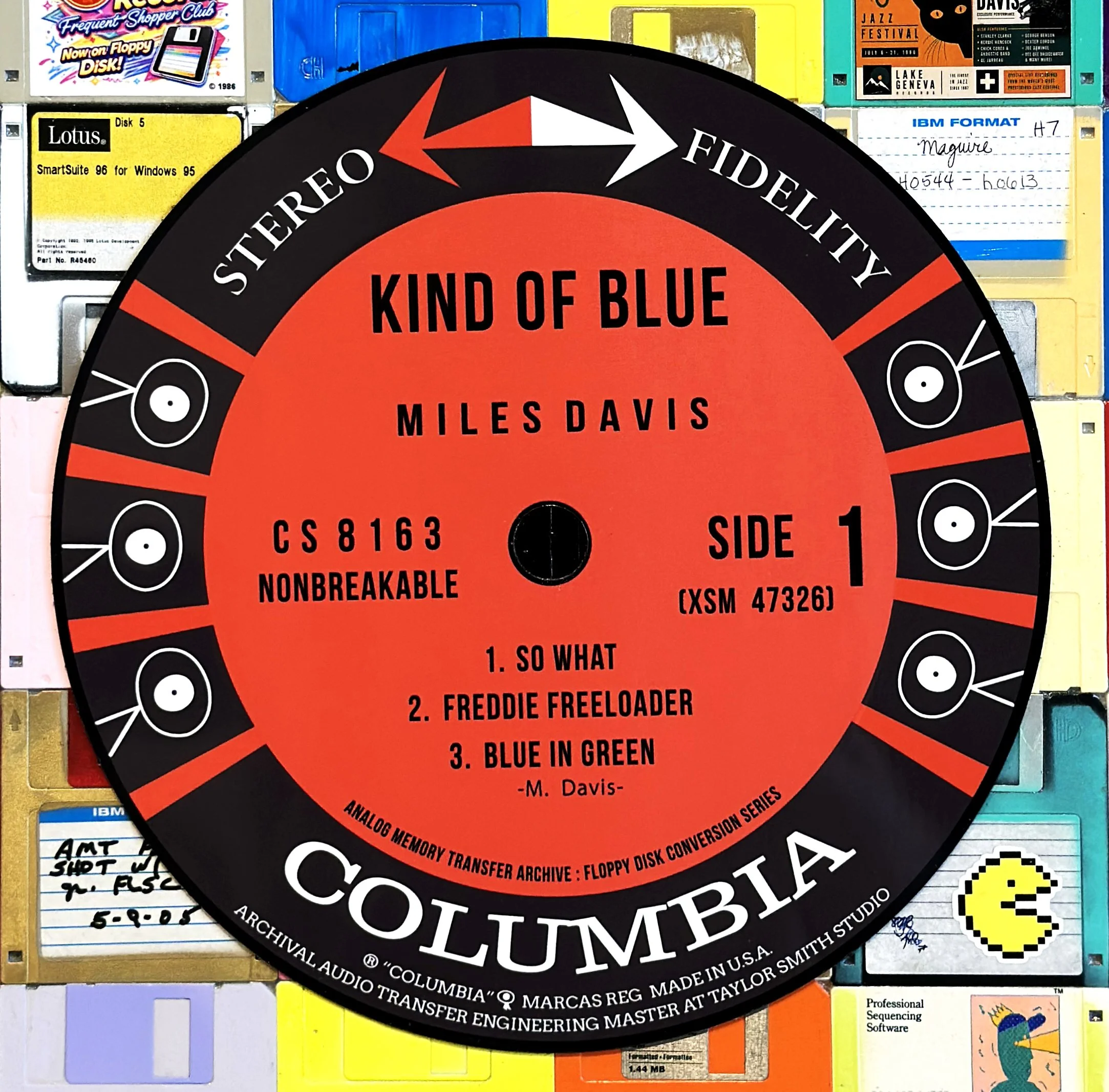
Detail of the reimagined center label for Kind of Blue (Side 1)