MEMORY HAS A MATERIAL
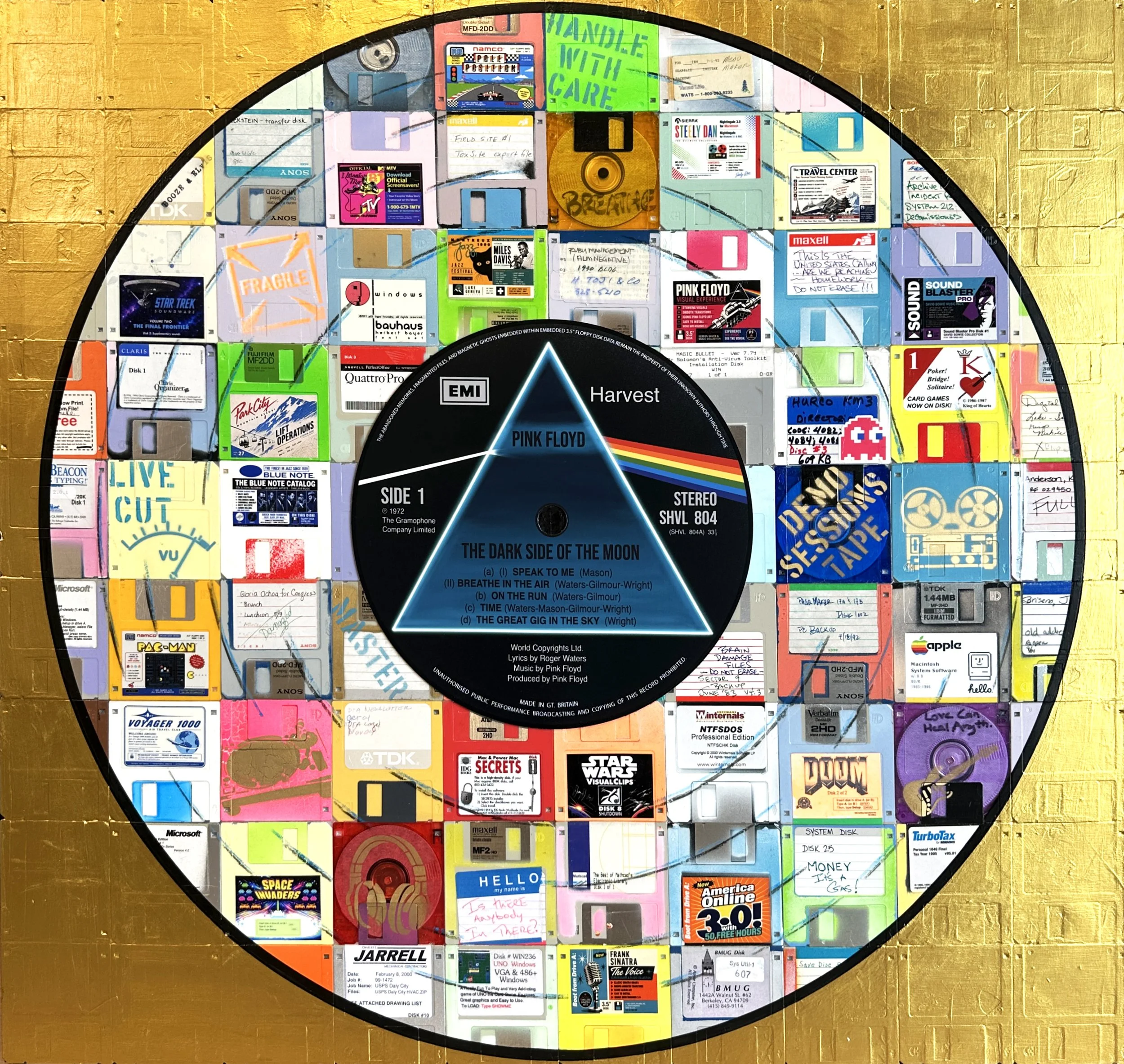
The Dark Side of the Moon occupies a rare place in cultural memory—an album whose imagery has become almost as enduring as its music. In this work, that familiarity is reconstructed through ninety vintage floppy disks, bringing together two physical technologies that once carried information, sound and experience before being displaced by the digital world. At the center, I reimagine the record label from the ground up, rebuilding its typography, graphics and period details while introducing references to the language of the floppy-disk era. The result is not a reproduction of the original record, but a dialogue between different generations of stored memory—one preserved in grooves, another once encoded magnetically—each now surviving as an object long after the technology that made it essential has begun to disappear.
VINYL SERIES
Pink Floyd
Dark Side Of The Moon
Side One
33 × 35.5 inches
Mixed media on vintage 3.5-inch floppy disks
2026
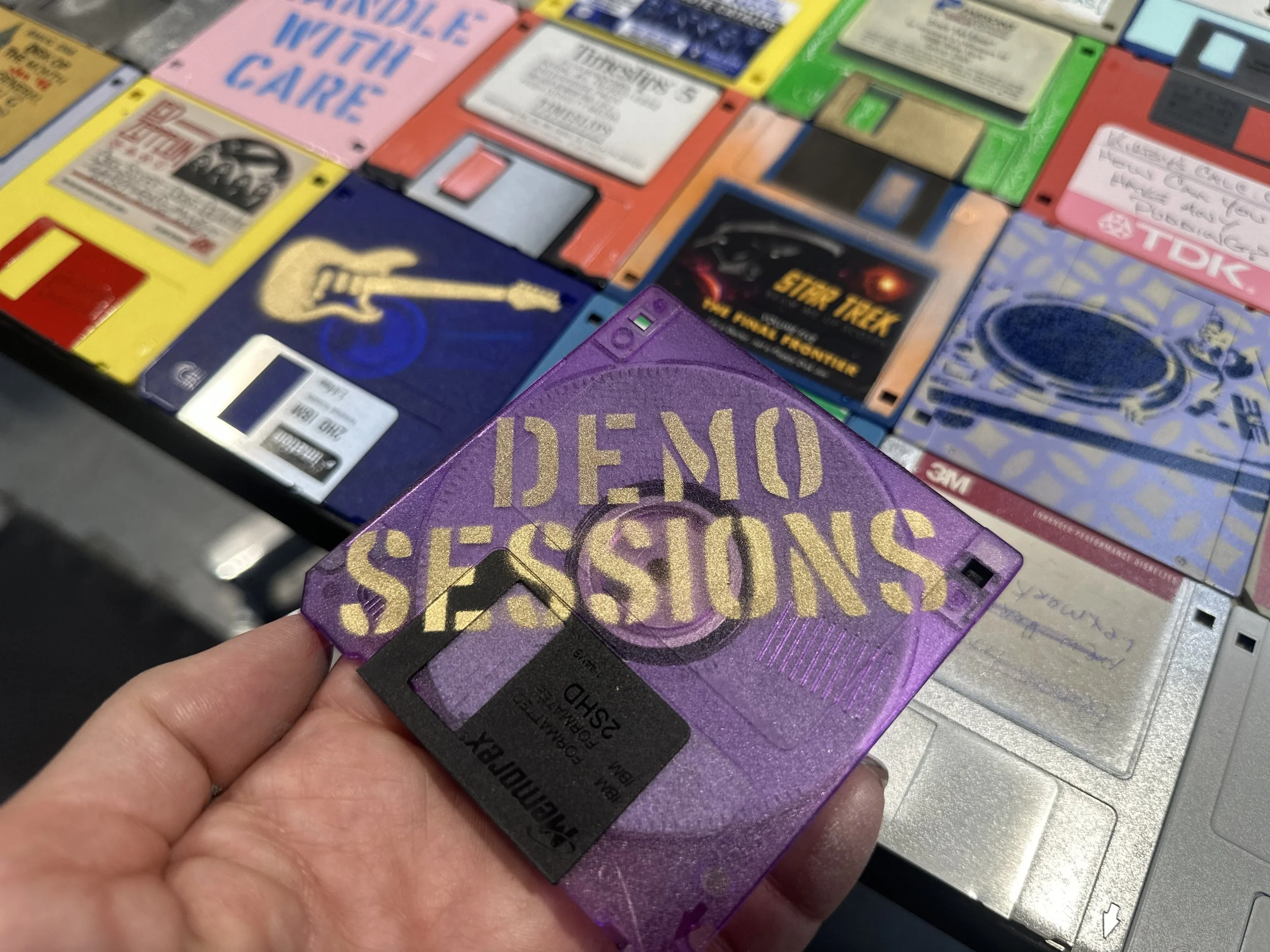
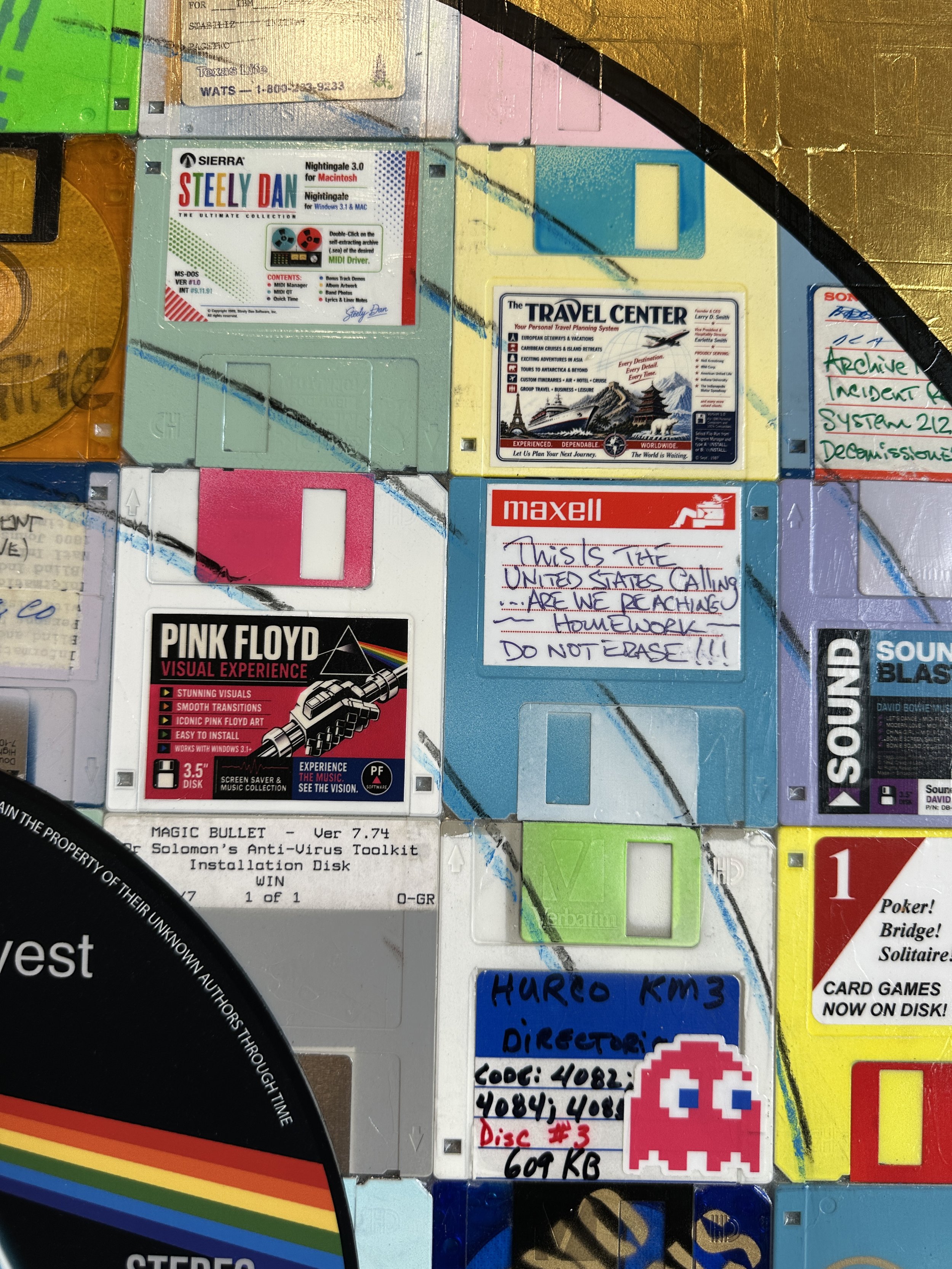
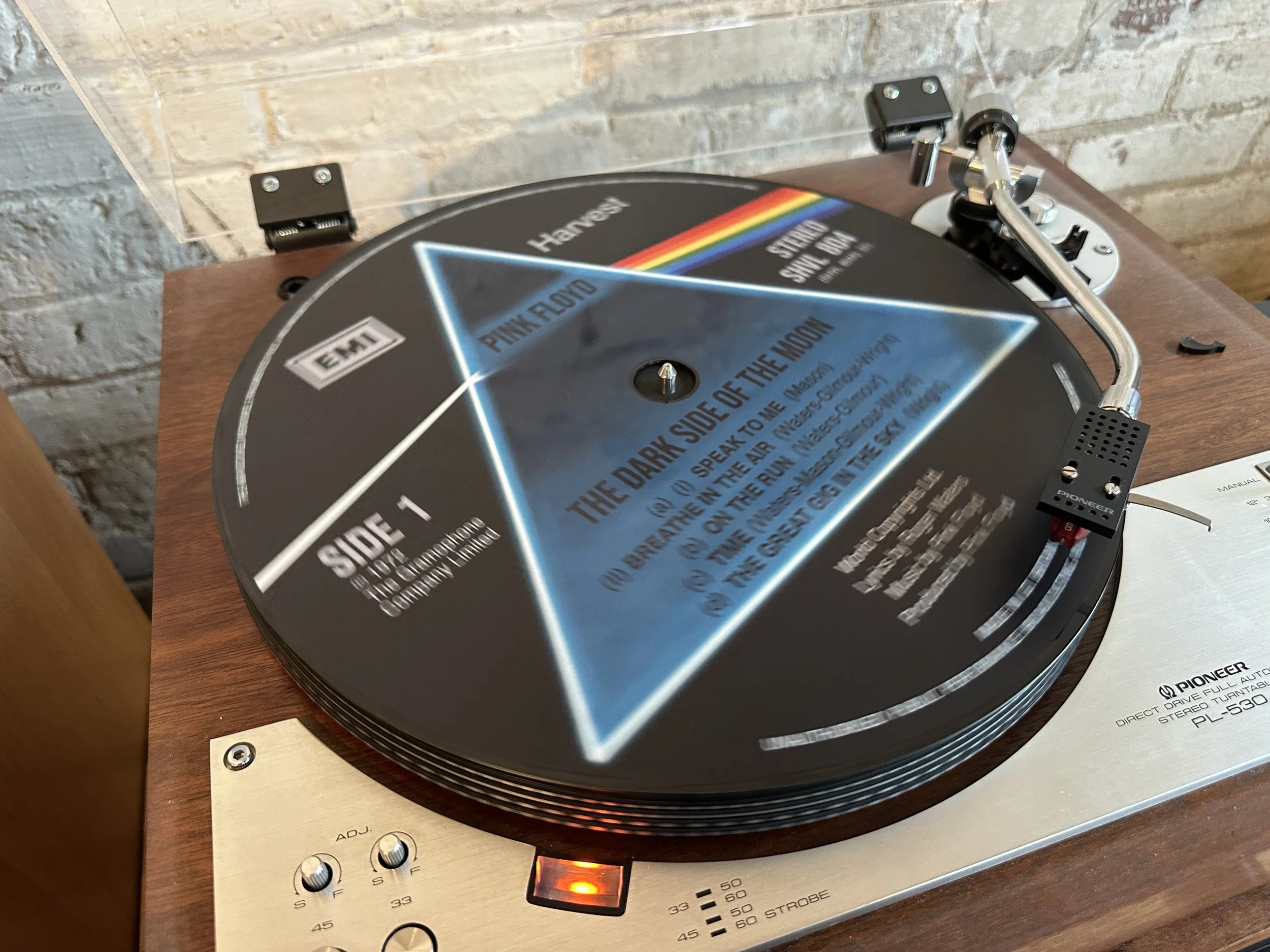

The Dark Side of the Moon (Side 1) from Taylor Smith’s Vinyl Series, shown in a contemporary interior.
DARK SIDE OF THE MOON
Few albums have become as deeply embedded in visual culture as The Dark Side of the Moon. Released in 1973, its prism, spectrum and black field have transcended the album itself, becoming a graphic language recognizable across generations. The record also emerged at a moment when recording technology was becoming increasingly central to the construction of music, making the album particularly resonant within a body of work concerned with memory, media and technological change.
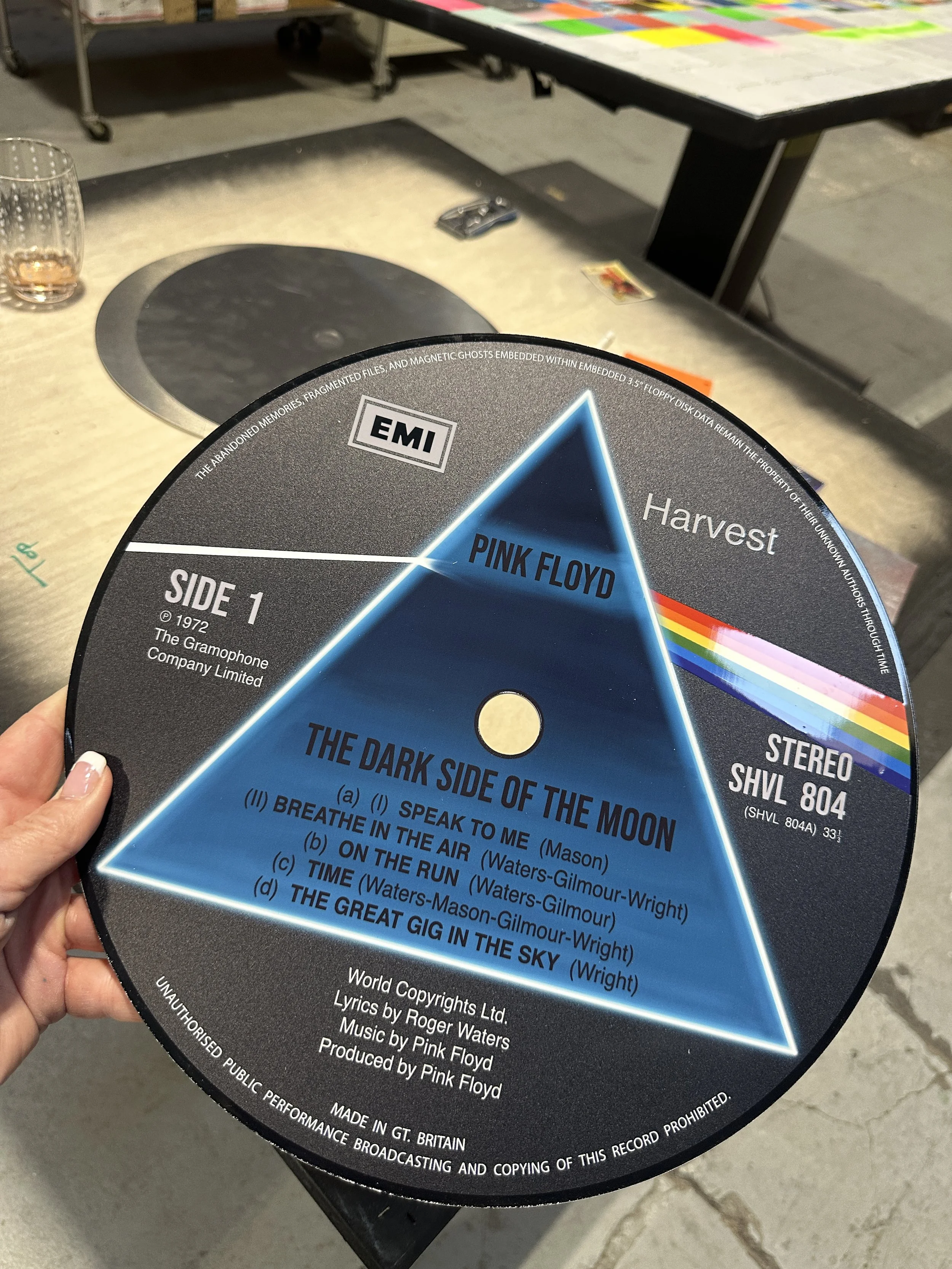
The Dark Side of the Moon (Side 1) turns from the familiar album cover to the physical record itself. Ninety vintage 3.5-inch floppy disks form the surface of the work around a custom-cut aluminum center disc, where Smith reconstructs and reimagines the visual language of an early 1973 British Harvest pressing. The prism from the album cover is brought into the label itself where it never previously existed, surrounding the Side 1 sequence from “Speak to Me” and “Breathe (In the Air)” through “Time” and “The Great Gig in the Sky,” while original recording information coexists with newly invented references to data, memory and obsolete technology.
The result brings two generations of recorded information into direct contact. A vinyl record from the analog era is reconstructed through floppy disks that came to symbolize a later digital one, while the prism becomes a point of intersection between them. Both technologies once promised a way to capture, store and replay experience; here, their obsolete physical forms become the material through which cultural memory is preserved.
STUDIO NOTES
The Dark Side of the Moon felt almost inevitable for the Vinyl Series because the album is so deeply connected to ideas of time, technology and memory. The prism is one of those rare images that can trigger recognition before you even see the words Pink Floyd. I wanted to work with that familiarity without simply reproducing an image everyone already knows.
I became especially interested in bringing the prism away from the album cover and into the physical language of the record itself. I developed the center disc around an early British Harvest label, then reconstructed it so the prism, spectrum, typography and recording information could coexist with details that belong entirely to my own work. Some references are immediately recognizable; others reveal themselves only when you get close. That process of discovery is important to me. I want the work to feel familiar from across the room and increasingly strange and layered as you approach it.
There is also something particularly appropriate about rebuilding The Dark Side of the Moon with floppy disks. The album was created during a period of extraordinary experimentation with recording technology, while the disks surrounding the center were themselves once tools for storing information that seemed remarkably advanced in their own time. Both eventually became physical artifacts of technological eras. Bringing them together allows me to use those obsolete objects not simply as nostalgic references, but as containers for memory—objects that still carry evidence of what we once believed was modern.
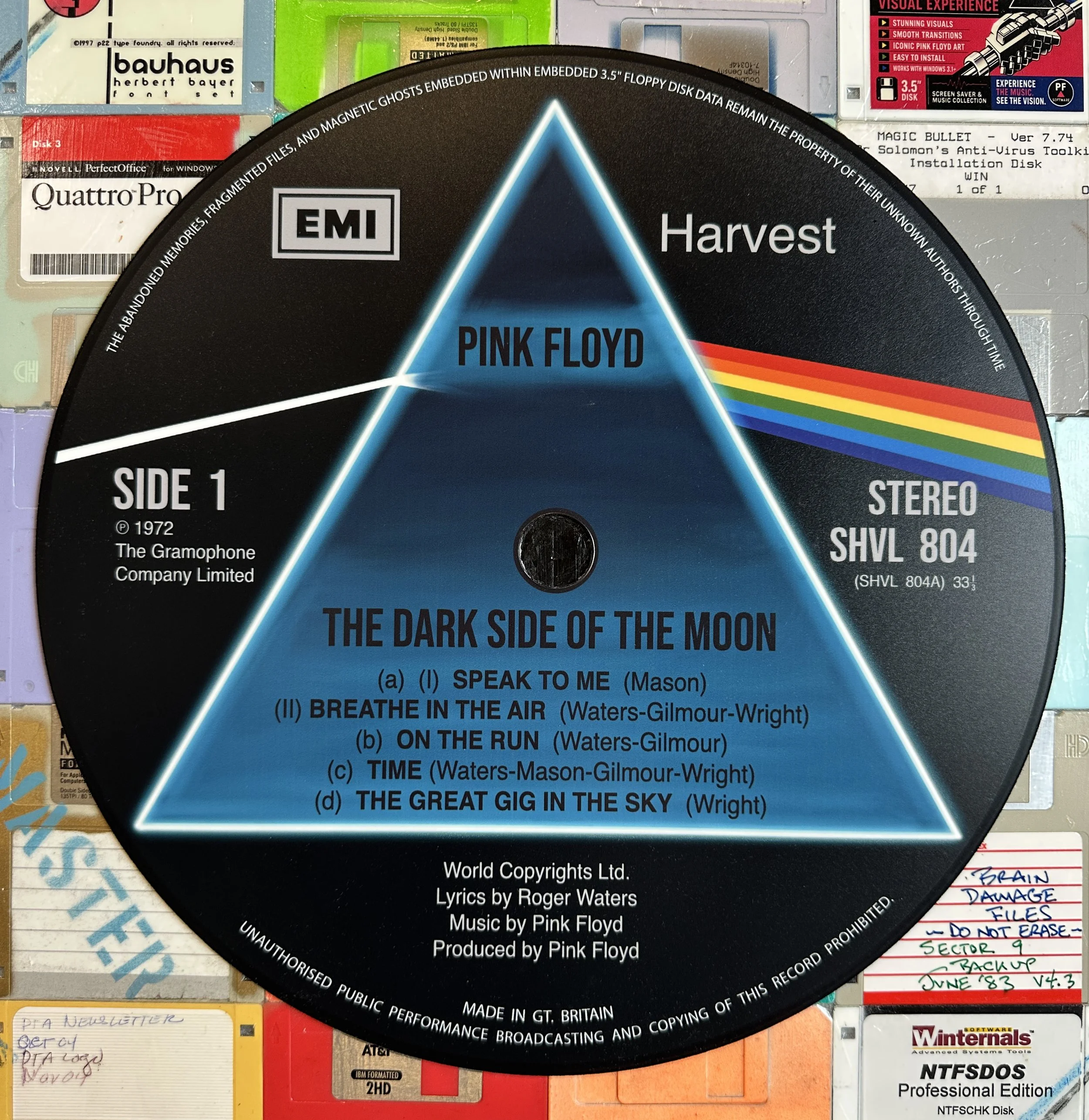
Detail of the reimagined center disc for Pink Floyd — The Dark Side of the Moon (Side 1). Taylor Smith, Vinyl Series.