MEMORY HAS A MATERIAL
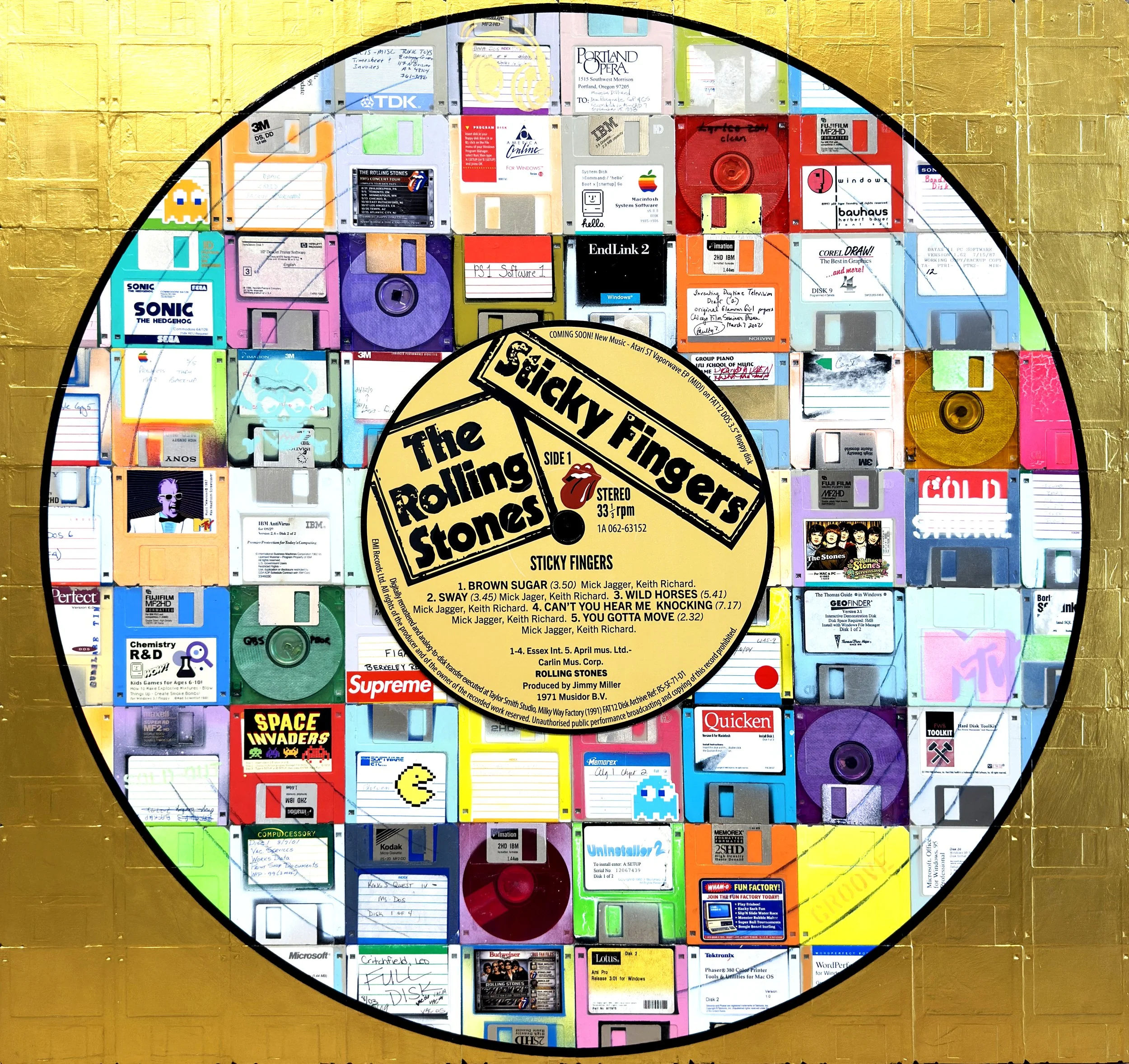
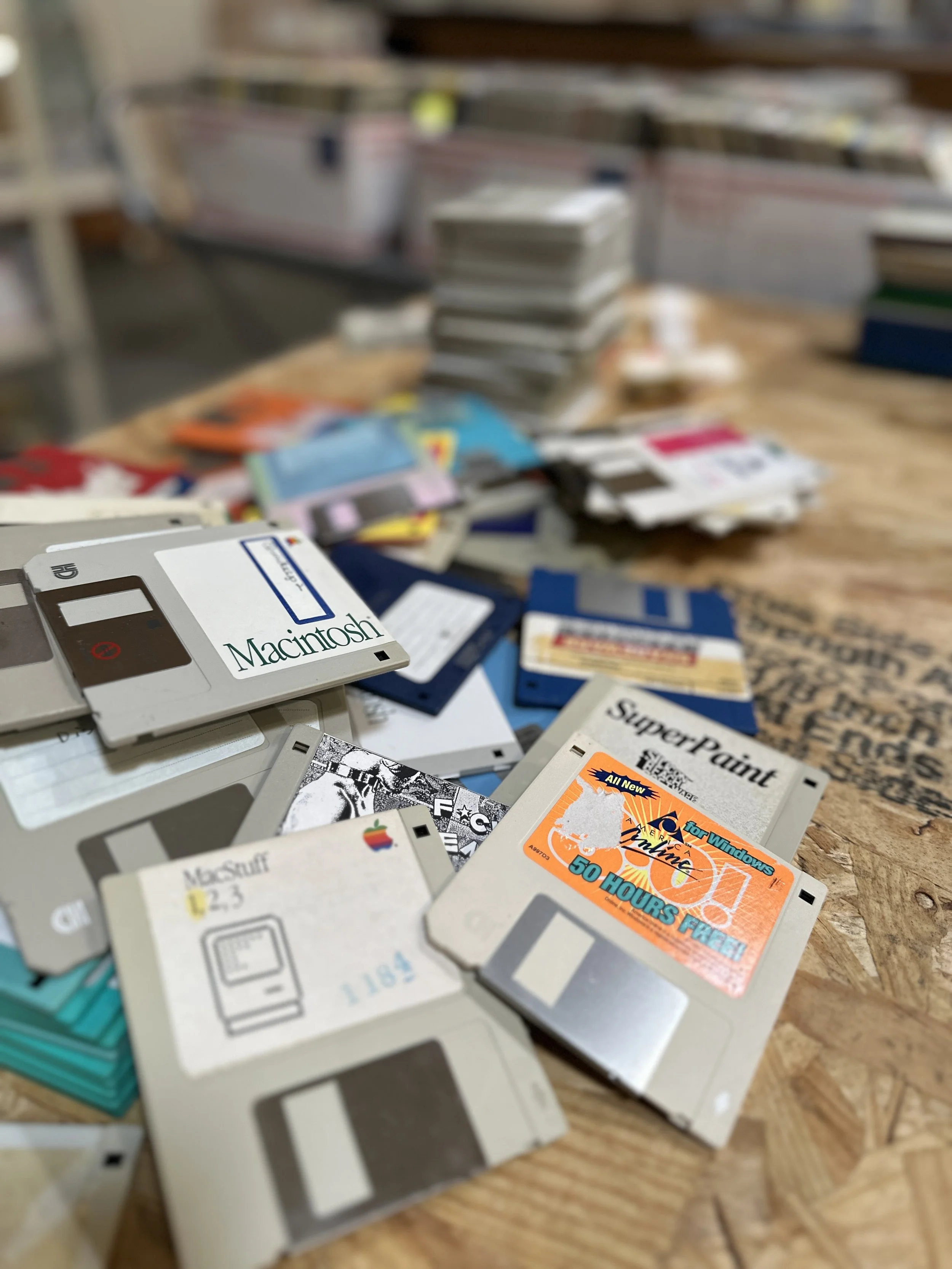
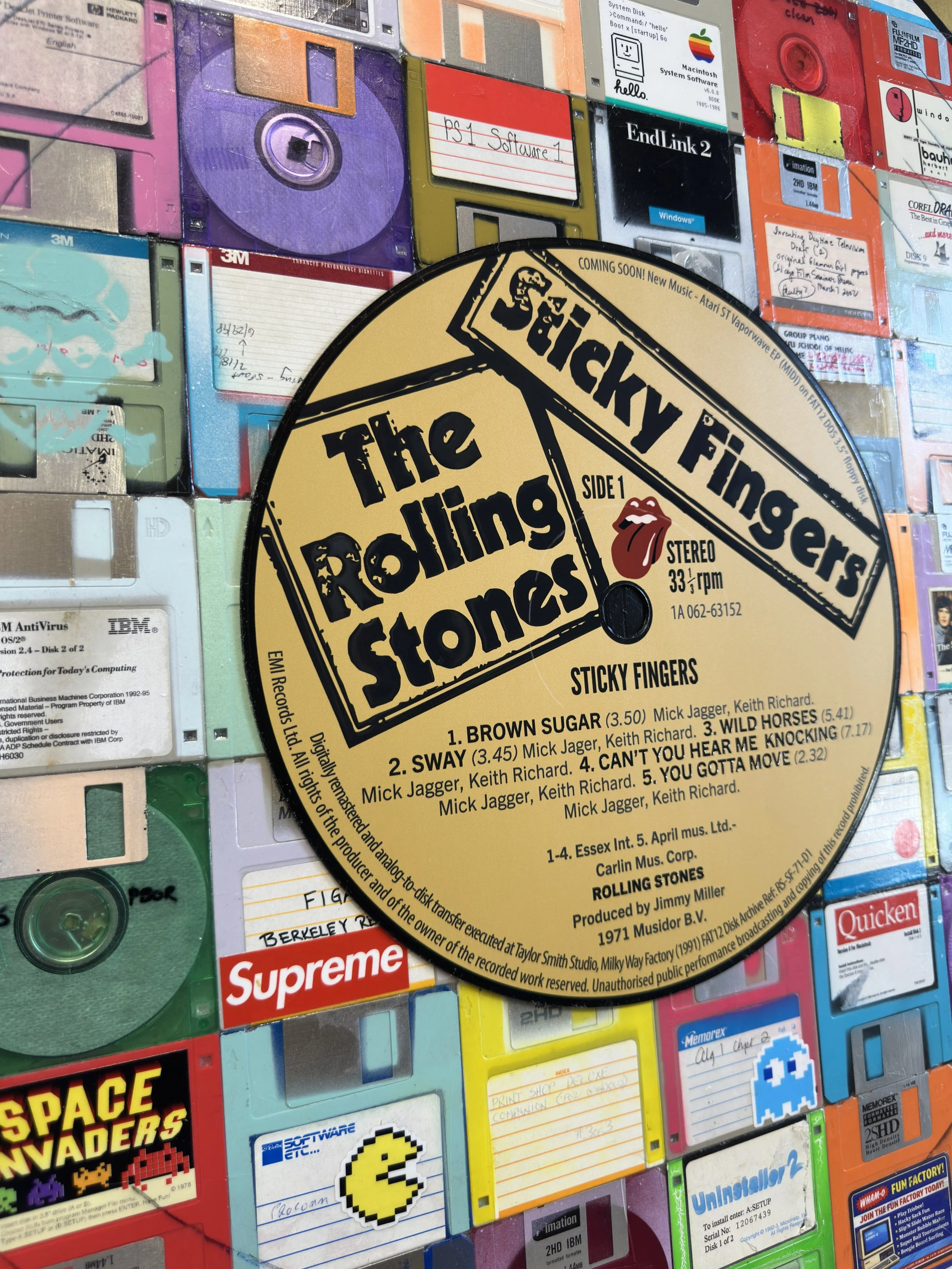
Sticky Fingers (Side 1) transforms one of rock music’s most recognizable albums into a collision of analog music culture and early digital technology. Constructed from 90 vintage floppy disks, the work surrounds a reimagined vinyl record center label with the colors, typography, labels and visual remnants of obsolete computer media.
The result bridges two technologies that defined different generations—the vinyl record and the floppy disk—while drawing on the cultural memory surrounding The Rolling Stones’ landmark 1971 album. From a distance, the composition reads as an oversized record; up close, individual disks reveal an intricate archive of forgotten software, brands, handwritten labels and technological ephemera.
VINYL SERIES
The Rolling Stones
Sticky Fingers
Side One
33 × 35.5 inches
Mixed media on vintage 3.5-inch floppy disks
2026
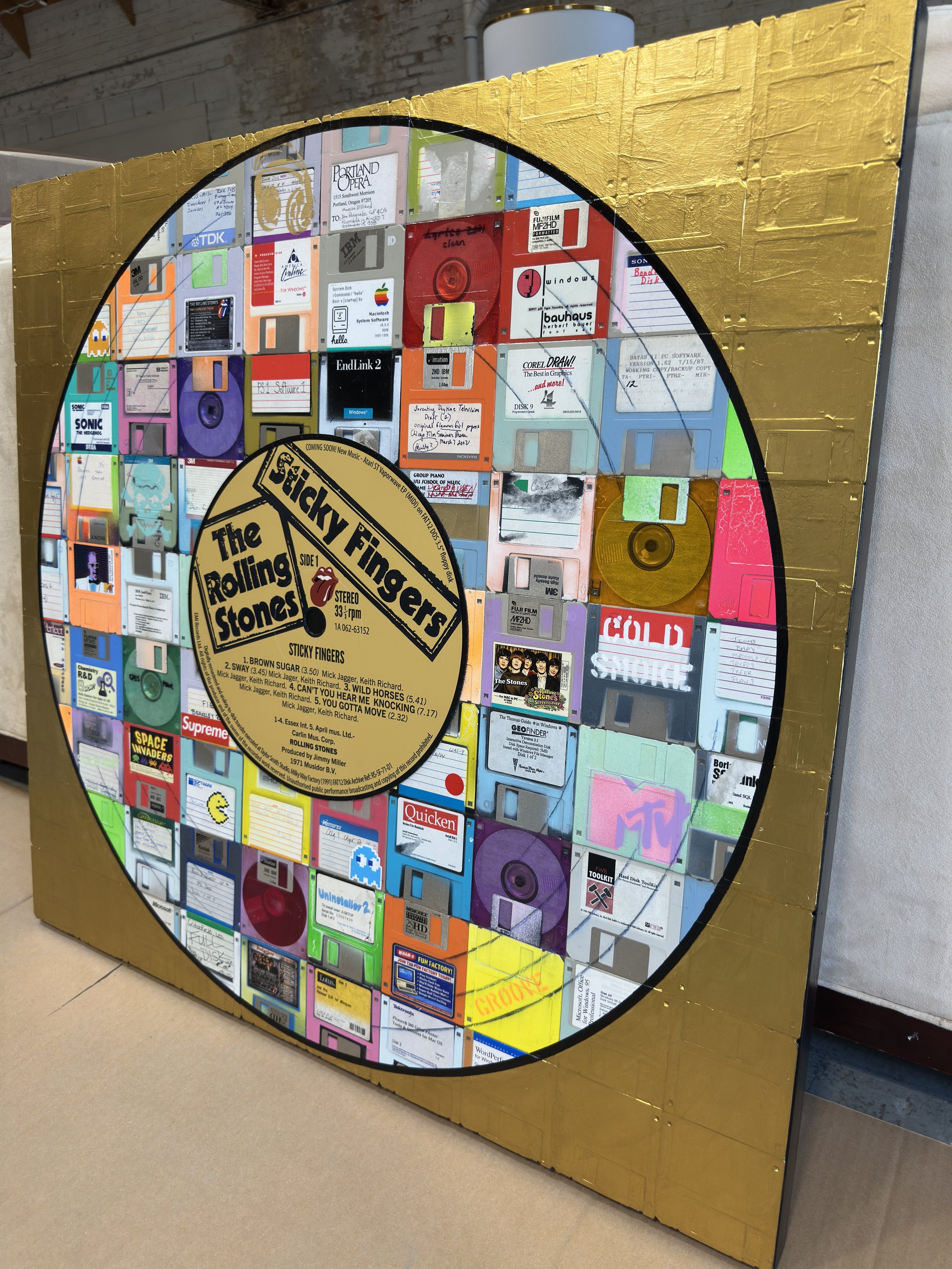
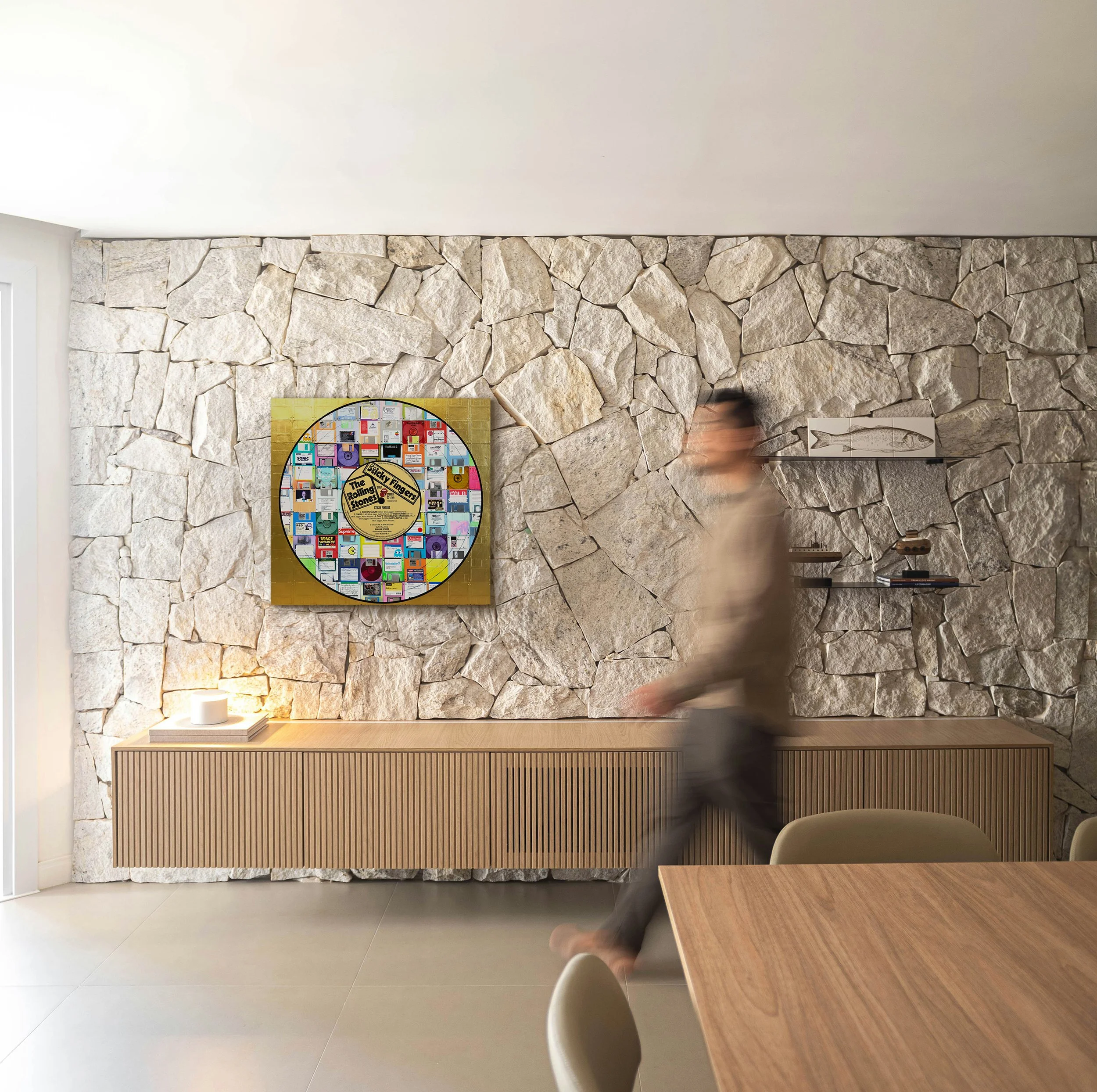
Sticky Fingers (Side 1) shown in a contemporary interior. Taylor Smith, Vinyl Series, 33 × 35.5 × 2 in.
STICKY FINGERS
Released in 1971, Sticky Fingers occupies a distinctive place in the visual history of rock and roll. Its provocative Andy Warhol-designed cover, stark typography and instantly recognizable Rolling Stones identity helped make the album a cultural object as much as a recording.
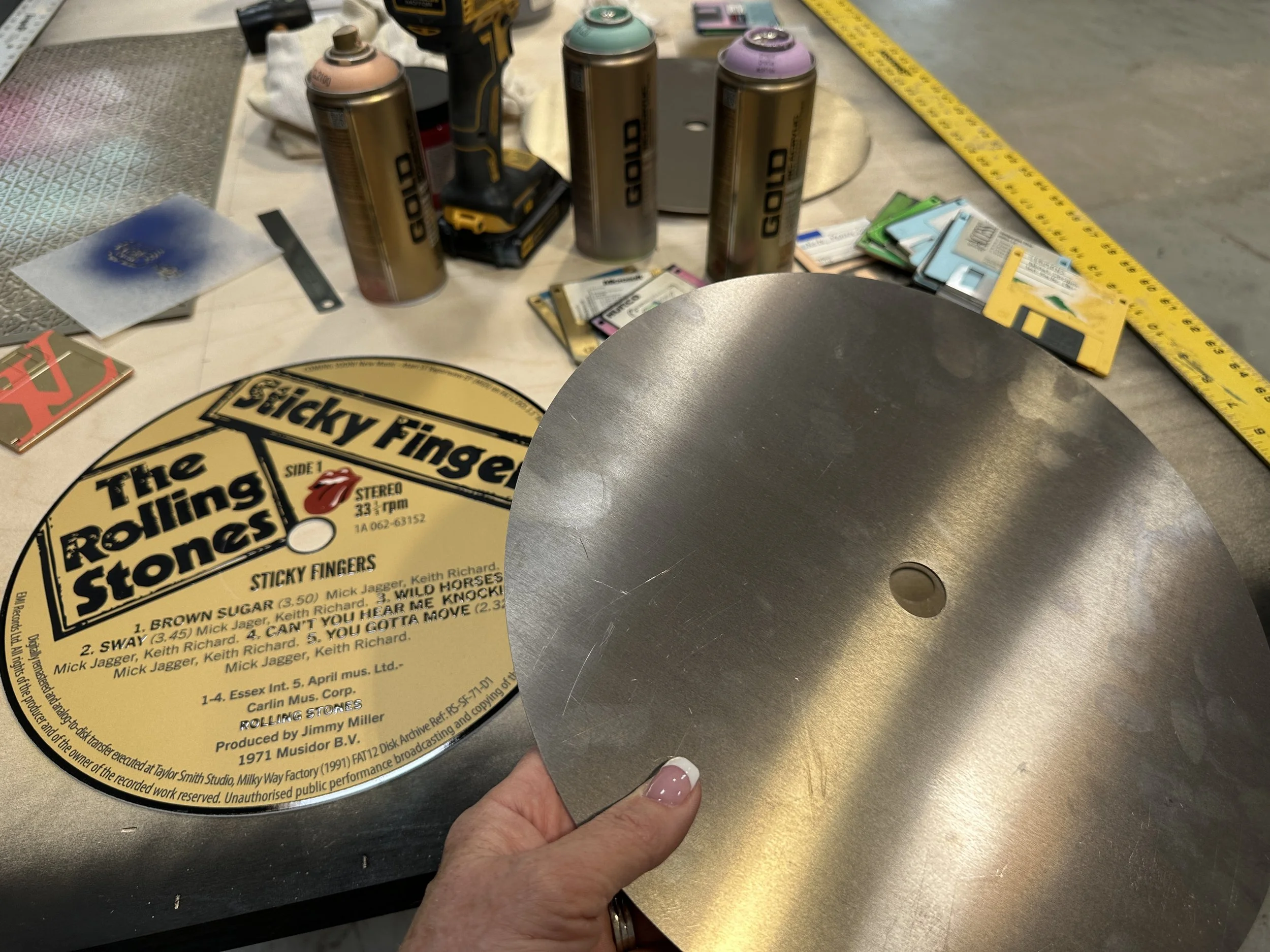
In Sticky Fingers (Side 1), that familiarity is reconstructed through another disappearing technology. Ninety vintage 3.5-inch floppy disks form the surface of the work, surrounding a custom-cut aluminum center disc. Rather than simply reproducing an original record label, Smith rebuilds and reimagines its visual language, bringing the physical vocabulary of vinyl into conversation with the later world of floppy disks, software and digital storage.
Side 1 carries some of the album's most enduring music, opening with “Brown Sugar” and continuing through “Sway,” “Wild Horses,” “Can’t You Hear Me Knocking” and “You Gotta Move.” That musical history is set against another archive of memory: floppy disks that once carried documents, images, games, correspondence, software and countless fragments of everyday life.
Rather than reproducing the album as memorabilia, the work uses its familiarity as a point of entry. Music, obsolete technology and personal history become layered into a new physical object, connecting two disappearing formats through the cultural memory attached to each.
STUDIO NOTES
The center label for Sticky Fingers (Side 1) was developed as an artwork within the larger work. Beginning with the visual language associated with the original record, I reconstructed and reimagined individual elements while introducing details that bridge the vinyl era and the later world of floppy disks and digital storage.
Original recording references coexist with newly composed language drawn from computing, software and obsolete technology. Typography, production details and perimeter text were considered individually so that the label remains connected to the visual history of Sticky Fingers while revealing new details upon closer inspection.
This process of research, reconstruction and redesign is central to the Vinyl Series. Each center label develops over many hours—and often weeks—as historical references are combined with invented elements specific to the artwork, creating something that feels simultaneously familiar and newly discovered.

Detail of the reimagined center label for Sticky Fingers (Side 1)