MEMORY HAS A MATERIAL
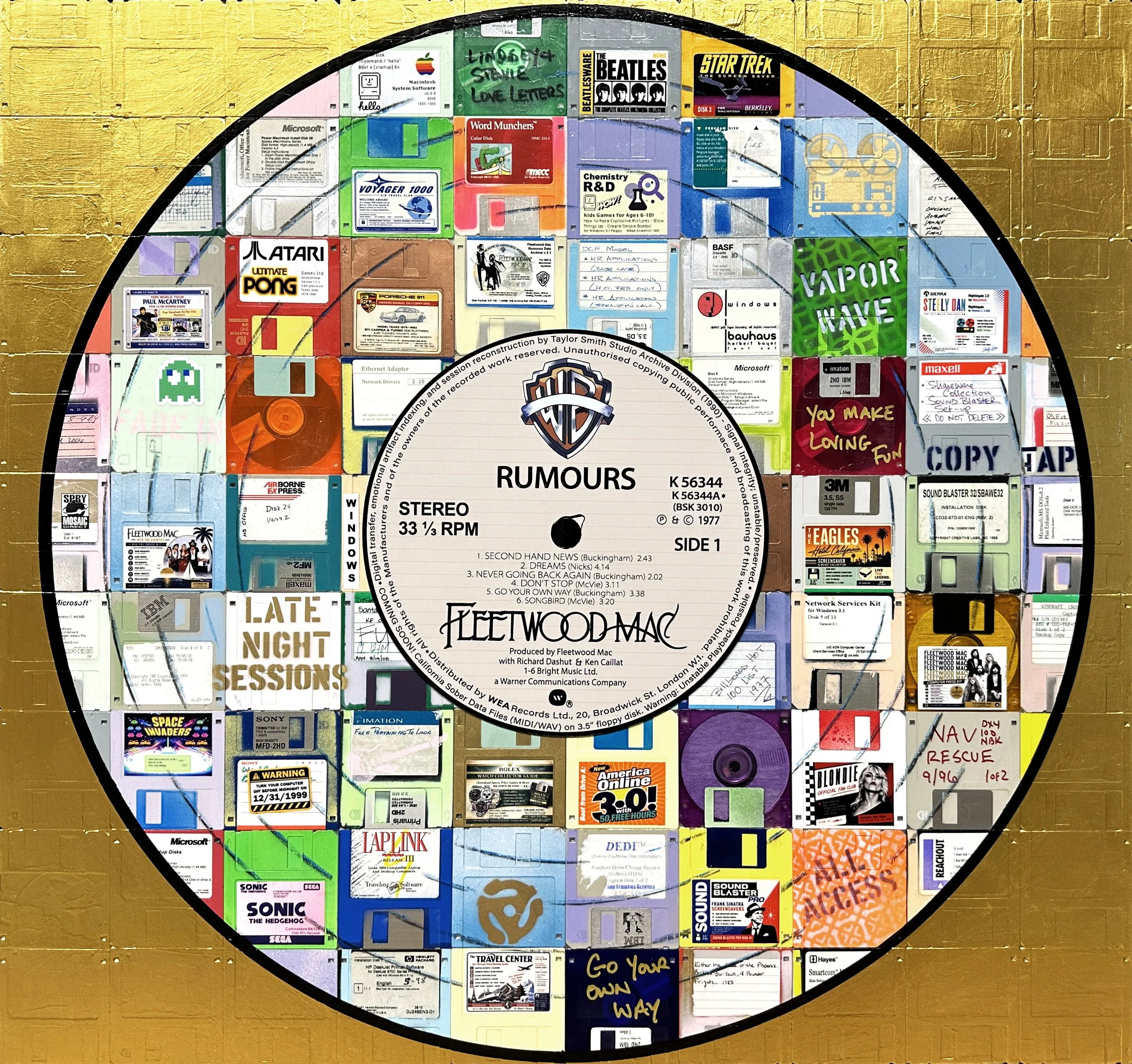
Rumours is an album shaped as much by the circumstances of its making as by the music itself. Relationships were unraveling inside Fleetwood Mac even as the group created a record that would become part of the shared memory of generations. That tension between something deeply personal and something absorbed into collective culture makes the album especially compelling within the Vinyl Series. In this work, ninety vintage floppy disks—each carrying its own traces of use, handwriting, labels and obsolete information—surround a custom aluminum center disc that reimagines the visual language of the original record. Together, these once-functional objects become carriers of a different kind of information: fragments of individual histories assembled around music that has accumulated memories far beyond those of the people who first created it.
VINYL SERIES
Fleetwood Mac
Rumours
Side One
33 × 35.5 inches
Mixed media on vintage 3.5-inch floppy disks
2026
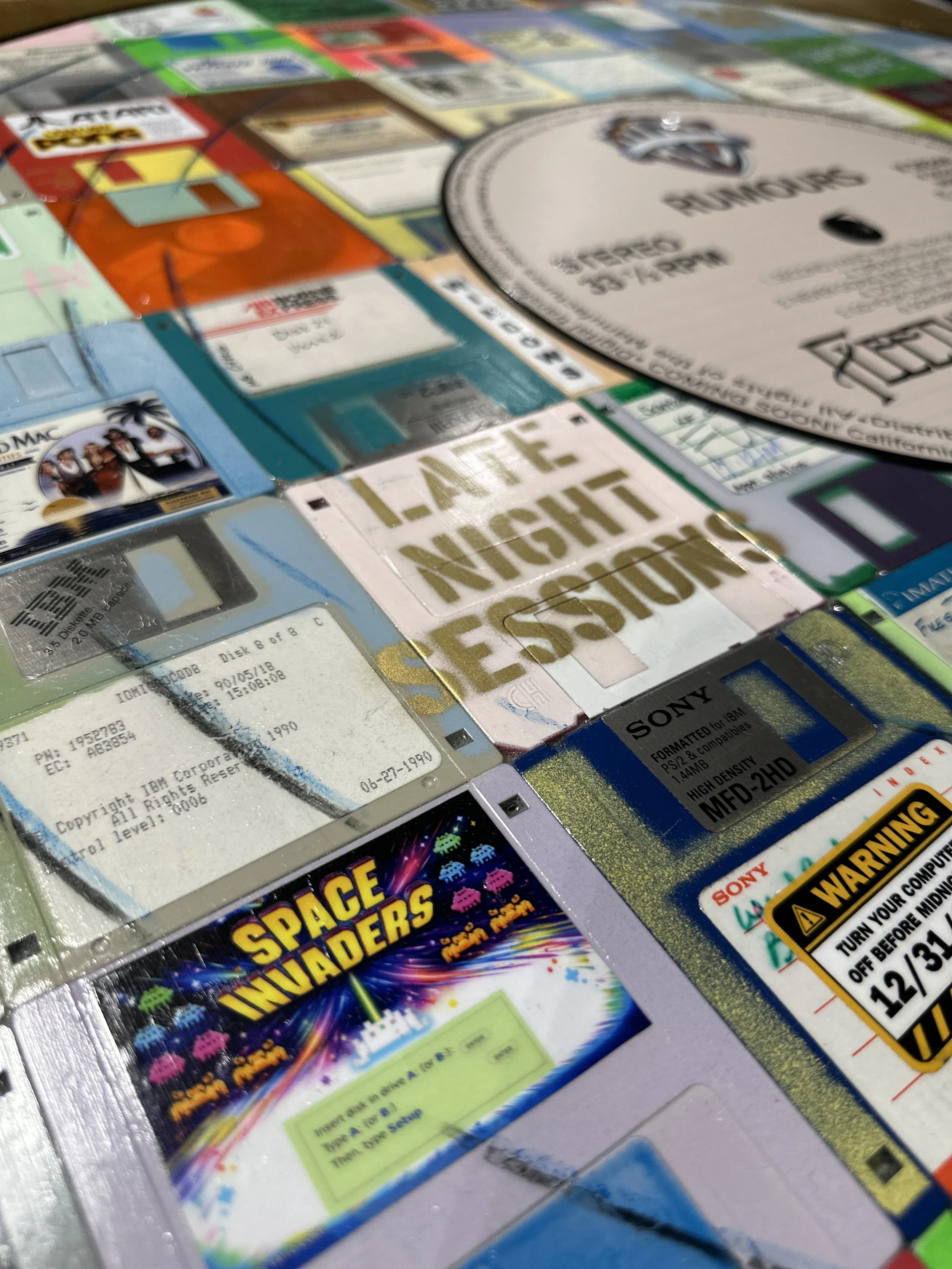
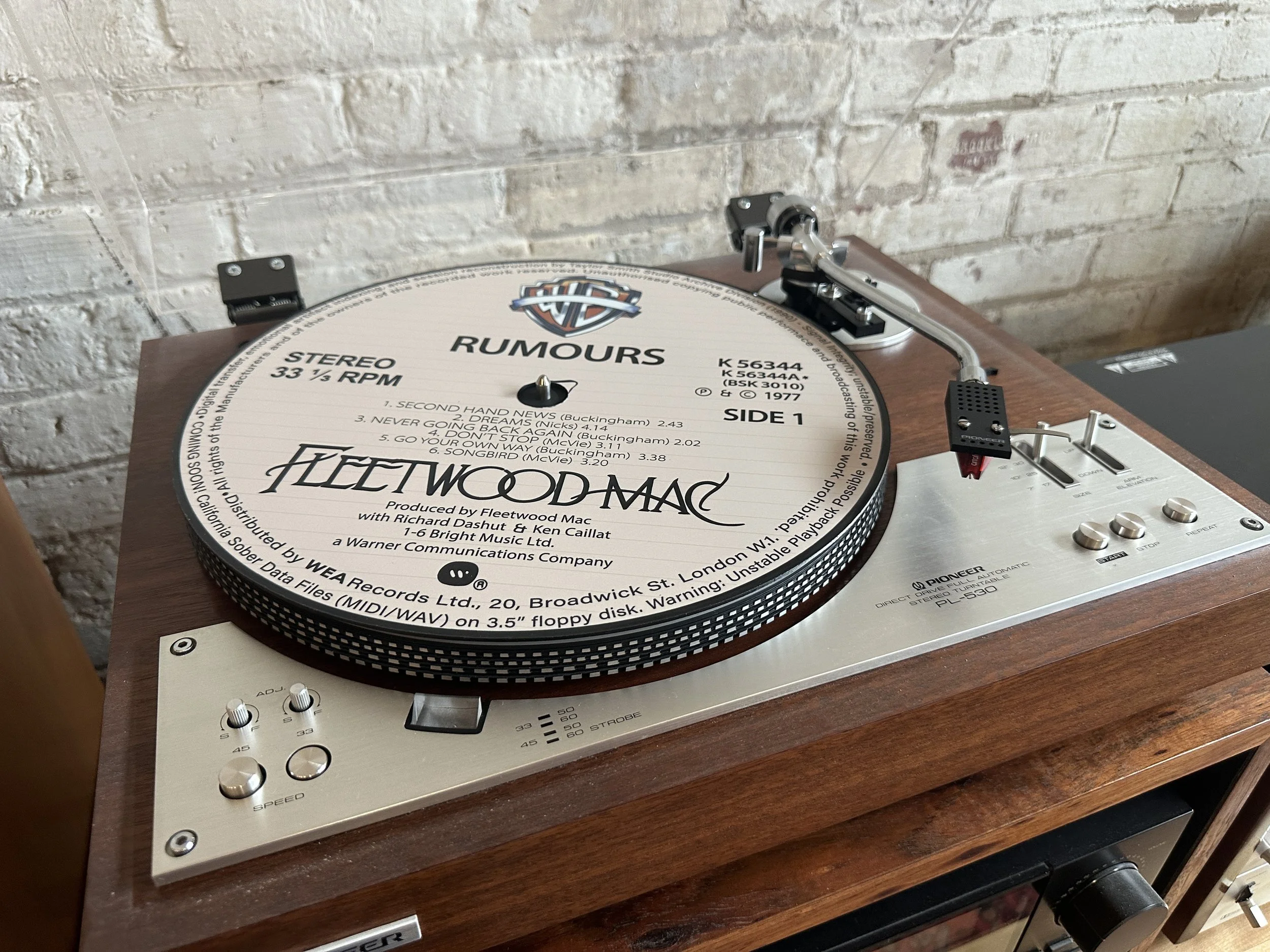
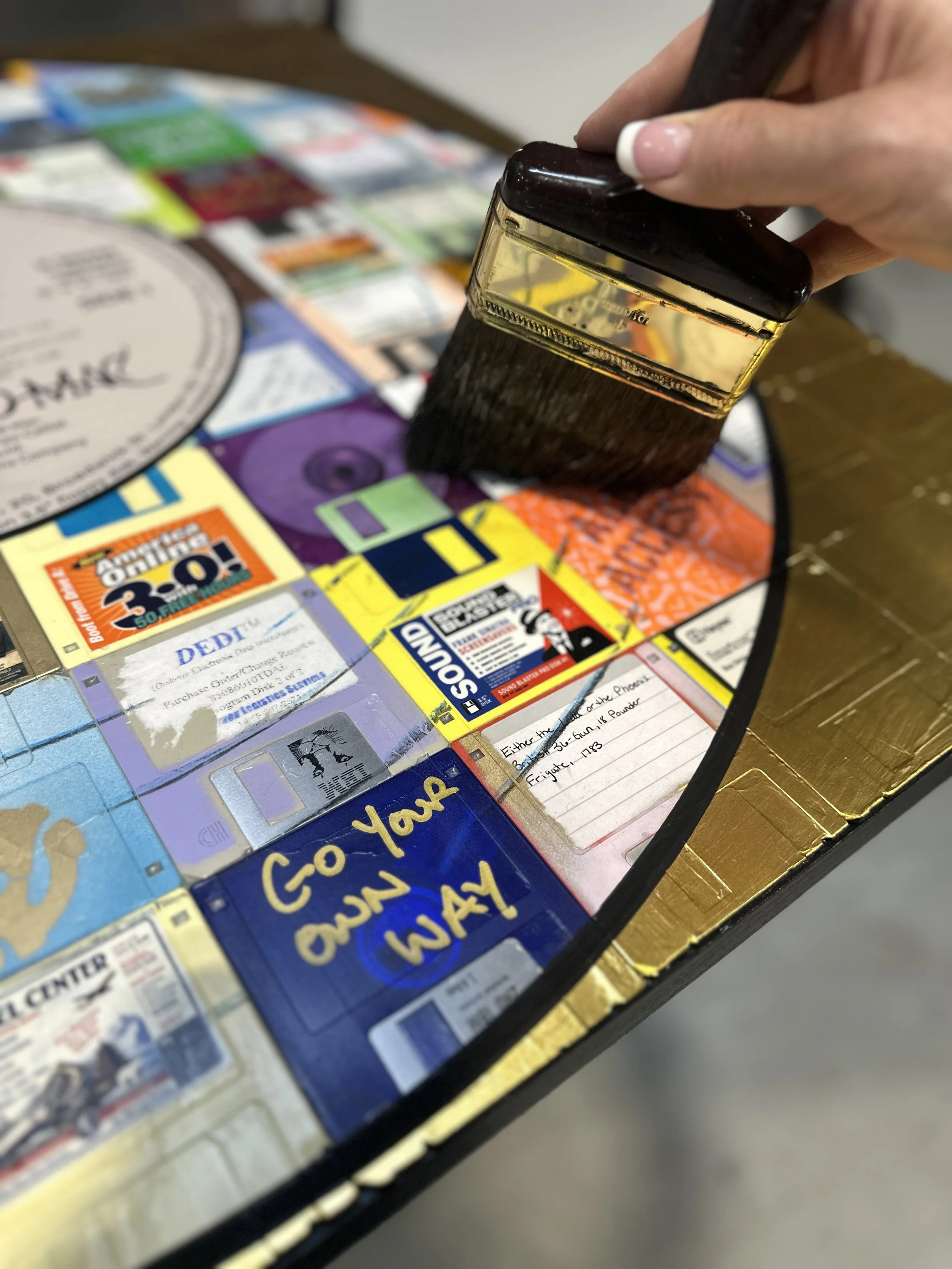
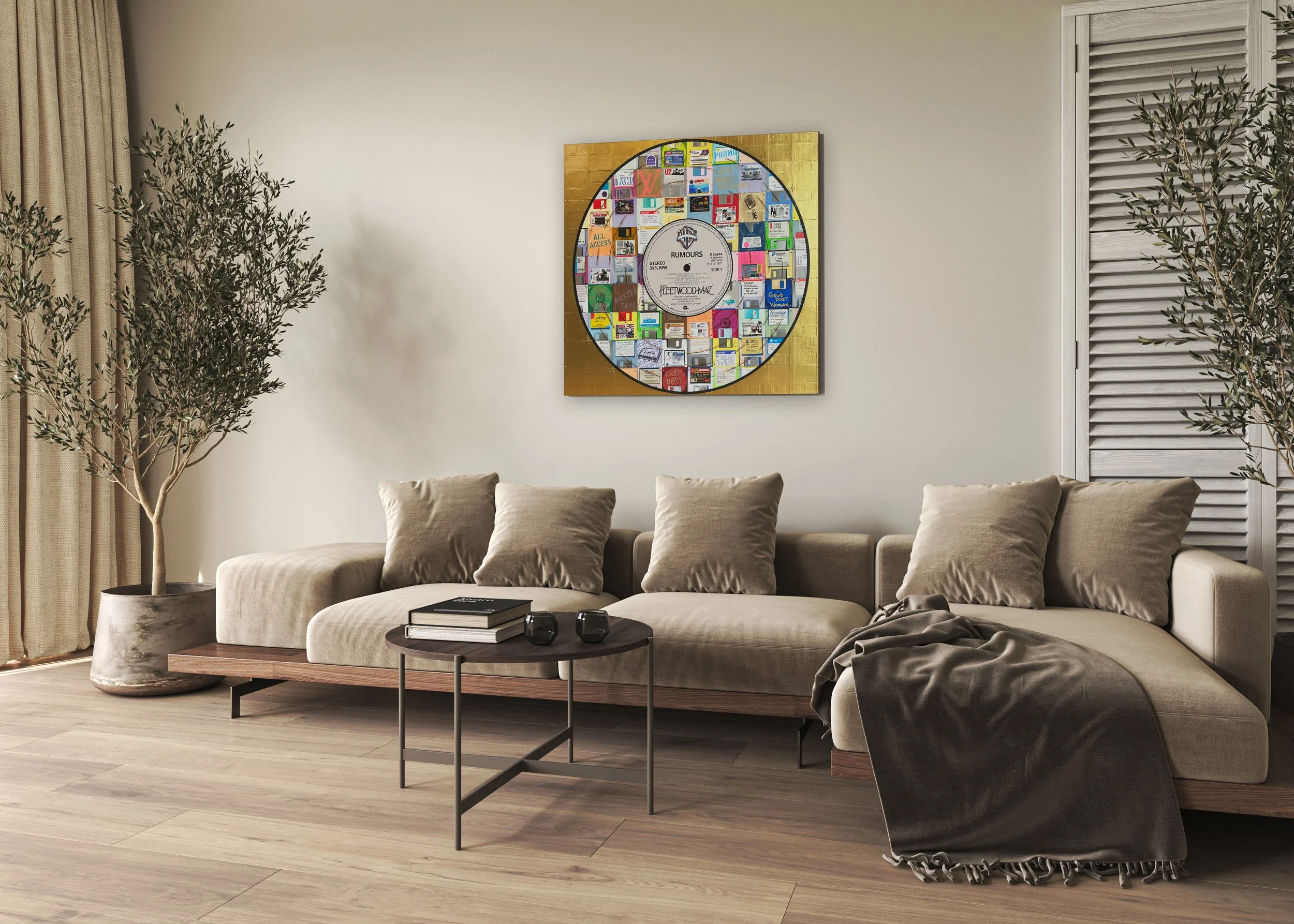
Shown in situ for scale. 33 × 35.5 × 2 inches.
RUMOURS
Few albums have become as inseparable from the circumstances of their creation as Rumours. Released in 1977, the record emerged from a period of extraordinary personal upheaval within Fleetwood Mac, yet became one of the defining recordings of its era. Its songs transformed private relationships, separation and conflict into music that has remained culturally present for generations.
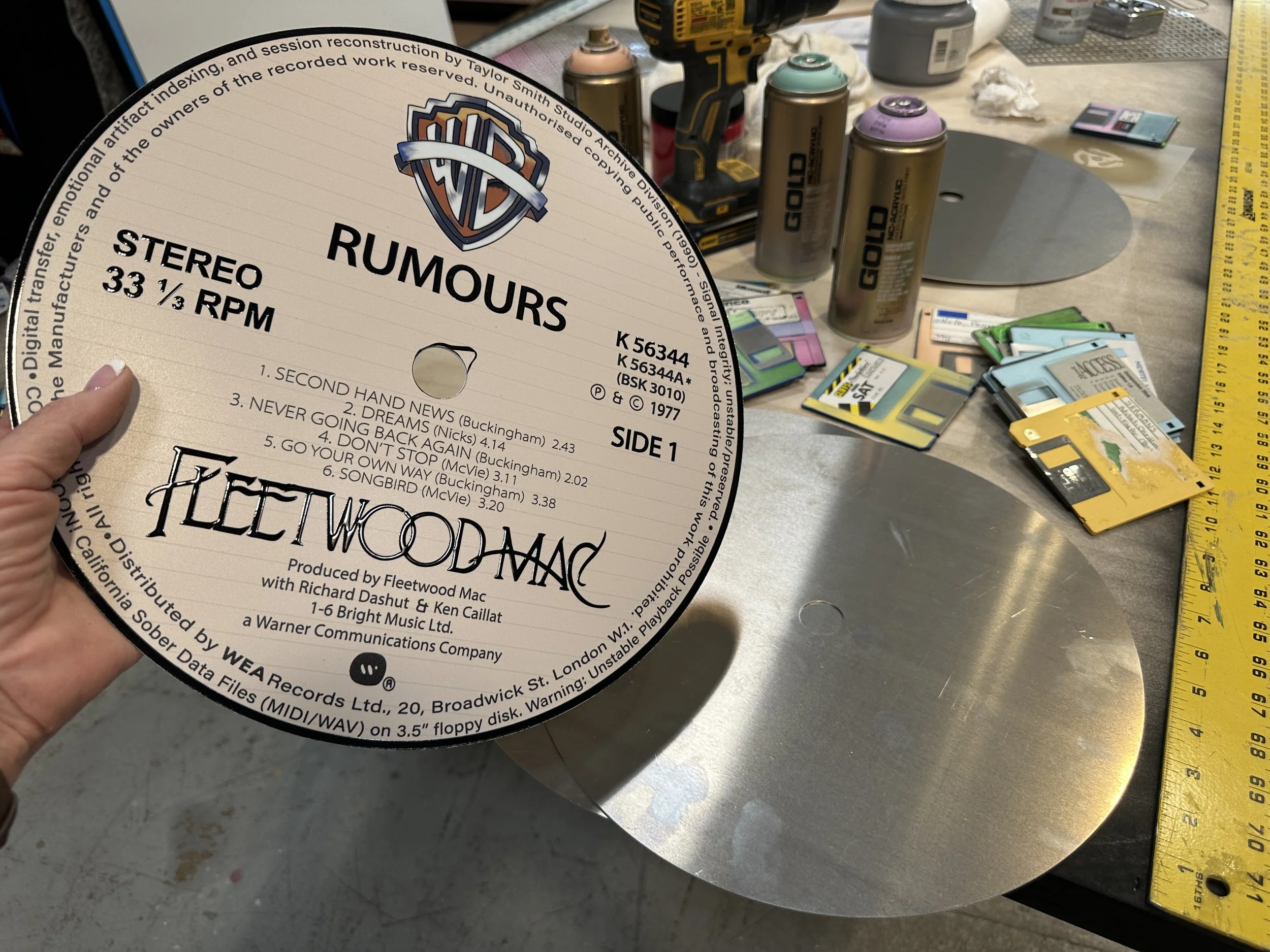
Rumours (Side 1) turns from the familiar album cover to the physical record itself. Ninety vintage 3.5-inch floppy disks form the surface of the work around a custom-cut aluminum center disc, where Smith reconstructs and reimagines the visual language of the original Warner Bros. label. Track listings and production details coexist with invented references to data storage, corrupted files and obsolete technology.
The result brings two generations of recorded information together: the analog record and the floppy disk. Both were once ordinary objects for storing something considered valuable, and both have since become artifacts of their respective eras. Here, they are joined physically, allowing an album associated with intensely personal memory to be reconstructed through materials that carry anonymous histories of their own.
STUDIO NOTES
Rumours has always fascinated me because the music feels inseparable from the story of the people who made it. These were songs being written and recorded while relationships within the band were breaking apart, yet what emerged became something millions of people would eventually attach to their own lives. That movement from private experience to collective memory felt particularly relevant to the Vinyl Series.
For the center disc, I wanted to begin with the visual familiarity of the original record without simply reproducing it. I reconstructed the label on aluminum and introduced details that belong to the language of another recording technology—data files, digital transfer, indexing and the instability of stored information. Some references reveal themselves immediately; others are meant to be discovered only when someone spends time looking closely at the work.
I especially like the contradiction in Rumours: an album born from relationships coming apart became an object with extraordinary permanence. The floppy disks surrounding the center have experienced almost the opposite trajectory. They were once trusted to preserve important information and are now largely unreadable and obsolete. Bringing those two histories together is what makes this particular work compelling to me.
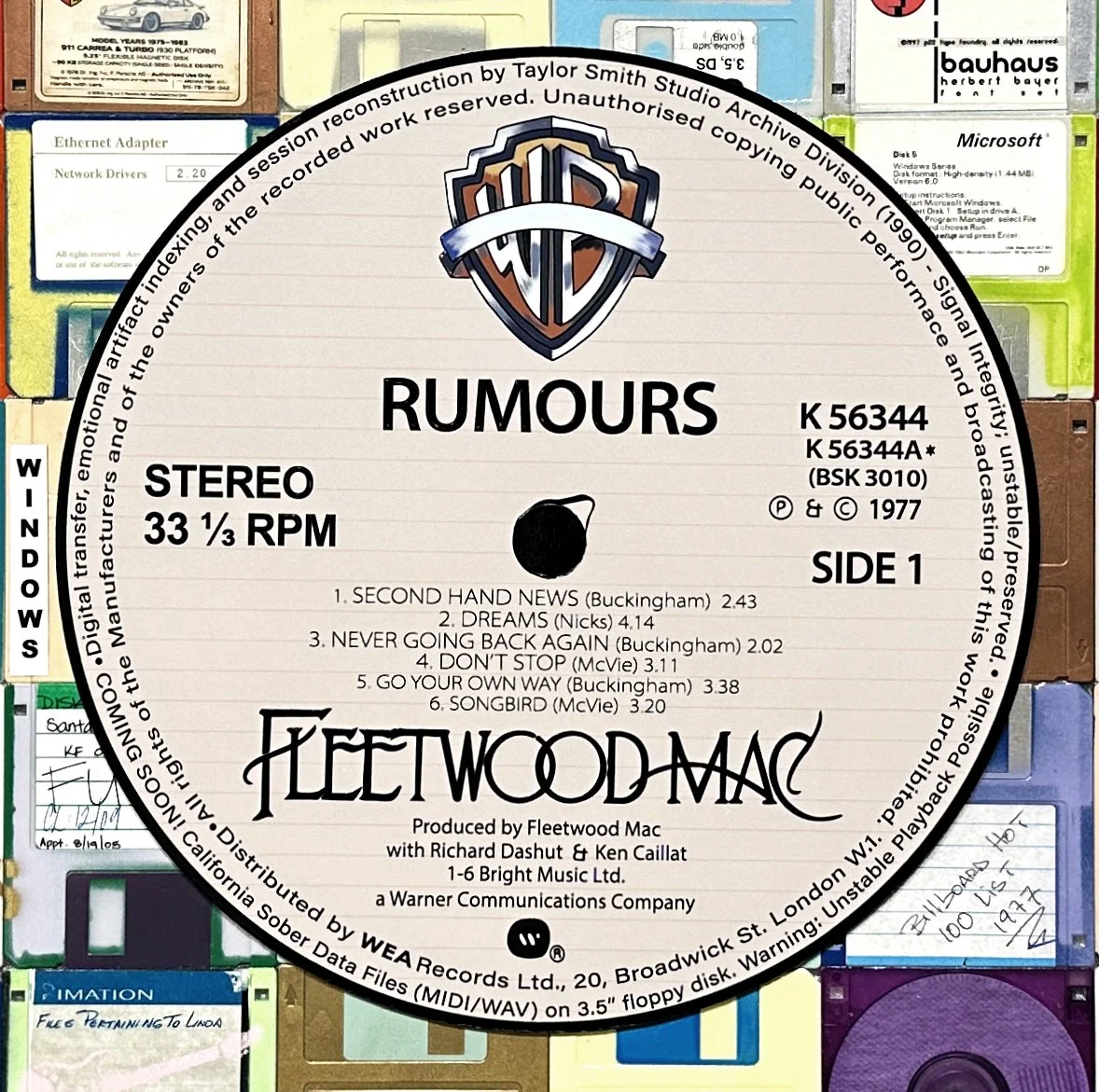
Detail: Fleetwood Mac – Rumours (Side 1)