MEMORY HAS A MATERIAL
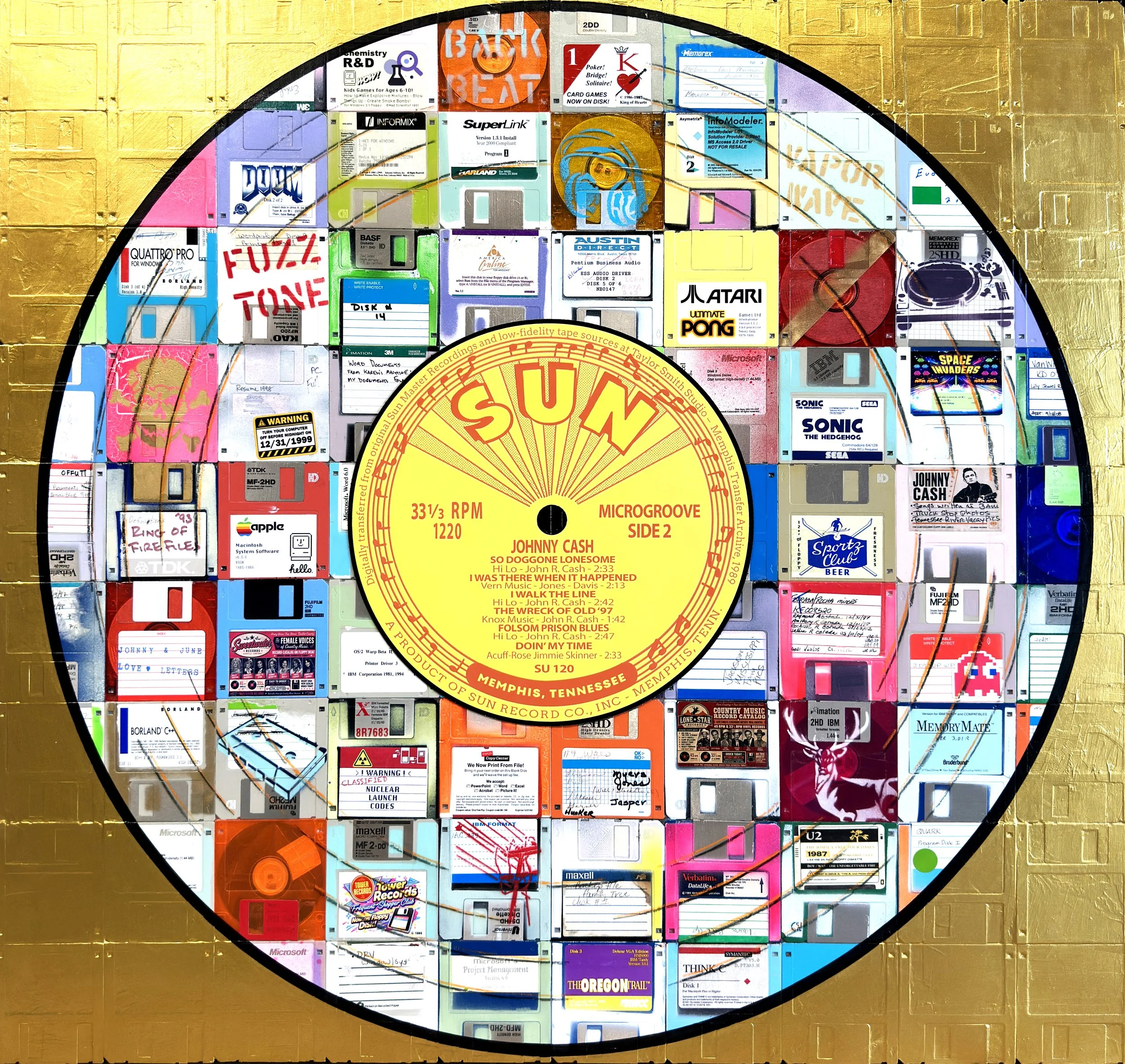
At Folsom Prison carries a particular kind of cultural memory—one inseparable from place, performance and the mythology that grew around Johnny Cash himself. In this work, that history is reconstructed through ninety vintage floppy disks, objects that once stored entirely different kinds of personal and technological records. Their handwritten labels, obsolete software and accumulated wear surround a custom aluminum center disc that reimagines the visual language of Cash’s early Sun Records era rather than simply reproducing the original album label. The materials come from different moments in American culture, yet both once existed as physical carriers of information. Brought together, they transform a familiar piece of music history into an object about how memory is recorded, stored and eventually inherited.
VINYL SERIES
Johnny Cash
Folsom Prison
Side Two
33 × 35.5 inches
Mixed media on vintage 3.5-inch floppy disks
2026
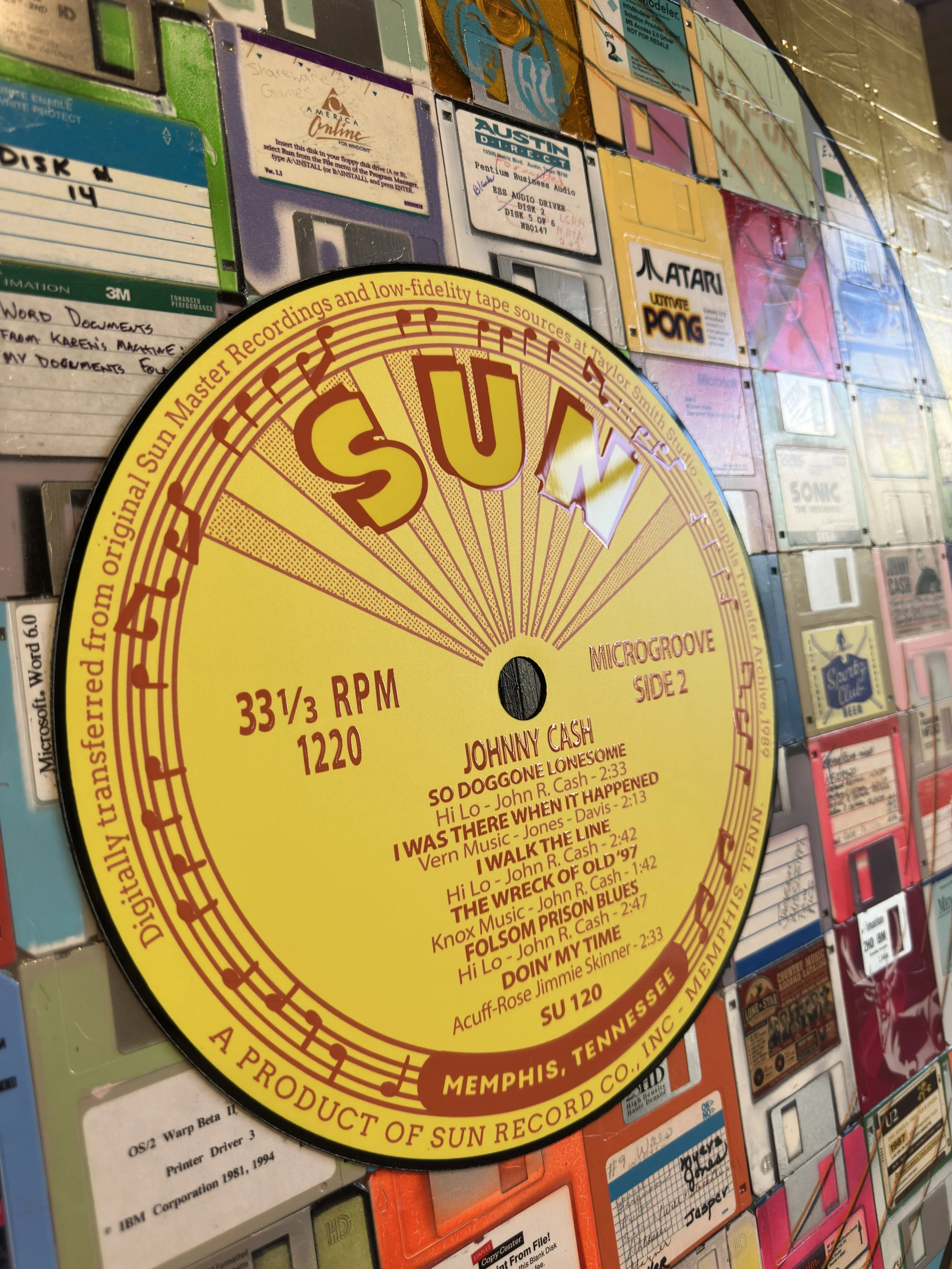
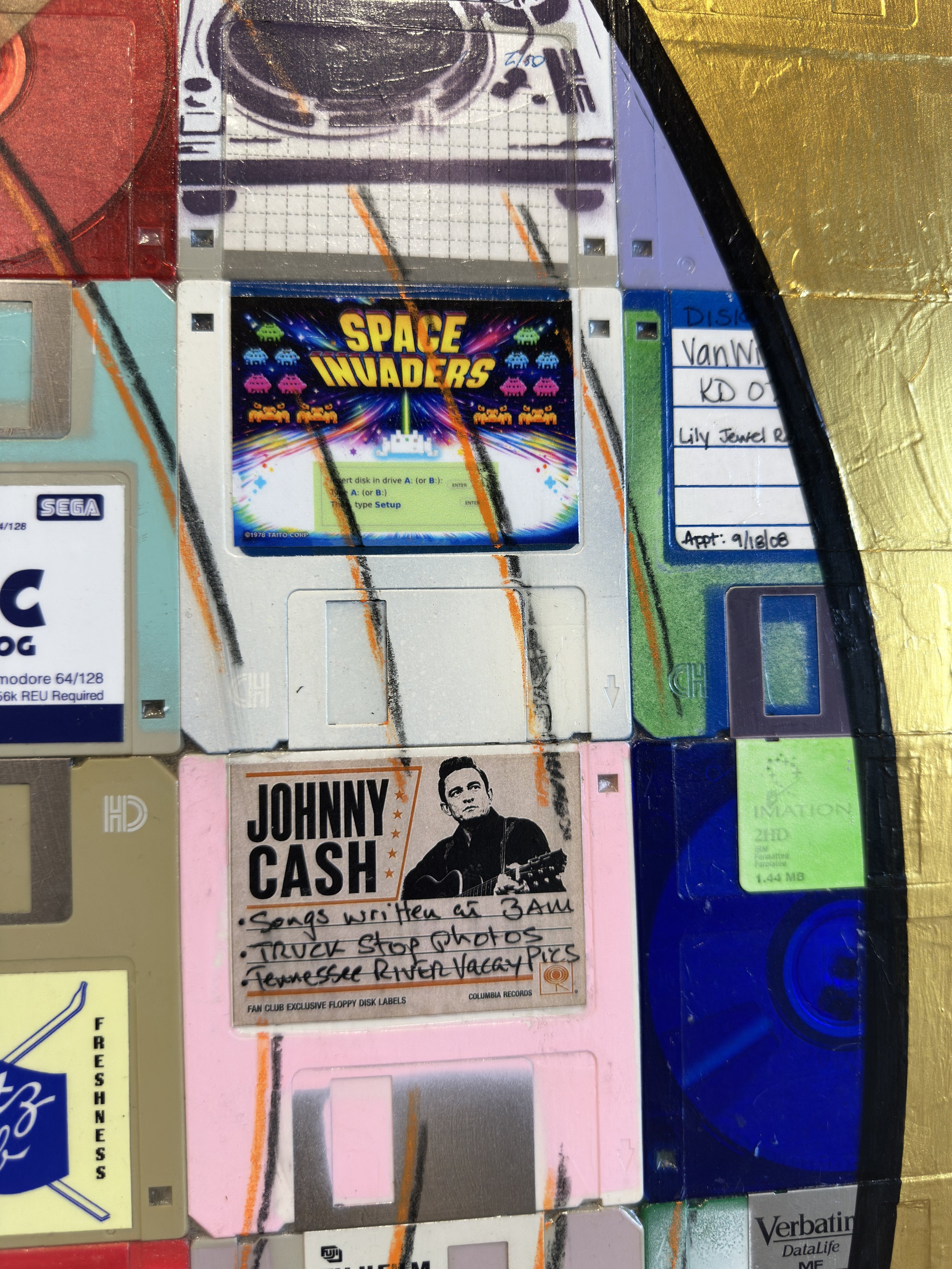
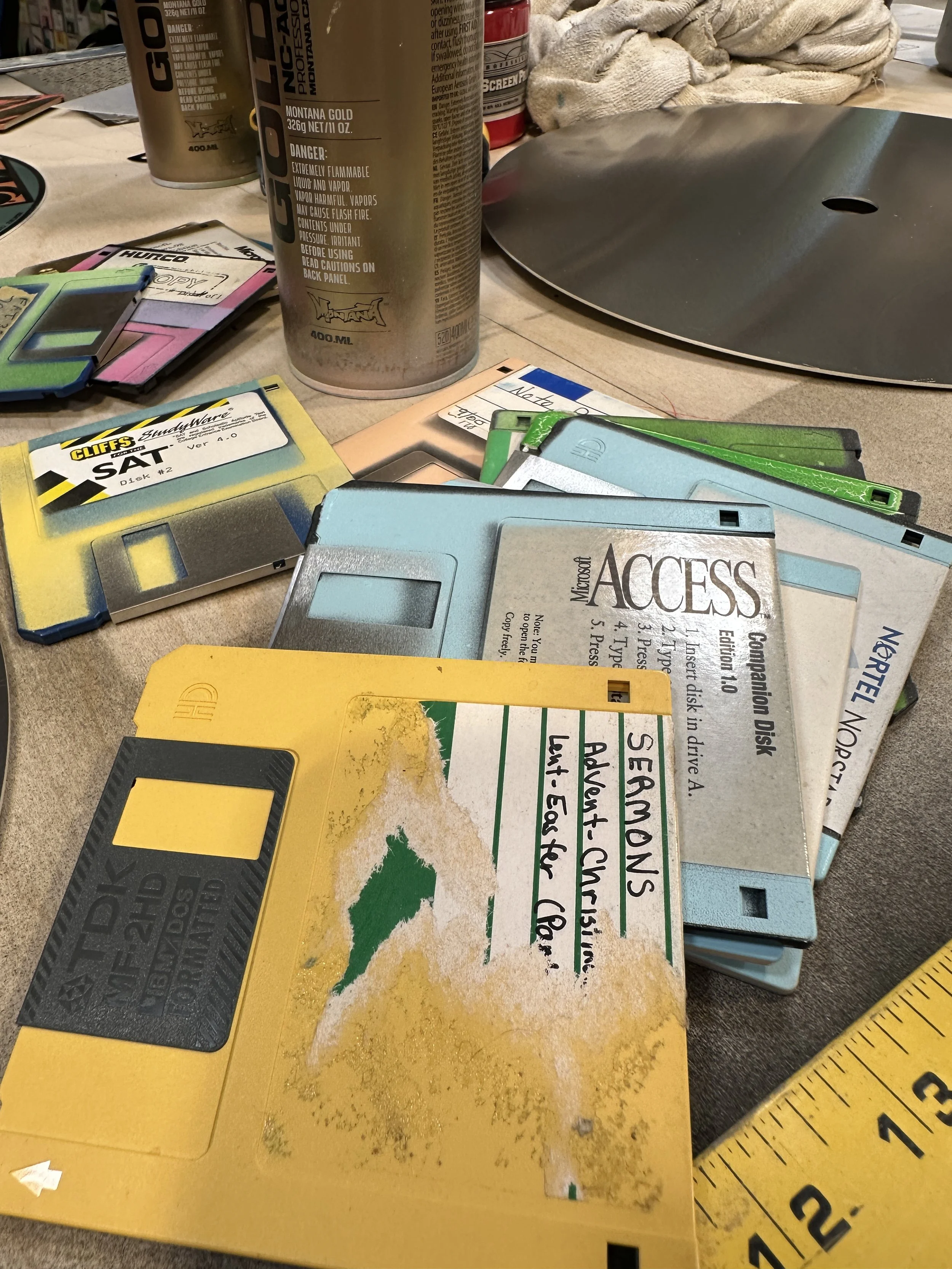

At Folsom Prison — The Vinyl Series | Mixed media on vintage 3.5-inch floppy disks, 33 × 35.5 in. Shown in situ.
FOLSOM PRISON
Memory, Recoded. The materials carry histories of their own. The floppy disks retain handwriting, damaged labels, obsolete software and traces of previous use—small records of people and information largely separated from their original contexts. Rather than erase those histories, Smith allows them to remain visible, layering new references onto objects that already contain evidence of earlier lives.
In At Folsom Prison (Side 2), that accumulation of memory is set against the unmistakable visual language of Sun Records. The relationship is intentionally anachronistic: Cash’s early recording history, the mythology of the Folsom performances and the later technology of magnetic data storage are compressed into a single object. What connects them is not chronology, but the ways culture is recorded, circulated and remembered.
The work ultimately treats obsolescence as a form of preservation. Technologies disappear, formats become unreadable and objects lose their original usefulness, yet their physical presence can continue to carry meaning. Here, the floppy disk and the record label become artifacts through which different histories survive.
STUDIO NOTES
At Folsom Prison interested me because Johnny Cash occupies a place in American culture that extends far beyond a single record. There is something unusually direct about the mythology surrounding him—the voice, the black clothes, the prisons, Sun Records, Memphis—and much of it has become part of our collective memory. I wanted the painting to acknowledge that history without simply recreating an album cover or reproducing an existing record label.
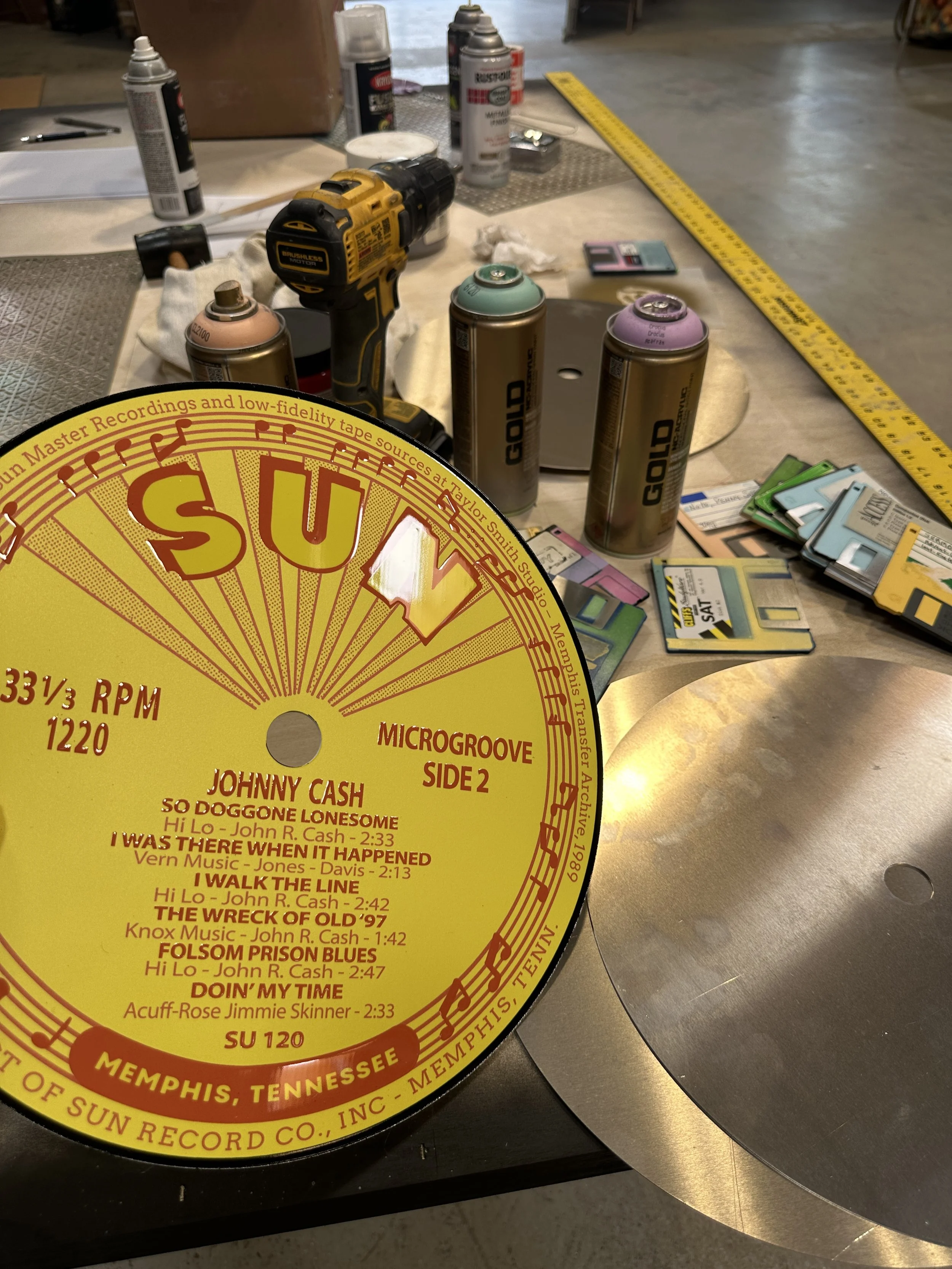
The center disc became the place where I could reinterpret that history most directly. Rather than copying the original At Folsom Prison label, I went back to the visual language of Cash’s early Sun recordings and imagined what this side of the record might have looked like had it belonged to that earlier period. I kept the familiar yellow, red typography and radiating Sun design, but rebuilt the information around the actual Side 2 tracks and introduced details that belong to the world of the painting. I like that it initially feels historically plausible, even though the closer you look, the chronology begins to collapse.
That same tension exists throughout the floppy disks. Some retain completely ordinary handwriting and old software labels; others contain references I've added to music, technology, games and American culture. I don't want every detail to announce itself immediately. Part of experiencing these works is getting close enough to discover things that weren't visible from across the room. For me, those small discoveries mirror the way memory actually works—fragments surface unexpectedly, different periods overlap, and objects we thought we'd forgotten suddenly become familiar again.
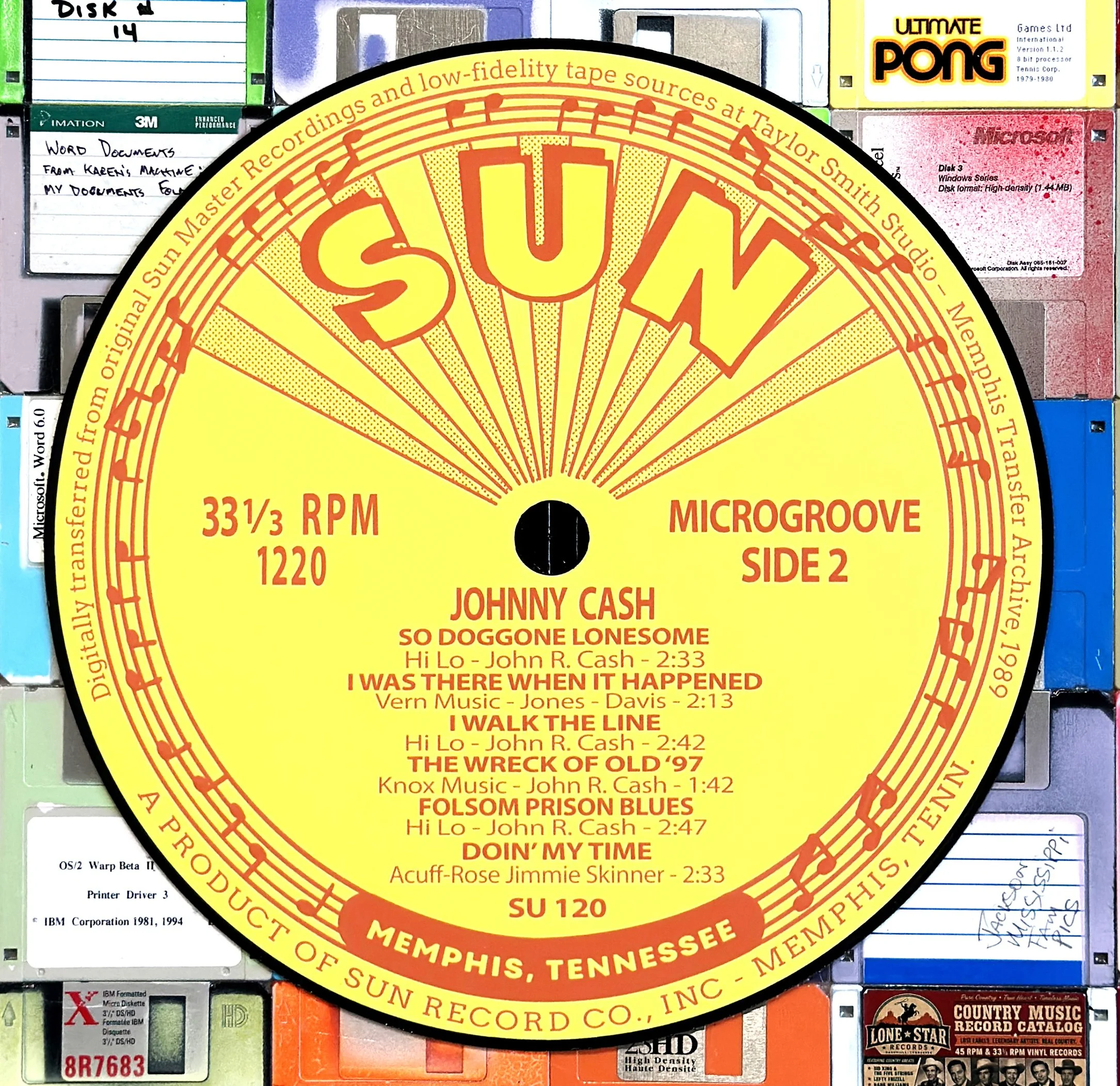
Detail: Johnny Cash – Folsom Prison (Side 2)