

MEMORY HAS A MATERIAL
Led Zeppelin IV is unusual because its identity is carried less by conventional title treatment than by atmosphere, symbols, and visual memory. The album’s enduring power lies partly in this refusal to explain itself. In the Vinyl Series, that ambiguity becomes especially resonant: the work is reconstructed from floppy disks bearing fragments of labels, obsolete software references, and handwritten notes whose original meanings are no longer fully available. Both the album and the material resist complete decoding. The painting treats the record as a visual relic—familiar, mysterious, and shaped by the viewer’s own accumulated associations.
VINYL SERIES
Led Zeppelin
Led Zeppelin IV
Side One
33 × 35.5 inches
Mixed media on vintage 3.5-inch floppy disks
2026
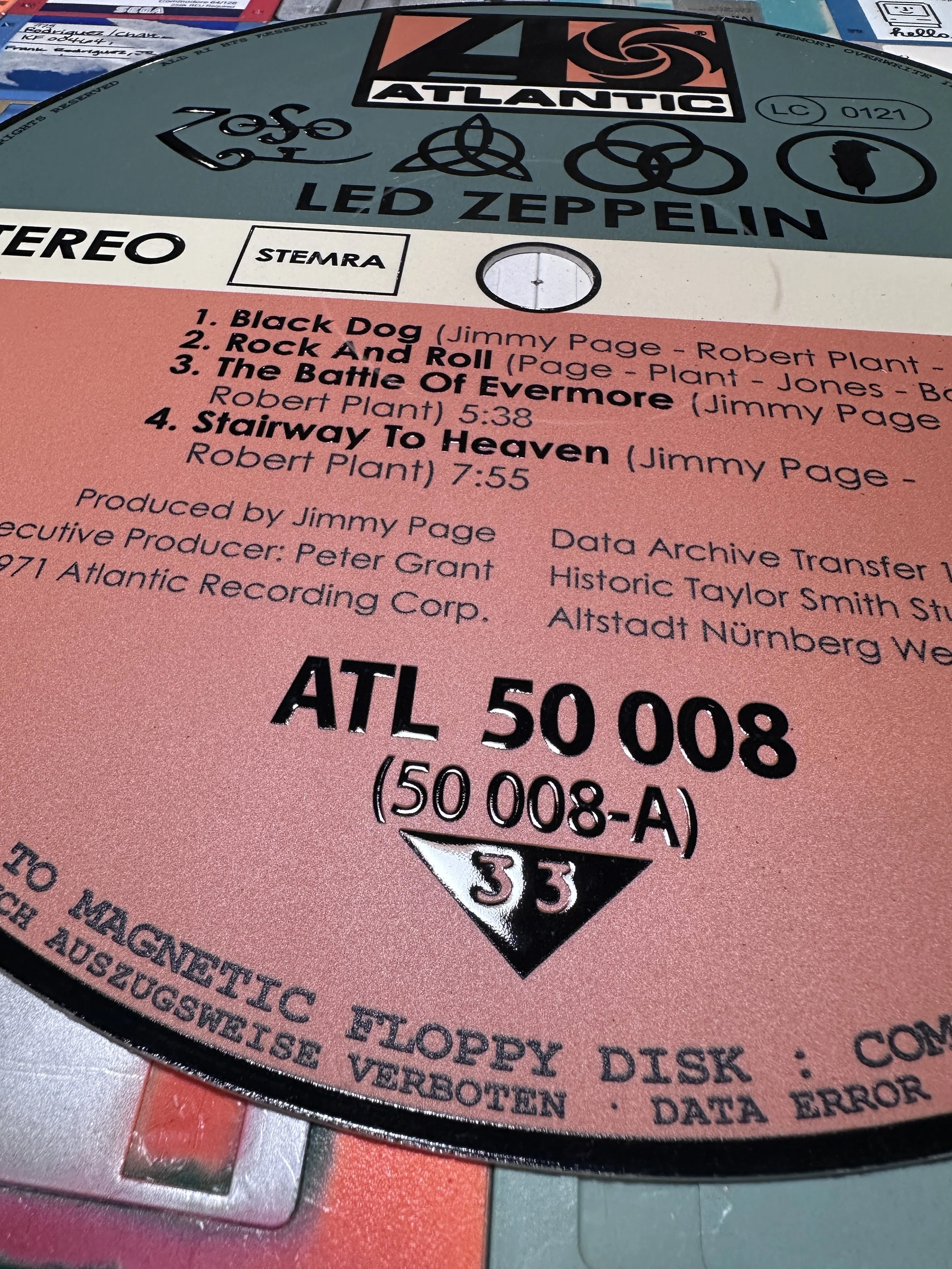
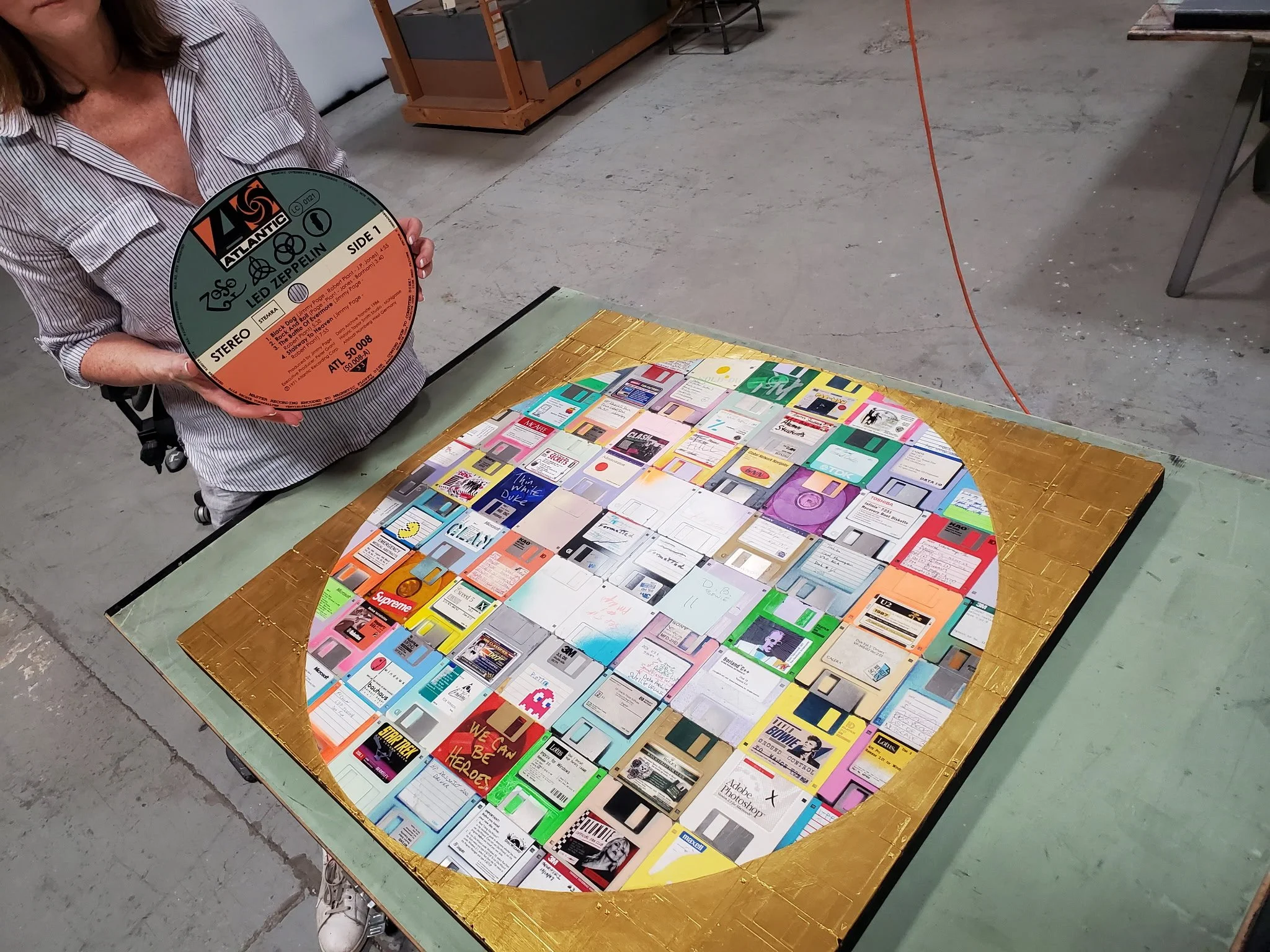
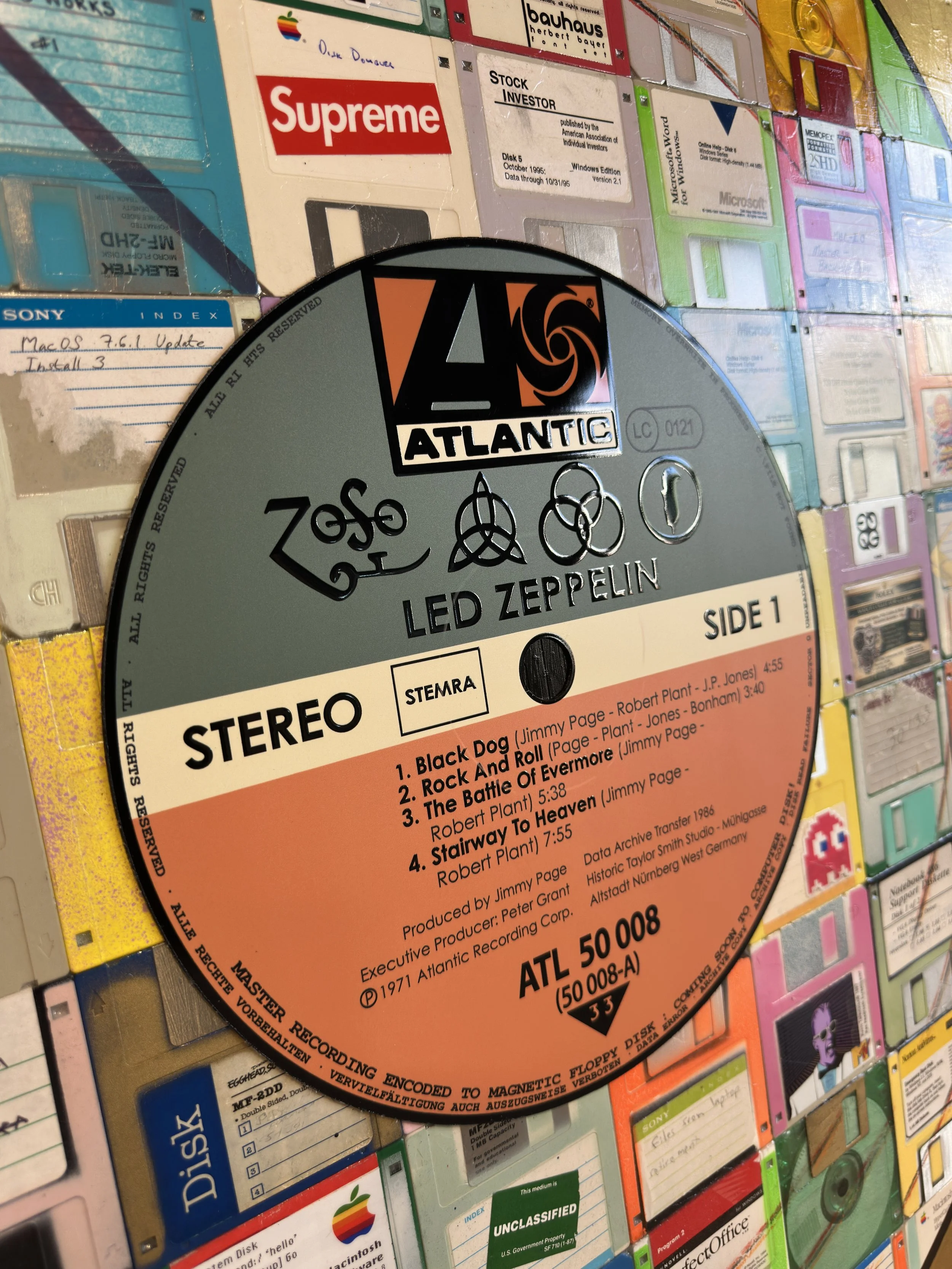
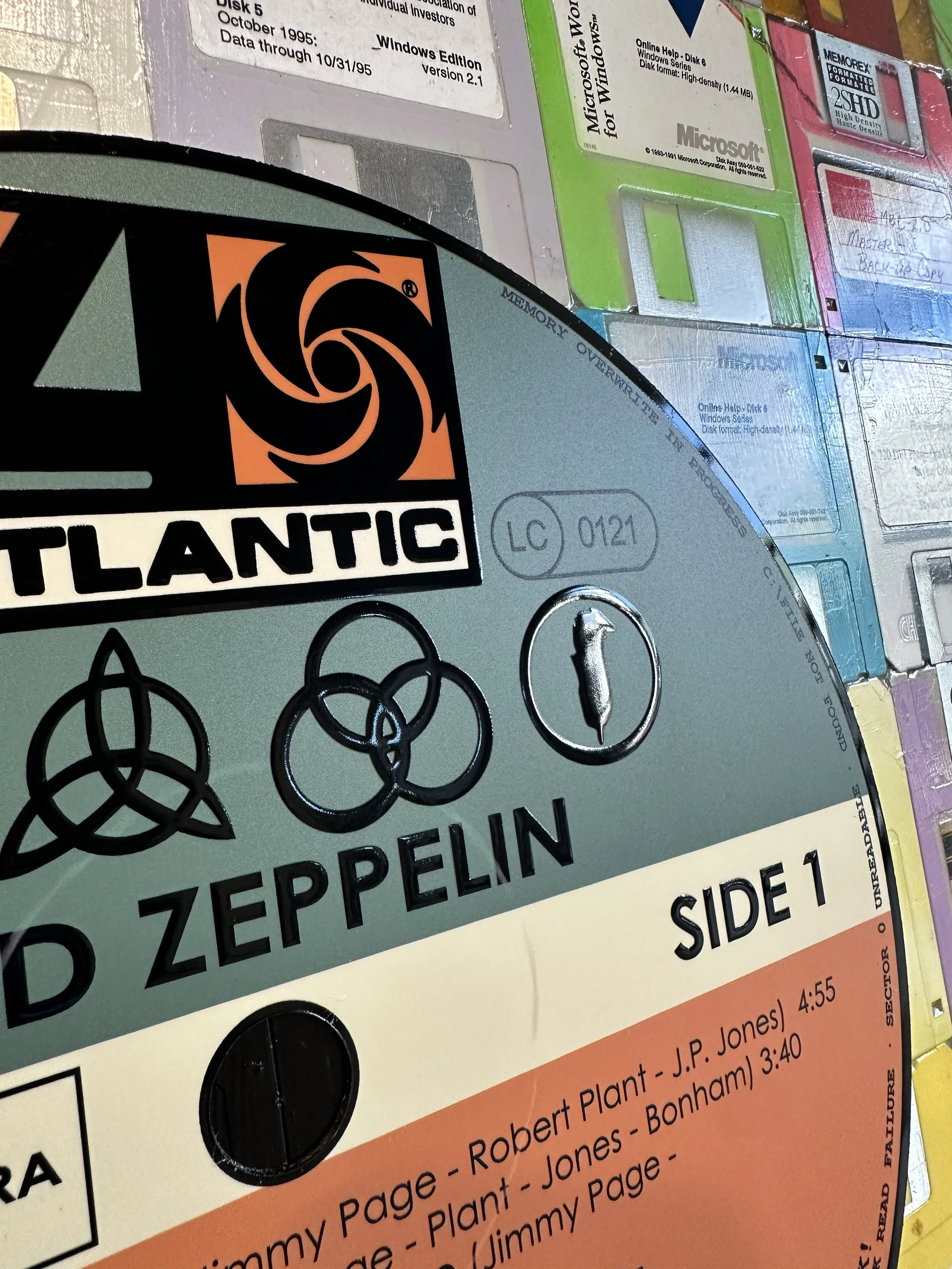

Led Zeppelin IV (Side 1) shown framed in situ. Taylor Smith, Vinyl Series, 2026.
LED ZEPPELIN IV
Led Zeppelin IV occupies a unique place in rock history. Released in 1971 without the band's name or a conventional title on its original cover, the album relied instead on a collection of enigmatic images and symbols to establish its identity. The weathered image of an elderly man carrying sticks, the four mysterious symbols associated with the band members, and the album's deliberately archaic visual atmosphere stood apart from the increasingly polished language of commercial record design. Yet those images became instantly recognizable, demonstrating how powerfully an object can become embedded in cultural memory without explicitly announcing what it is.
The music achieved a similar balance between the immediate and the mysterious. Acoustic folk traditions, blues, hard rock, mythology, and monumental studio production coexist across the record, culminating in “Stairway to Heaven,” a song whose cultural presence eventually extended far beyond the album itself. Over decades of repeated listening, reproduction, collecting, and reinterpretation, Led Zeppelin IV became more than a recording; it became an artifact whose imagery and sound are recognizable across generations.
That history makes the album particularly resonant within Taylor Smith's Vinyl Series. Here, one familiar but aging cultural object—the vinyl record—is reconstructed through another obsolete technology: the 3.5-inch floppy disk. Individual disks retain labels, handwriting, corporate identities, software references, scratches, and other evidence of their former lives. Their original information may be inaccessible, but the objects still carry traces of memory. Reassembling them into the visual language of Led Zeppelin IV creates a dialogue between two technologies that once stored culture and information and now survive largely as physical artifacts. The work asks what remains when the medium disappears, and why certain images continue to be recognizable long after the technologies that carried them have changed.
STUDIO NOTES
I intentionally based the center disc on the Dutch pressing of Led Zeppelin IV, which was more familiar to me from my years living, working, and studying art in Germany. Its muted sage green and unusual red-orange combination felt more powerful—and more nostalgic—than the brighter U.S. pressing. I also liked that many viewers might not immediately recognize this color language. That moment of unfamiliarity creates an element of surprise that I find magical. The quieter palette also allows the mosaic of vintage floppy disks to remain visually alive without competing with the center.
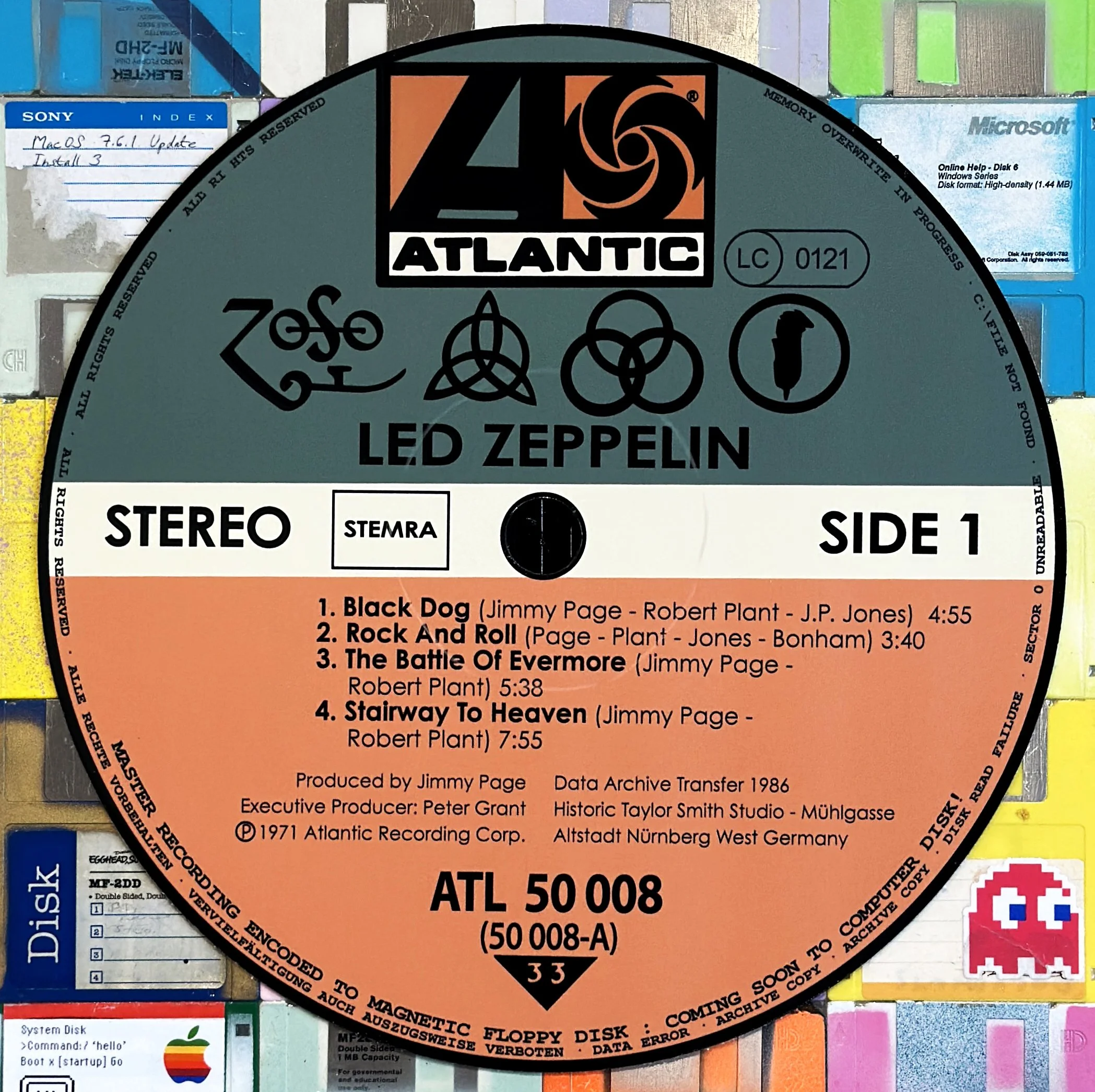
Detail of the reimagined center label for Led Zeppelin IV (Side 1)