
MEMORY HAS A MATERIAL
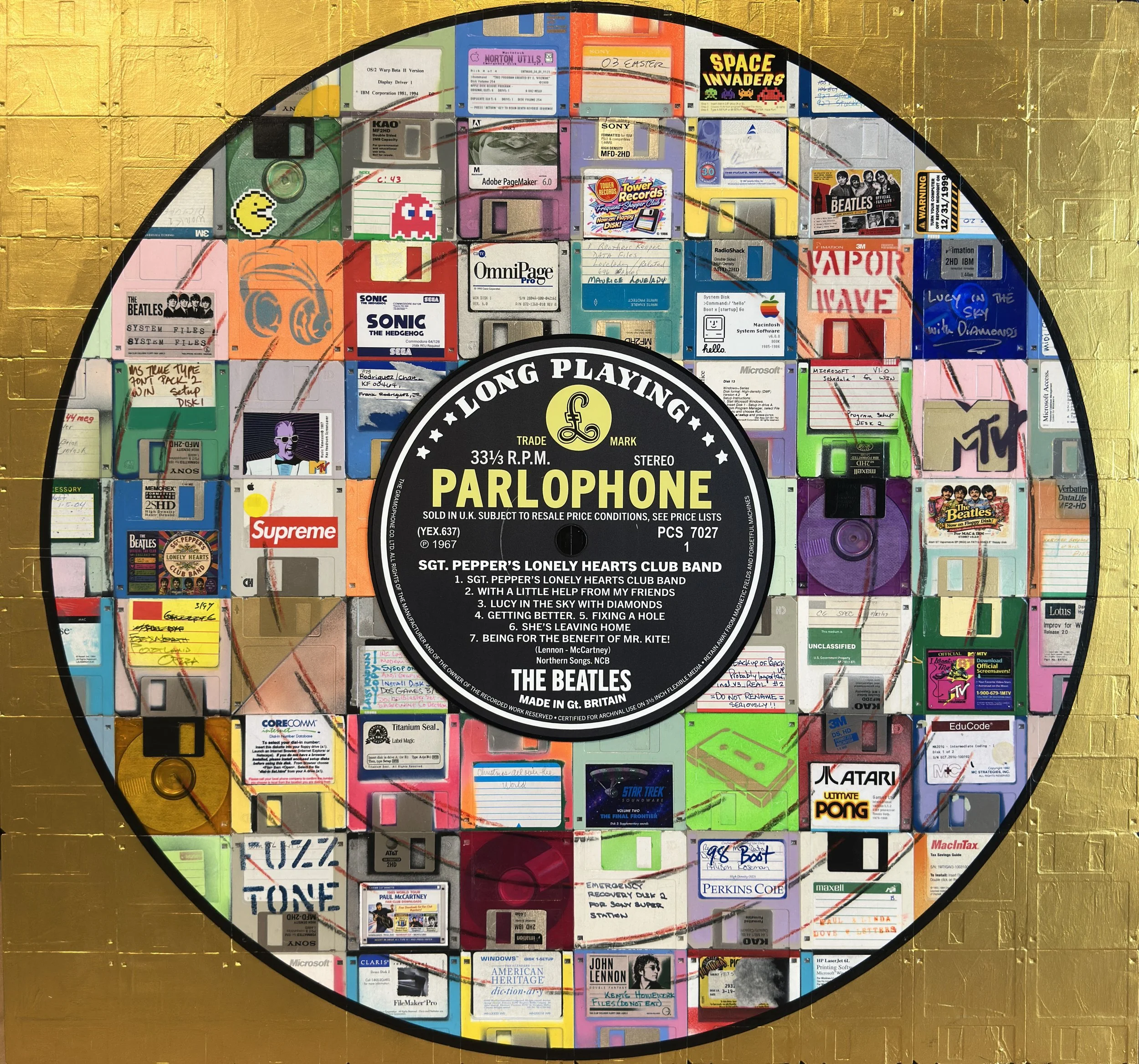
Released in 1967, Sgt. Pepper’s Lonely Hearts Club Band captured a moment when technology became part of the creative act itself. Working with the limitations of four-track tape, The Beatles and producer George Martin layered, manipulated, and transformed recorded sound into something that seemed impossible for its time. More than half a century later, that same collision of imagination and technology is reimagined through another once-revolutionary recording medium: the 3.5-inch floppy disk. Ninety obsolete disks—each originally designed to hold information magnetically—become the physical surface of the artwork, carrying their own fragments of labels, handwriting, software, and forgotten data. At the center, the familiar Parlophone label emerges not as reproduction but as reconstruction, connecting two generations of technology that once promised the future and now survive as artifacts of memory.
VINYL SERIES
The Beatles
Sergeant Pepper’s Lonely Hearts Club Band
Side One
33 × 35.5 inches
Mixed media on vintage 3.5-inch floppy disks
2026
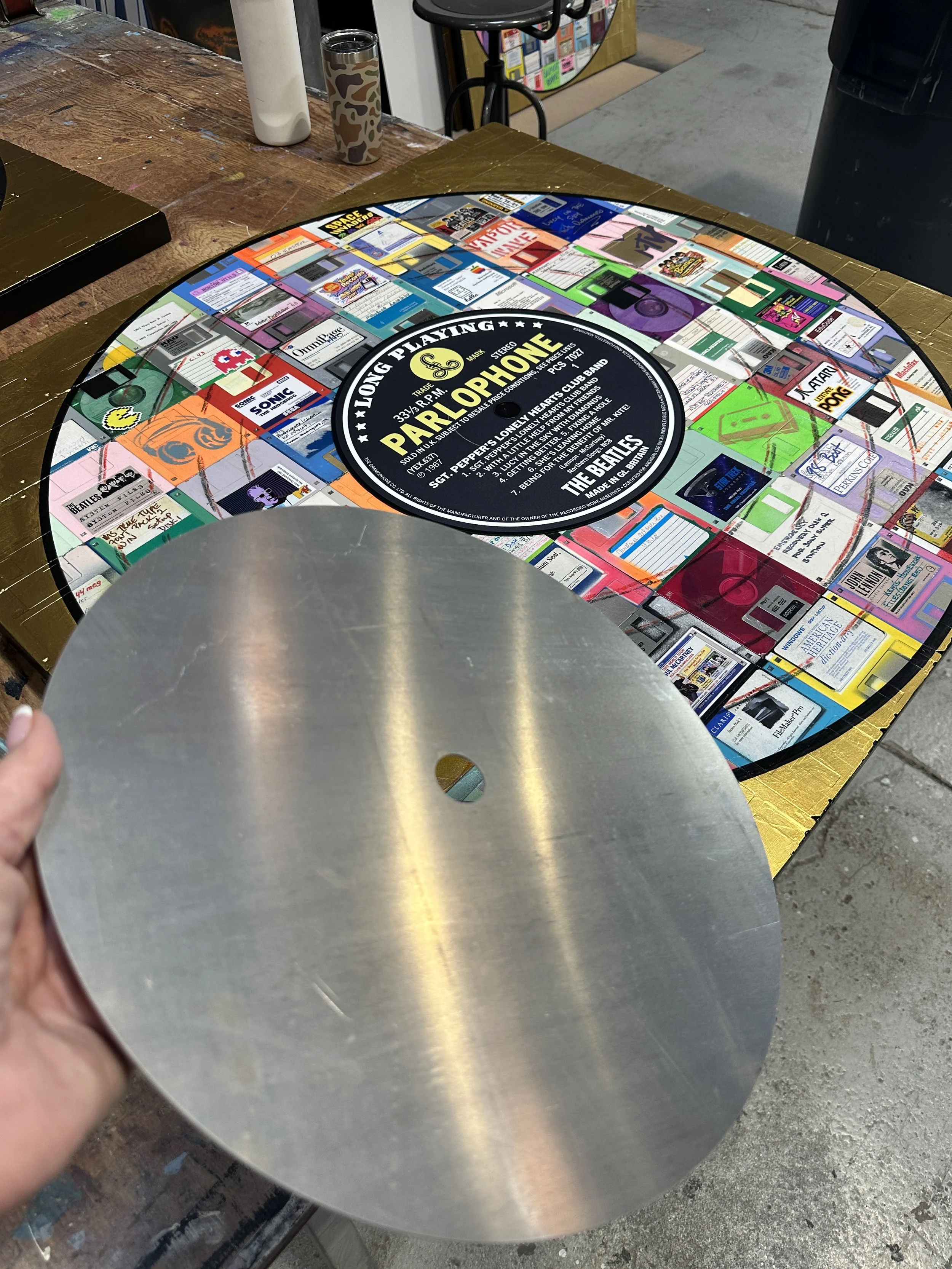
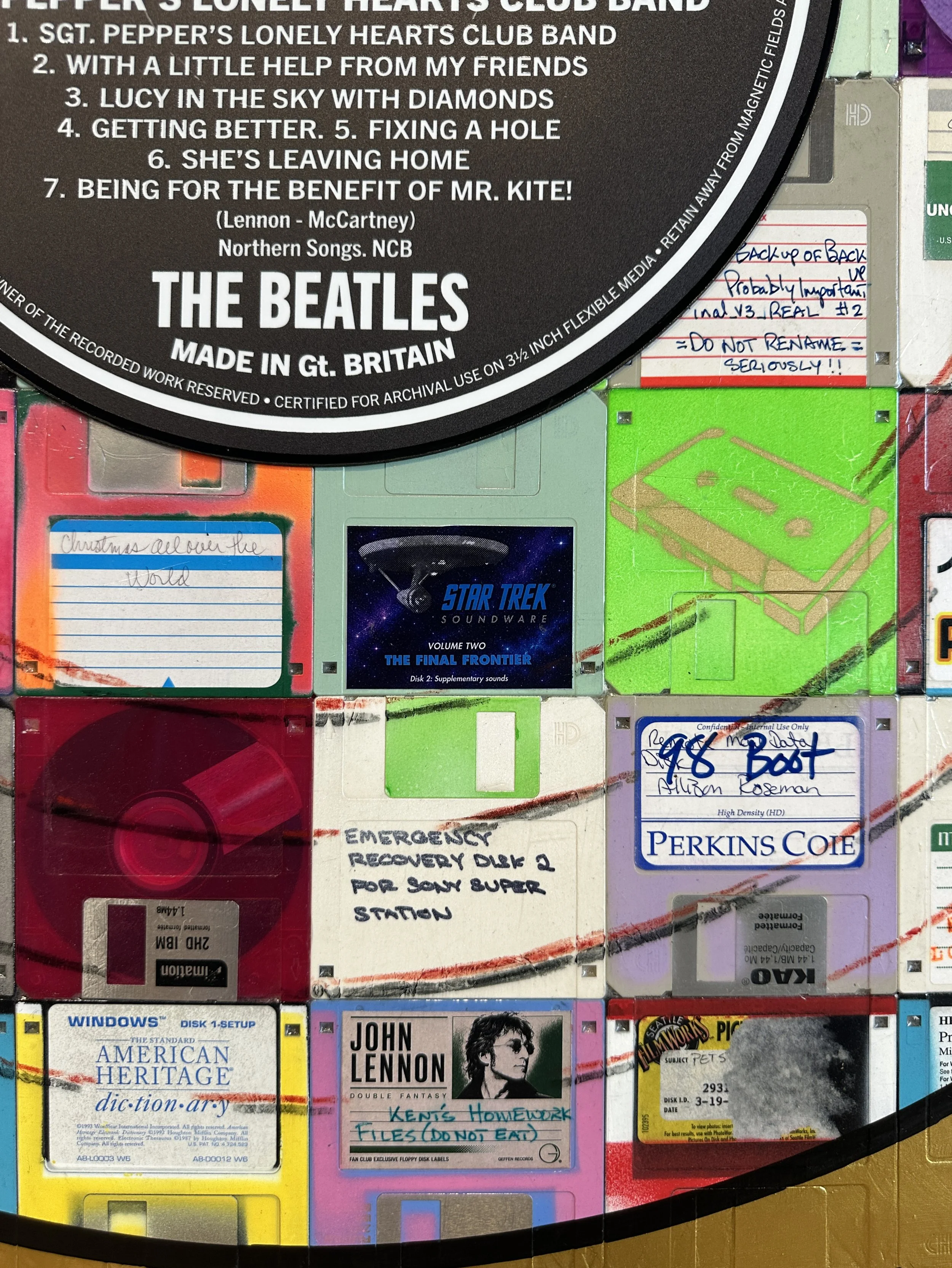
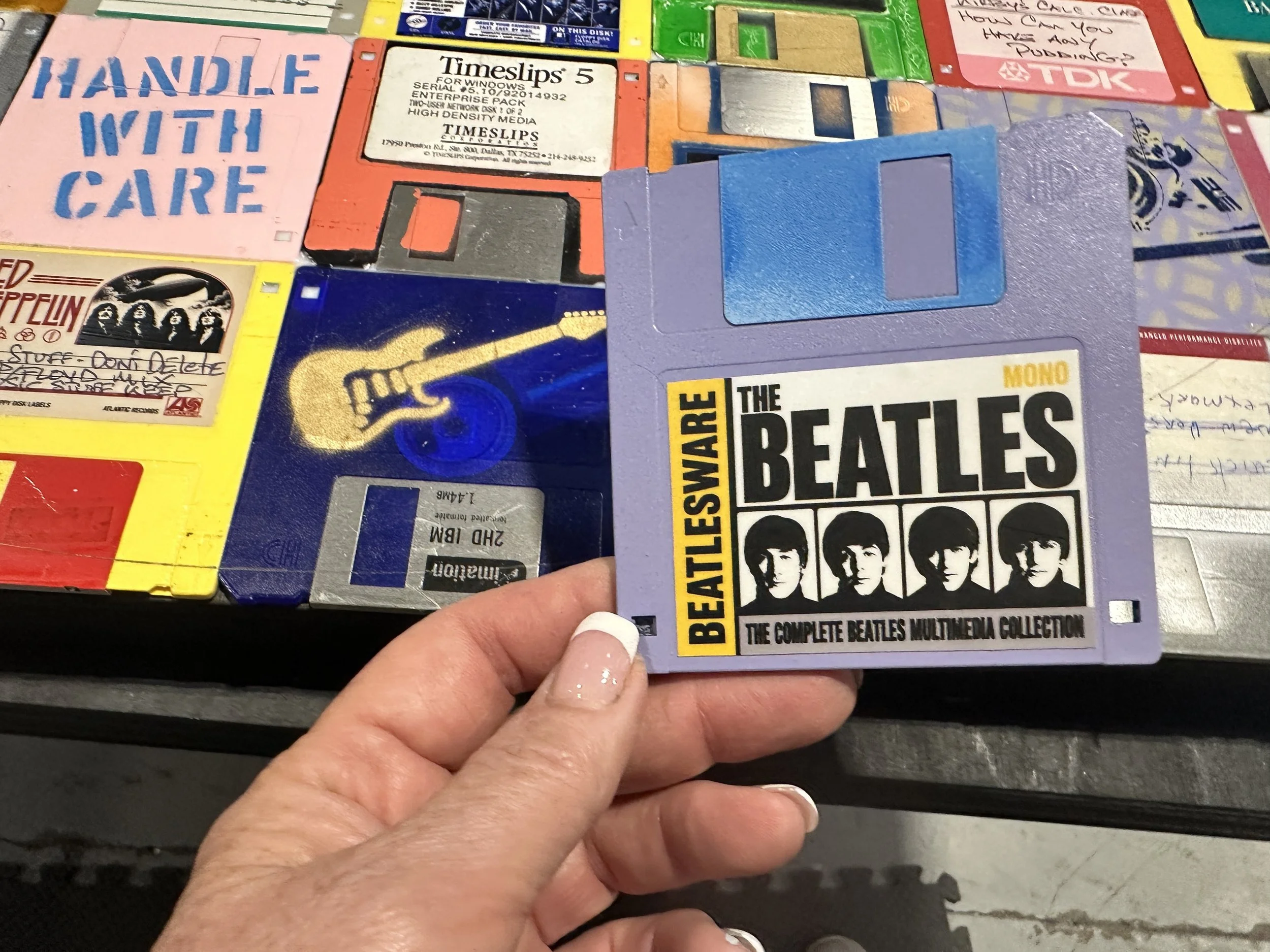

The Beatles – Sgt. Pepper’s Lonely Hearts Club Band (Side 1) in progress. Taylor Smith, Vinyl Series, 33 × 35.5 × 2 in.
SGT. PEPPER’S LONELY HEARTS CLUB BAND
Released in 1967, Sgt. Pepper’s Lonely Hearts Club Band marked a profound shift in how popular music could be conceived, recorded, and experienced. The Beatles and producer George Martin transformed the studio itself into an instrument, using layered recording, tape manipulation, orchestration, and experimentation to create a work that extended far beyond the conventions of the traditional pop album. Its visual identity was equally radical: music, typography, photography, packaging, and persona became parts of a single constructed world. More than half a century later, Sgt. Pepper remains an enduring artifact of a moment when popular culture embraced experimentation without boundaries—a record that did not simply reflect its time, but helped redefine it.
STUDIO NOTES
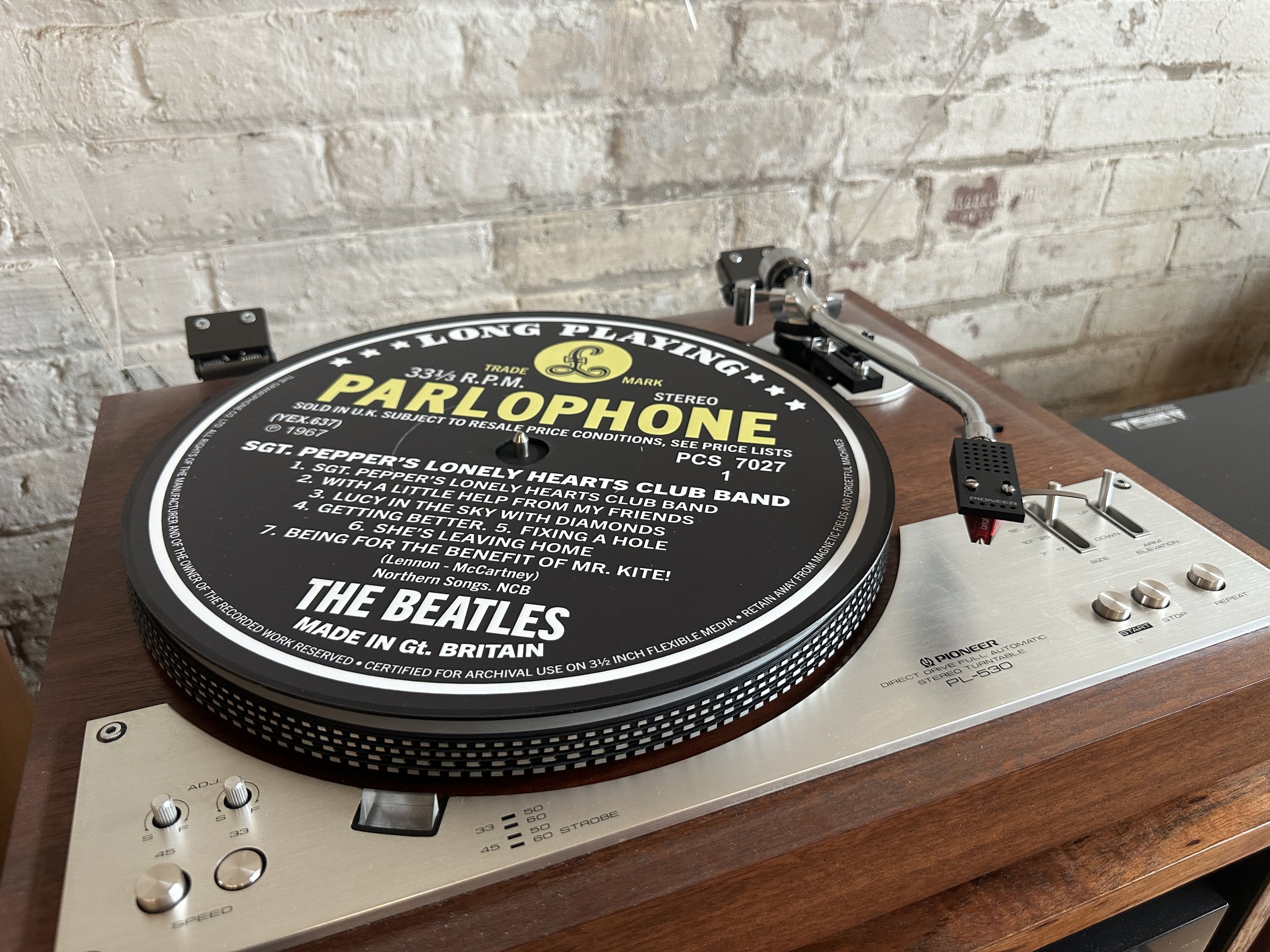
For this work, I wanted the exuberance and experimentation of Sgt. Pepper to emerge through the materials rather than through a literal reconstruction of its famous cover. The field of ninety vintage floppy disks became an archive of its own—layers of obsolete software, handwritten notes, forgotten files, early computer graphics, and fragments of popular culture accumulated over decades. I deliberately incorporated several Beatles references among them, including an original Beatles software disk, allowing discoveries to surface gradually rather than announce themselves immediately. At the center, I rebuilt the black-and-yellow Parlophone label on aluminum, preserving its period character while quietly altering details and introducing new language into the original legal text. One of those interventions—“CERTIFIED FOR ARCHIVAL USE ON 3½ INCH FLEXIBLE MEDIA”—creates an improbable bridge between the technologies of 1967 and the computer age that followed. The references are there to be found, but the work ultimately remains about something larger: how objects designed to carry information become physical records of memory themselves.

Detail: The Beatles – Sgt. Pepper’s Lonely Hearts Club Band (Side 1)